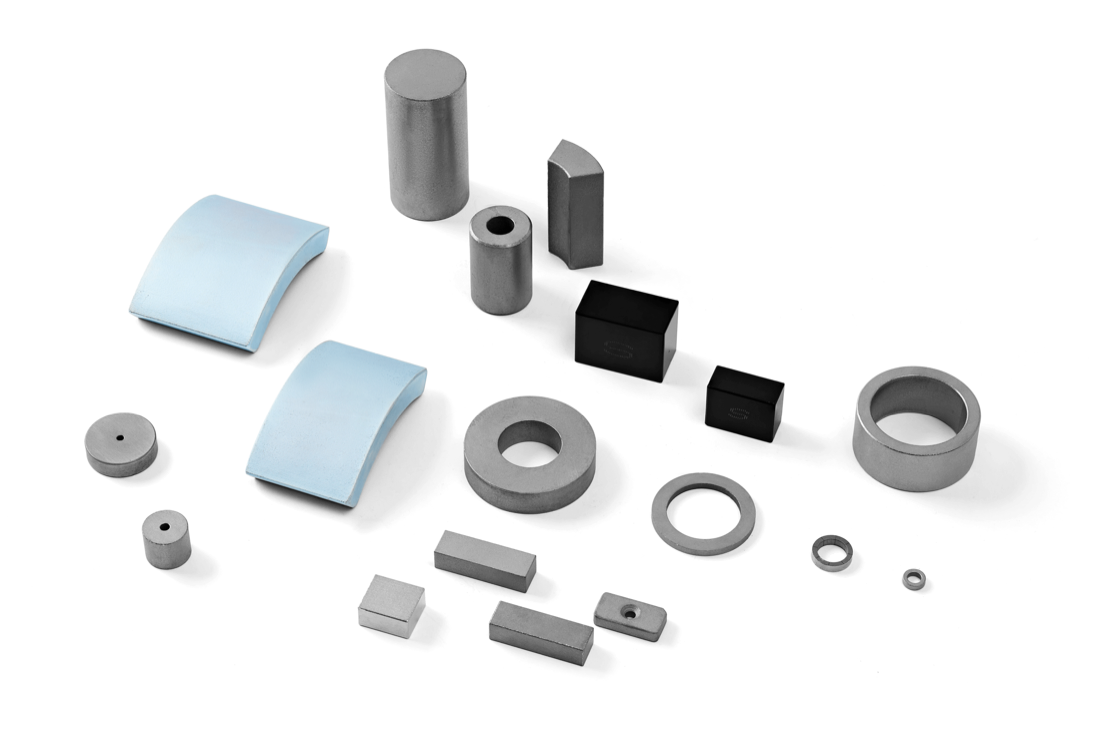
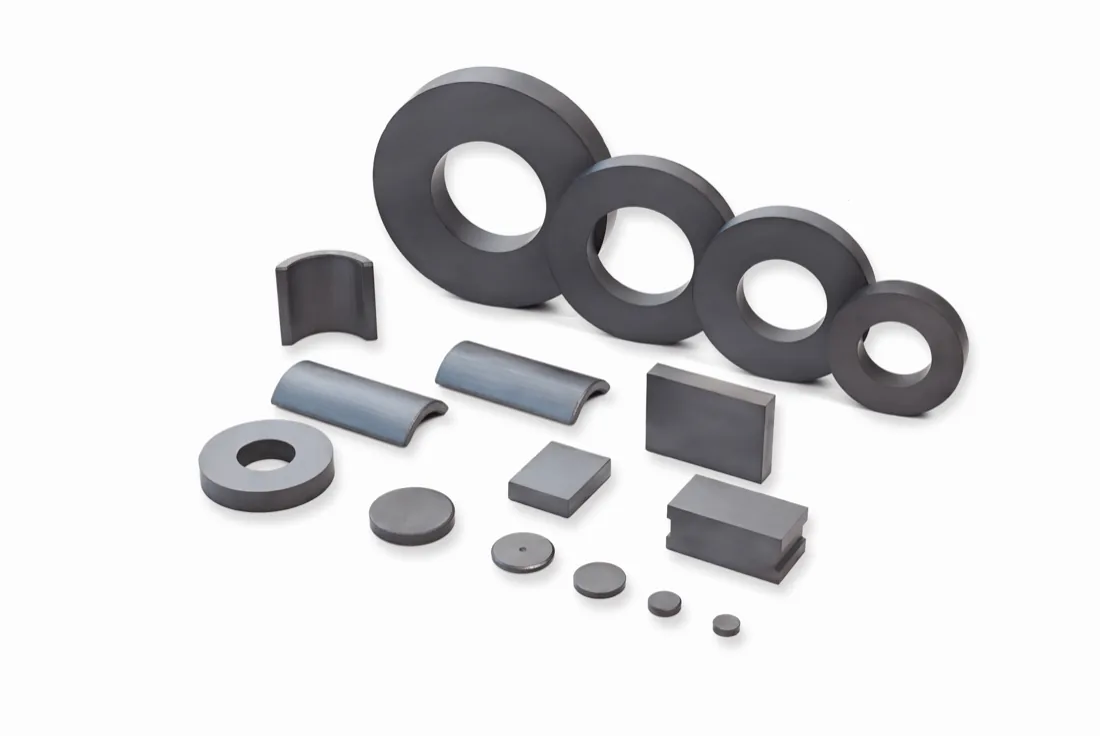
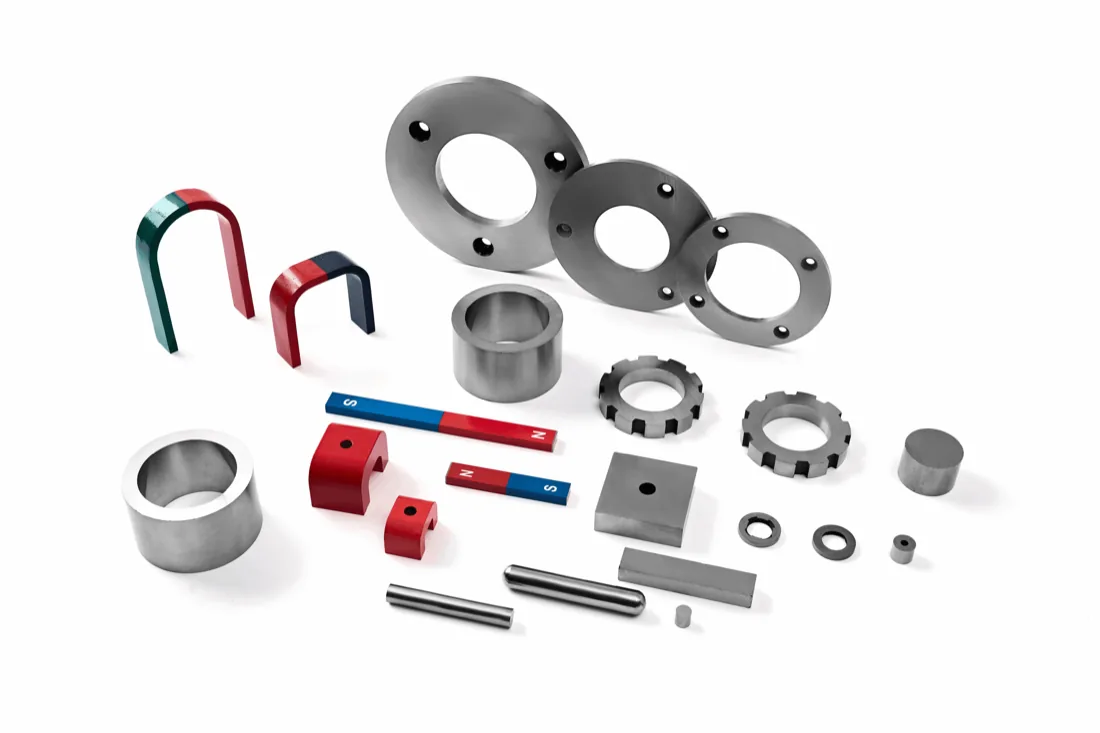
Neodymium (NdFeB) magnets are the strongest permanent magnets available on the market. With their exceptional magnetic strength they offer high pull force in compact sizes; they are a reliable solution for demanding industries, engineering and product development. Because of their limited thermal and corrosion resistance, they are protected with a surface coating (Ni, Zn, epoxy).
Why the strongest magnet?
The superiority of neodymium magnets comes from the magnetic energy they can store per unit volume. To obtain the same pull force with a ferrite magnet, a much larger body is needed. That is why in every application where space is limited — sensors, compact holders, slim separator rods — neodymium is the first choice.
Its limit: temperature and corrosion
The price of strength is paid in durability. Neodymium loses its magnetic properties as the temperature rises, and above a certain threshold this loss becomes permanent. Standard grades are safe up to about 80 °C; high-temperature grades can go up to 200 °C, but these grades are more expensive and give up some strength.
The second limit is corrosion. The material oxidizes rapidly with the moisture in the air, so it is always coated: nickel (the most common, bright surface), zinc (economical) or epoxy (chemical environments). If the coating is scratched, corrosion starts at that point and breaks the magnet up from the inside.
Where it is not preferred
In applications that will run continuously above 150 °C, SmCo magnets are the better choice, and in jobs where cost is decisive and strength is not critical, ferrite magnets. Neodymium is also brittle; in applications subject to impact it must be protected inside a housing.
Safety note: powerful neodymium magnets can trap fingers when they snap together, and they can shatter and fly apart. They must also be kept away from sensitive devices such as pacemakers and magnetic cards.