Volumetric Dosing Systems Products(2)
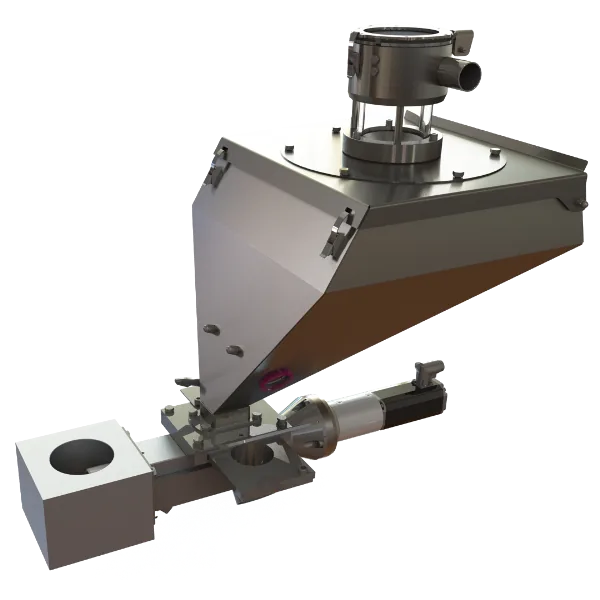 DIGICOLOR
›Digicolor DC-18 / DC-38 Volumetric Dosing Unit
- DC-18: up to 16 kg/h, 7 liter stainless hopper
- DC-38: up to 70 kg/h, 15 liter stainless hopper
- Speed-controlled industrial motor
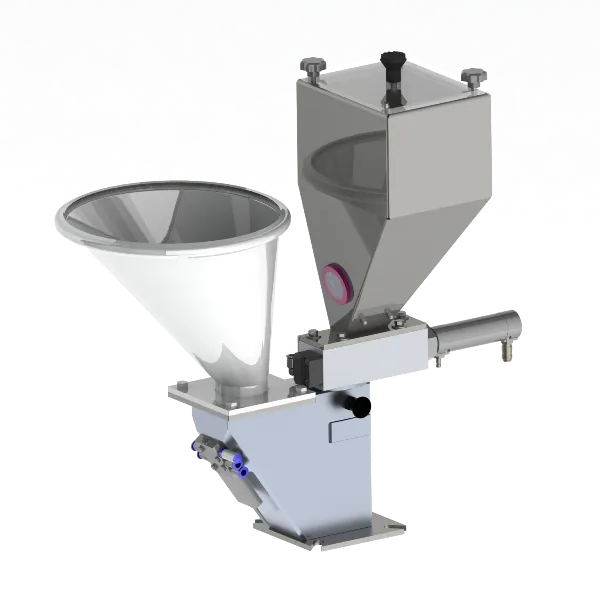 DIGICOLOR
›Digicolor DC-MICRO Micro Dosing Unit
- For the smallest masterbatch and additive ratios
- Self-optimizing dosing mode
- Only shot weight and ratio are entered
Volumetric Dosing Systems
Volumetric dosing adds the additive on a volume basis: the dosing screw turns at a certain speed and transfers a certain volume of material per revolution. In gravimetric dosing the material is added by weighing.
Which one, and when?
The distinction is simple. If the consumption quantity has to be recorded or the mixing ratio has to be documented, gravimetric dosing is preferred. If holding the ratio at a reasonable accuracy is enough, volumetric dosing is both a simpler and a more economical solution.
The weak point of the volumetric system is the change in the bulk density of the material. The same volume means a different weight when the density changes. For that reason care is needed with materials whose bulk density varies, and especially with regrind. We covered the difference between the two methods in detail in our article on gravimetric and volumetric dosing.
Where is it installed?
The dosing unit is mounted directly above the feed zone of the processing machine. Placed under the main raw material hopper, at the feed section of the plasticizing screw, the additive blends directly into the material column. Because the conveying distance is shorter, the risk of separation is also reduced.
There are standard mounting flanges that make installation easier, and stainless steel dosing hoppers in different sizes.
Adding regrind
The second common use of volumetric dosing units is returning regrind to the process. Material obtained from runners and scrap is fed back into production in a loop built together with a granulator and conveying equipment.
In this setup the granulator is placed next to the processing machine and grinds the runner; the regrind comes to the dosing unit over the conveying line and blends into the main raw material. You can look at the counterpart on the granulators side. There are dedicated dosing screws for regrind.