Plastic Material Drying Systems Products(15)
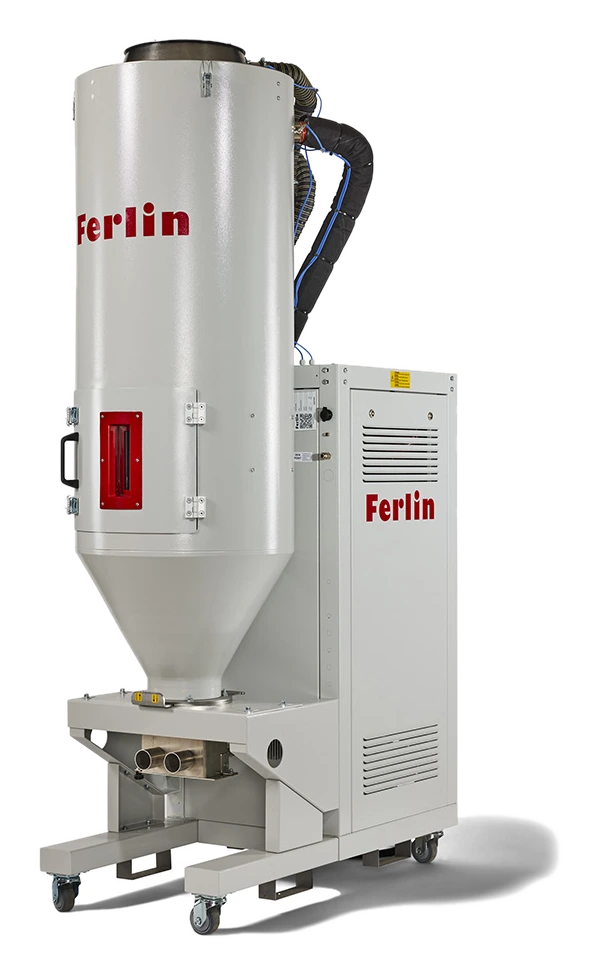 Ferlin Plastics Automation
›Ferlin EasyDry HT
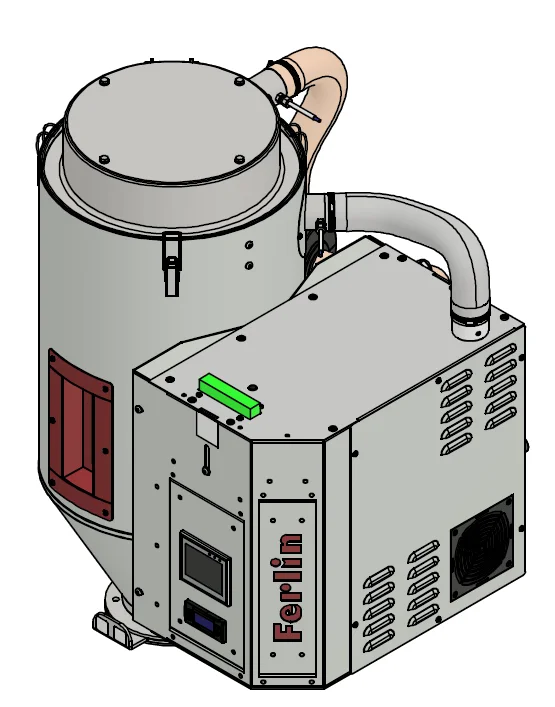 Ferlin Plastics Automation
›Ferlin EasyDry
 Ferlin Plastics Automation
›Ferlin HotDry
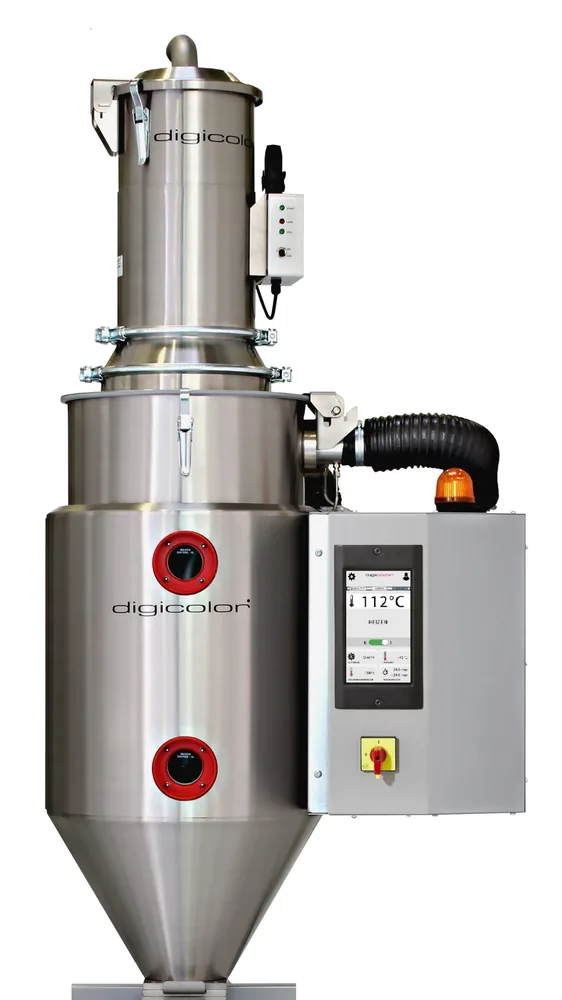 DIGICOLOR
›Digicolor Drywell Dryers
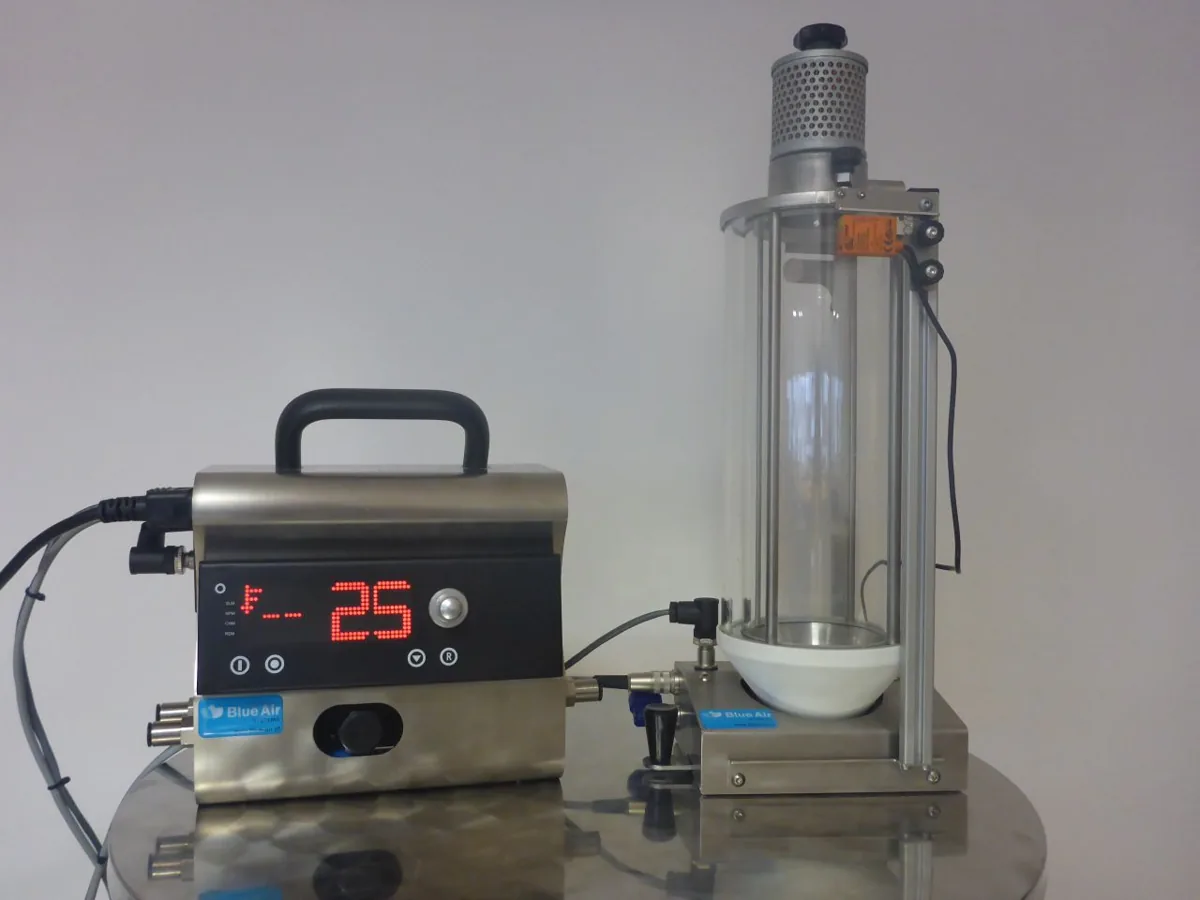 Blue Air Systems
›Blue Air Compressed Air Dryers
 DIGICOLOR
›Drying Equipment and Service
Plastic Material Drying Systems
In plastic injection molding and extrusion production, moisture is the source of the most frequently seen quality problems. Hygroscopic (moisture-absorbing) plastics draw the moisture in the air into the granulate; drying them before processing is mandatory.
The price of working with damp raw material is not only a surface defect:
| Symptom | Physical cause | Result |
|---|---|---|
| Silver streaks on the surface | Moisture in the melt evaporates and is dragged to the surface | Scrap, reproduction |
| Brittleness, low impact strength | Chain scission (hydrolysis) in materials such as PA and PC | The part breaks in the field |
| Dimensional shift and flash | Viscosity changes from batch to batch | Production that does not hold the dimension |
| Haze in a transparent part | A fall in the viscosity number of PET | A rejected batch |
Hydrolysis has an important property: it is irreversible. A polymer chain that has been broken cannot be repaired by drying afterwards, and that batch stays with its low strength. For that reason drying is not a parameter that can be corrected after production, but a condition that has to be met before it.
Dryer types: which one for which raw material?
| Dryer type | Operating principle | Suitable raw material | Series |
|---|---|---|---|
| Dry air (desiccant) | Lowers the dew point of the air to levels reaching –40 °C and removes the internal moisture of the granulate | Hygroscopic: PA, PC, ABS, PET, PBT, PMMA, TPU, PLA, ASA | Ferlin EasyDry |
| Dry air high temperature (HT) | The same principle, process temperature up to 170 °C | High temperature engineering plastics: PA66, PPS, PEEK, PEI, PET | Ferlin EasyDry HT |
| Hot air | Removes only the surface moisture with heated ambient air | Non-hygroscopic: PP, PE, PS | Ferlin HotDry |
The selection has to be made in both directions. Hot air dryers fall short on a hygroscopic material — the moisture the ambient air carries itself is not enough to draw out the moisture that has penetrated into the granulate. The reverse is also true: buying a dry air dryer for PE and PP, which only get wet on the surface, is paying for a capacity that will never be used.
How is dryer capacity calculated?
There are two decisive values: the hourly raw material consumption of the machine and the residence time the material requires. The hopper volume has to be large enough to hold the product of these two.
Example: a machine consuming 40 kg of PA6 per hour must hold 160 kg of material in the hopper continuously for a residence time of 4 hours. Since the bulk density of PA6 is approximately 0.65 kg/L, this means a hopper of at least 250 liters.
Common drying values:
| Raw material | Drying temperature | Residence time |
|---|---|---|
| PA6 / PA66 | 80 °C | 3 – 5 hours |
| PC | 120 °C | 3 – 4 hours |
| ABS | 80 °C | 2 – 3 hours |
| PET | 160 – 180 °C | 4 – 6 hours |
| TPU | 80 °C | 2 – 3 hours |
For the temperature, time and moisture values of all raw materials you can look at the material processing data table. Why a hygroscopic material behaves differently and what the dew point means are explained in detail in the material drying guide.
Choosing the hopper larger than necessary is also a problem: if the material stays in hot air longer than it should, degradation begins, especially in PET and TPU.
Machine-side or central drying?
If different raw materials are processed on one or a few machines, a machine-side dryer is the right solution; each machine dries its own material with its own time. In plants where the same raw material goes to many machines, central drying is more economical and the dried material is distributed over the central conveying line.
In central drying the critical point is the line itself: while dried granulate is being conveyed in an uninsulated or damp line, it can pick the moisture back up before it reaches the machine.
What determines the price of a plastic dryer?
Dryer prices are not made up of a single item; the following headings create the difference between quotations:
- Hopper volume and air flow rate — as capacity grows, the body, the blower and the heater all grow; this is the main determinant of the price
- Dryer type — a dry air desiccant system is a more complex structure than a hot air unit
- Operating temperature — HT models going up to 170 °C are in a different class in terms of insulation and materials
- Control equipment — dew point monitoring, automatic residence time management and energy saving functions
- Frame, suction box and aspiration — complementary equipment that changes according to the machine-side layout
Alongside the purchase price, the energy consumption also has to be taken into account: drying is the largest item after the machines in the total electricity consumption of an injection molding plant, and a dryer that is larger than necessary or runs continuously pays that difference every month. We covered the subject in the article on energy consumption and ways to save.
If you tell us the raw material you process and your hourly consumption, we can determine the required type and hopper volume together and prepare a quotation.
Drying with compressed air
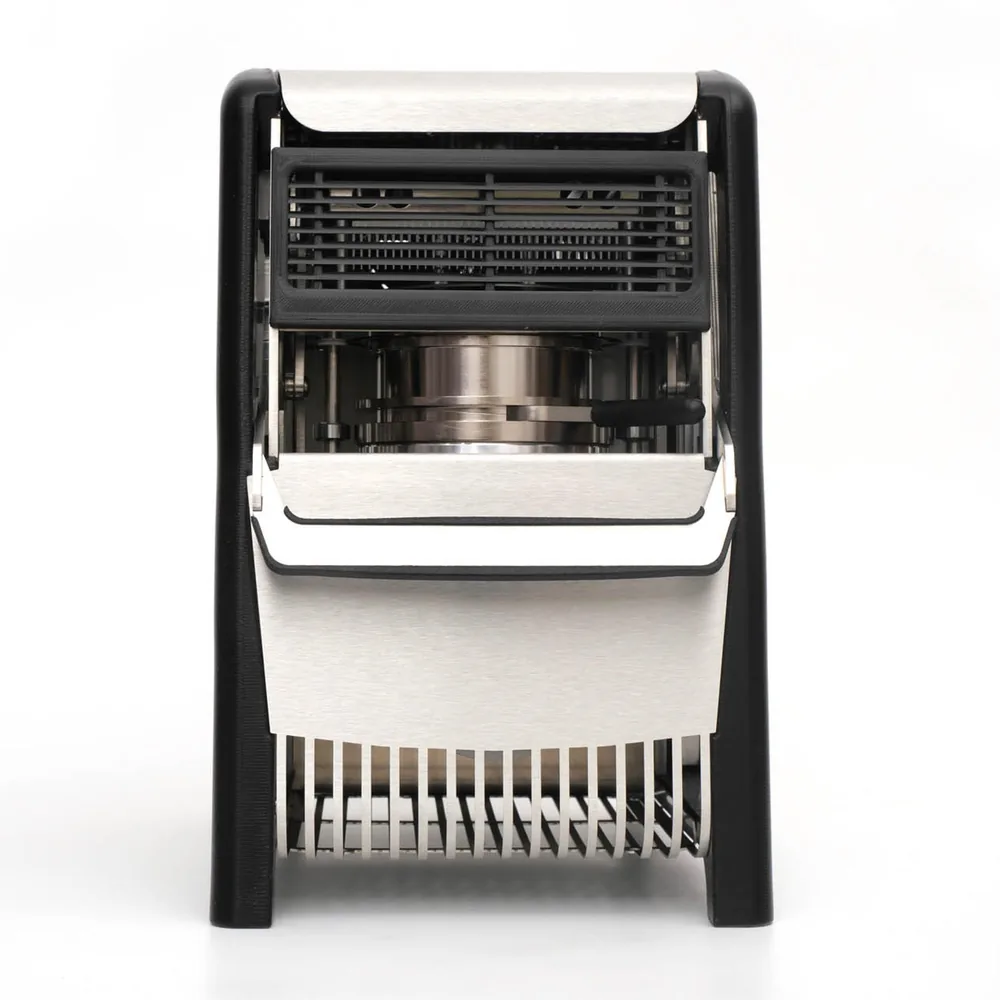
Besides desiccant dryers, there are also Blue Air compressed air dryers, which use the dried compressed air in the plant and require no regeneration. They suit micro molding, on-machine drying and plants that recover the exhaust air of a blow molding machine.
Frequently asked questions
Is a hot air dryer enough for nylon or PET? No. These materials take moisture into the granulate; a dryer working with ambient air only dries the surface. With hygroscopic raw materials such as nylon, PC and PET, a dry air desiccant dryer is mandatory.
Why is the dew point expressed as a negative value? The dew point is a measure of how dry the air is, not the temperature of the dryer. While the dryer heats the air in the 80 – 170 °C range, the moisture content of that same air is low enough to correspond to a dew point of –40 °C. The air is hot and dry at the same time.
Does drying the raw material longer than necessary cause harm? It does. Staying in hot air for a long time leads to degradation, yellowing and loss of mechanical properties, especially in PET and TPU. The residence time should be set according to the material and should not be extended as a safety margin.
Should regrind be dried as well? Yes. Because regrind has a large surface area, it draws moisture faster than the original granulate. It is also more prone to degradation, having gone through a heat cycle once more; its ratio and its drying have to be managed separately.
Teknik Part offers machine-side and central drying solutions, led by Ferlin EasyDry dry air dryers.
For the complete Ferlin range of dryers, dosing and conveying you can look at the Ferlin brand page.