Hot Runner Control Systems Products(18)
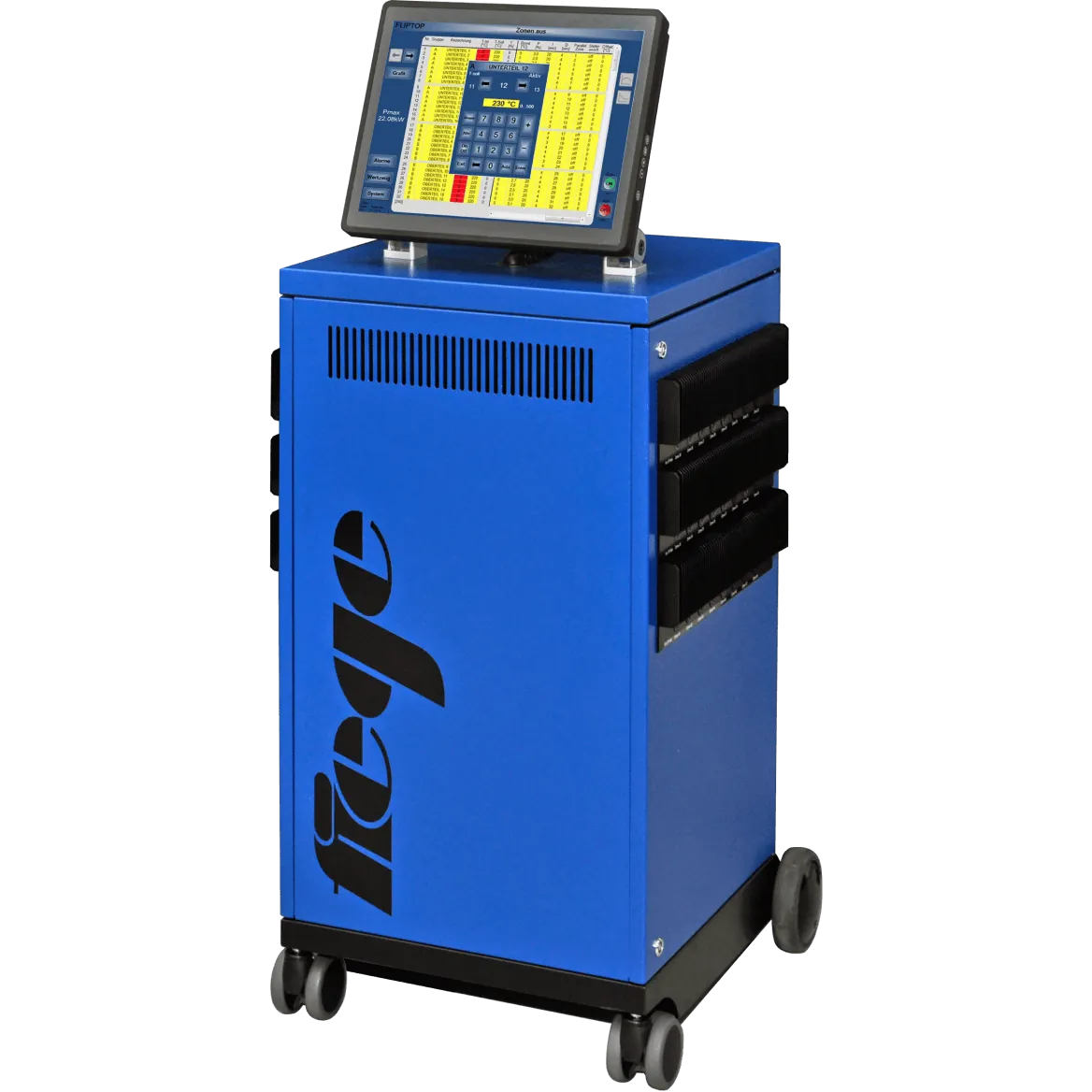 FIEGE Electronic
›JETmaster TP
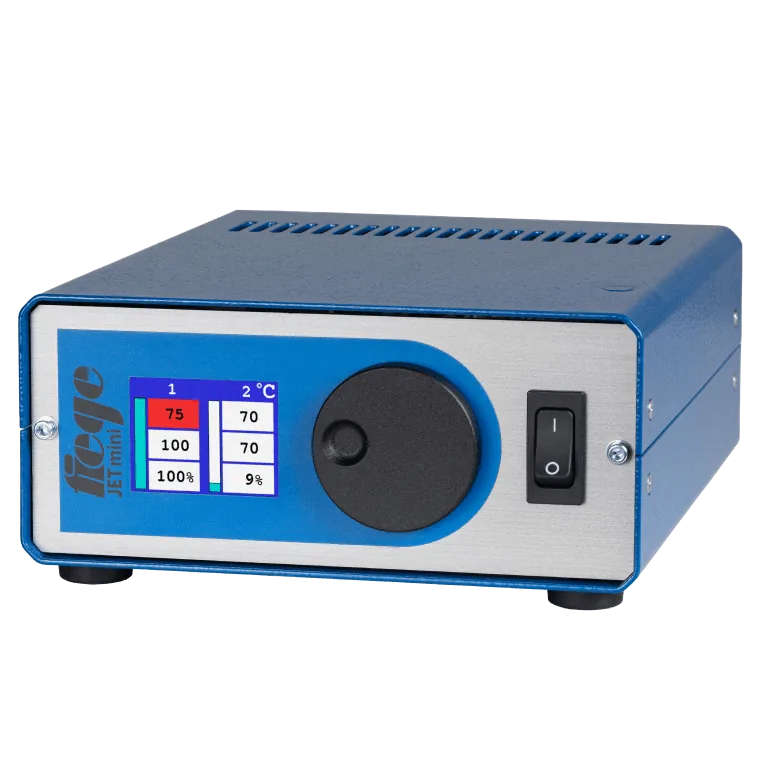 FIEGE Electronic
›JETmini
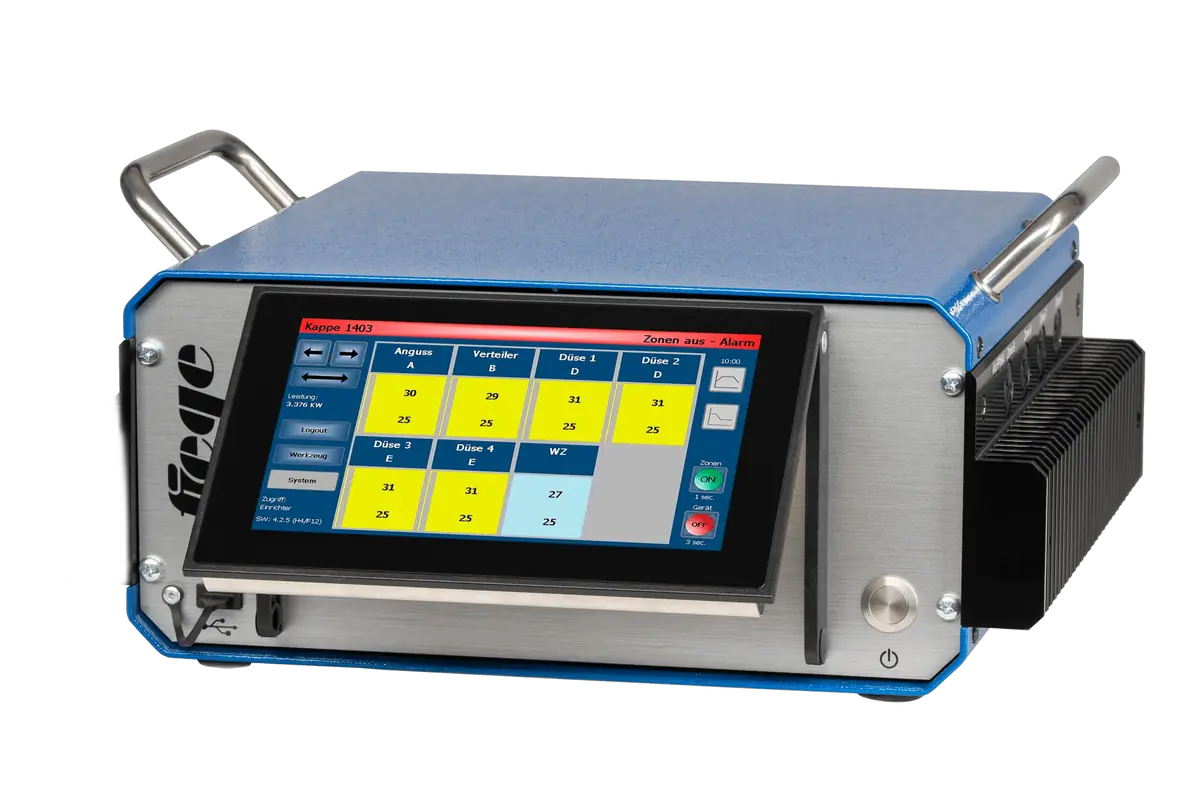 FIEGE Electronic
›TP and VARIO Series
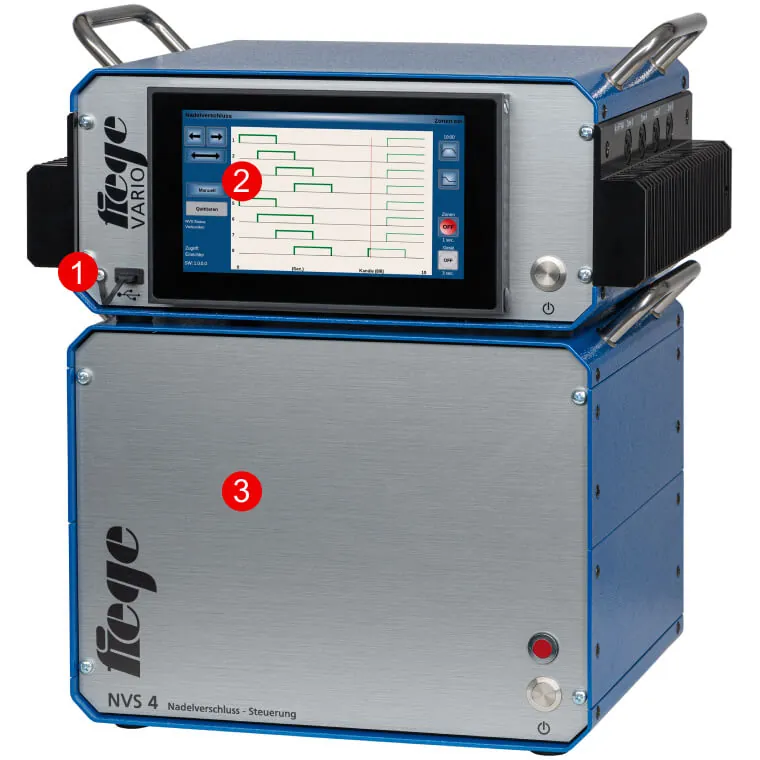 FIEGE Electronic
›Needle Valve Control Systems
 FIEGE Electronic
›In-Mold Cavity Pressure Measurement
 FIEGE Electronic
›Mold Connection Cables
 FIEGE Electronic
›Hot Runner Accessories
Hot Runner Control Systems
The performance of a hot runner system depends largely on how precisely the temperature is controlled. Every nozzle zone is heated separately and measured separately; a deviation in one zone turns into a short shot, flash or color difference in that cavity.
The control unit manages all of these zones: it holds the target temperature, detects a heater failure, dries a damp heating element in stages and ensures that the system heats up in a balanced way during start-up.
The three components of the system
1. Temperature control — Selected according to the number of zones. From a single-zone application to huge systems of 240 zones. → JETmini · VARIO Series · JETmaster TP
2. Valve gate control — In cascade (sequential) injection it manages which nozzle opens and closes when. → Valve Gate Control Systems (NVS)
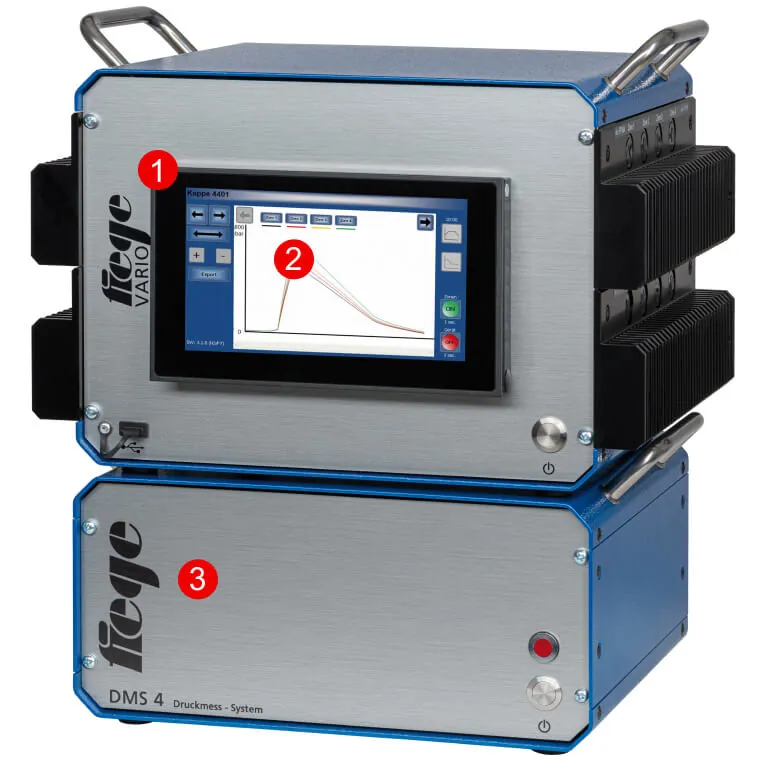
3. Cavity pressure measurement — Monitors the repeatability of the process by measuring the real pressure inside the mold. → In-Mold Cavity Pressure Measurement (DMS)
Selection by number of zones
| Product | Zones | Typical use |
|---|---|---|
| JETmini | 1 – 2 | Single or few-cavity molds, general heating, sample production |
| VARIO | 4 – 32 | Standard injection molds, the most common range |
| JETmaster TP | 24 – 240 | Multi-cavity molds, PET preform, large automotive parts |
What is cascade (sequential) injection?
On large parts, filling from a single point causes a pressure drop at the end of the flow path and a weld line. In cascade injection more than one nozzle is used and these open in sequence: while the melt front advances from the first nozzle, the second nozzle opens exactly at the moment the front reaches it.
The result: the weld line disappears or becomes invisible, the clamping force requirement falls and warpage is reduced. For this, every nozzle has to be controlled with millisecond precision — the valve gate control system does that job.
The detail of the subject: What is a hot runner system and what are its advantages?
When selecting a control unit
1. Number of zones — the determining figure is not the highest of your current molds but the number of zones you will use in the future 2. Sensor type — Fe/CuNi (type J), NiCr/Ni (type K) or Pt100; it has to match the sensors present in the mold 3. Power per zone — the heater power determines the output current 4. Soft start-up — damp heating elements, or ones that have stood for a long time, are damaged if they are not heated in stages 5. Valve gate requirement — if cascade injection will be done, an NVS compatible with the control unit has to be added 6. Cavity pressure measurement — if process validation and automatic good/bad part separation are wanted, a DMS is required 7. Machine communication — VARIO and JETmaster TP connect to central data management over Ethernet and OPC/UA; RS232, RS485 and TTY are optional
For a control unit selection suited to your application you can reach our technical support team.
What determines the price of a hot runner control unit?
In hot runner control systems the main measure of the price is the number of zones, but that is not the only determinant:
- Number of zones — there is a wide range, from a compact unit of 1 – 2 zones to a cabinet of 240 zones
- Current capacity per zone — an output of 16 A and an output at a lower current mean different hardware
- Cabinet type and supply — a single-phase benchtop unit and a 400 V three-phase cabinet system are separate classes
- Diagnostics and monitoring — leakage current monitoring, triac fault protection, mold diagnostics and calibration accuracy
- Communication and interface — USB, Ethernet, OPC/UA support and an industrial touch screen
- Valve gate and cavity pressure — sequential (cascade) injection requires additional control units
When determining the number of zones it is necessary to think not only of the mold's requirement today but also of the zones that may be added later; modular cabinets grow in steps of 4 or 8 for that reason.
It is enough to send us the number of zones and the thermocouple type in your mold's connection diagram; we will determine the suitable cabinet and price it.
Frequently asked questions
How many zones does the control unit need? Every separately heated point in the mold is a zone: each nozzle, the manifold sections and the tip heaters if there are any. The count is made from the mold maker's connection diagram.
Why does the thermocouple type matter? Type J and type K require different temperature ranges and different wiring. The control unit has to match the sensor type in the mold; a wrong match leads to the temperature being read incorrectly.
What is needed for cascade (sequential) injection? In addition to temperature control, a valve gate control unit that manages the opening and closing timing of the valve pins is required. It is the basic method of removing the weld line on large parts; the subject is explained in the hot runner system article.
Are the mold connection cables needed as well? Yes. The heater and thermocouple cables are prepared specifically for the mold; the connection standard matches the mold with the unit. This item is often overlooked at the quotation stage.
The complete FIEGE range of control units, valve gate and cavity pressure is on the FIEGE brand page.