Plastic Injection Molding Machines Products(12)
 DKM Plastik Makineleri
›VICTOR Series
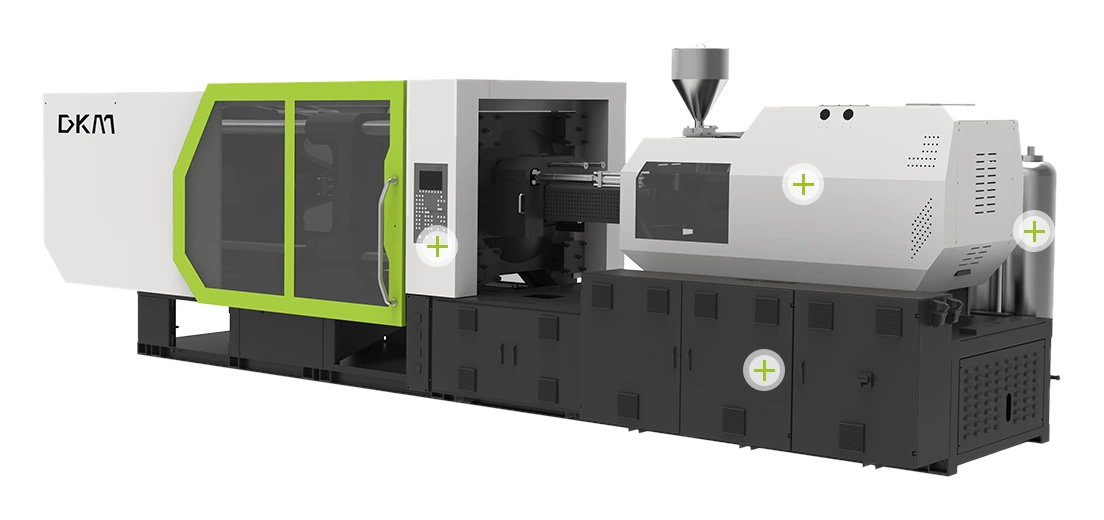 DKM Plastik Makineleri
›HH Series
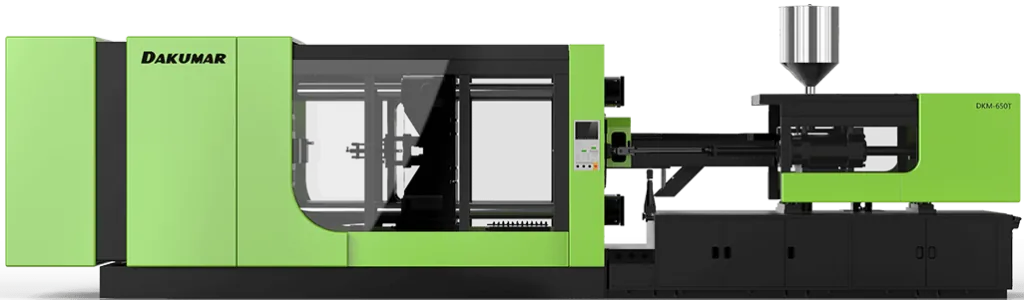 DKM Plastik Makineleri
›SV Servo Series
 DKM Plastik Makineleri
›DFS Series
 DKM Plastik Makineleri
›TP Series
 DKM Plastik Makineleri
›DH Series
 DKM Plastik Makineleri
›MX Series
 DKM Plastik Makineleri
›LEAN Series
 DKM Plastik Makineleri
›EH Series
 DKM Plastik Makineleri
›PET Series
 DKM Plastik Makineleri
›PVC Series
 DKM Plastik MakineleriNEW
›FE All-Electric Series
What Is an Injection Molding Machine?
An injection molding machine melts granular raw material and injects it into a mold under pressure, then ejects the part once it has cooled. From packaging to automotive, from medical to white goods, the majority of plastic parts are produced by this method.
The machine consists of three main units:
- Injection unit — melts the raw material, homogenizes it and forces it into the mold. Screw diameter and shot volume define the capacity of this unit
- Clamping unit — holds the mold closed. Its capacity is expressed in tons and is the first criterion in machine selection
- Control unit — manages temperature, pressure, speed and position parameters; repeatability comes from this unit
For a detailed account of the operating principle, the cycle stages and the machine sections: what is an injection molding machine.
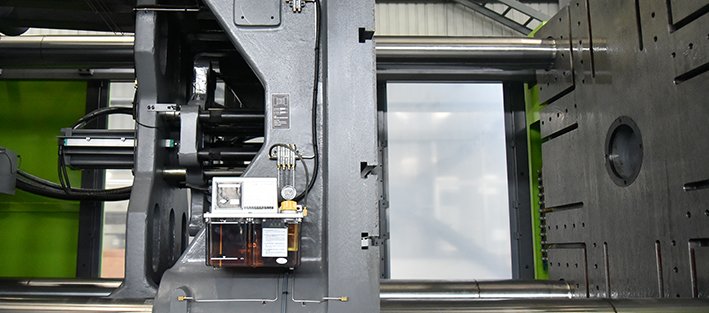
Choosing a series: which machine for which job?
The DKM range covers 90 to 4,000 tons across 12 series. The series differ not only in tonnage but in what they were designed to do.
| Series | Tonnage | Intended for |
|---|---|---|
| DH | 90 – 3,350 | Fast injection; short cycles with electric pre-plasticizing |
| LEAN | 90 – 3,350 | Low-inertia structure — fast response, low energy |
| FE All-Electric | 90 – 460 | No hydraulic oil, highest energy efficiency and precision |
| SV Servo | 130 – 3,350 | General-purpose servo series — the widest application range |
| MX | 130 – 450 | Medical and cleanroom; two-platen hybrid drive |
| EH | 130 – 450 | Servo all-electric plus hydraulic hybrid; precision parts |
| PVC | 130 – 650 | Screw and corrosion measures specific to PVC processing |
| HH | 200 – 1,300 | Fast and precise toggle structure |
| PET | 250 – 650 | PET preform — dedicated screw, low AA level |
| DFS | 310 – 650 | Thin-wall products and in-mold labeling |
| VICTOR | 350 – 850 | High injection speed, short cycle |
| TP | 600 – 4,000 | Two-platen design; large molds and high tonnage |
Tonnage ranges overlap; what decides the choice is the application itself. A 400-ton requirement, for example, points to DFS for thin-wall packaging, to MX for a medical part, and to SV for general-purpose production.
Drive type: hydraulic, servo and all-electric
Machines of the same tonnage differ in energy consumption and precision according to their drive system:
- Servo-hydraulic — the pump runs only when needed and only at the speed required; it delivers a clear energy saving over conventional hydraulics
- All-electric — every movement is driven by its own servo motor. There is no hydraulic oil; the highest efficiency and repeatability are found here
- Hybrid — critical movements are electric, those demanding high force remain hydraulic
The comparison in detail: Differences between servo, hydraulic and all-electric injection molding machines
What to look at when selecting a machine
1. Clamping force (tonnage) — calculated from the projected area of the part and the material; to calculate it: clamping force calculator 2. Shot volume and screw diameter — the shot weight should stay within 20 – 80% of the screw volume 3. Plasticizing capacity — the kg/h required within the target cycle time must be met 4. Mold dimensions — tie-bar distance, opening stroke and minimum-maximum mold height must accommodate your mold 5. Application requirements — needs such as cleanroom, PET, PVC or thin wall point to a dedicated series 6. Energy consumption — as operating hours increase, the difference in drive closes the difference in investment 7. Automation and communication — robot, conveyor and ancillary equipment integration must be planned from the outset
Step-by-step selection guide: How to select an injection molding machine
The machine alone is not enough
An injection molding machine is only as good as the control you have over the raw material you feed it and over the mold. A complete line consists of these links:
- Material conveying — central conveying systems
- Drying — damp raw material produces defective parts even on the best machine: drying systems
- Dosing — consistency of color and additive ratio: gravimetric dosing
- Mold temperature — determines cycle time and dimensional stability: temperature control units
- Hot runner control — zone-based temperature in multi-cavity molds: hot runner systems
- Mold clamping — brings changeover time down to minutes: quick mold change
- Metal protection — protects the screw and the mold: metal separation systems
What determines the price of an injection molding machine?
For these machines — also written as injection moulding machine in British usage — the price is not a single item but the sum of several components. To understand why quotations differ from one another, these headings are the ones to examine:
- Clamping force (tonnage) — the most decisive item. Tonnage larger than necessary permanently raises both the investment and the energy cost
- Drive system — all-electric machines require a higher investment than servo-hydraulic ones, and repay it through the energy item
- Injection unit — at the same tonnage there are different screw diameter and shot volume options; the unit selected is reflected directly in the price
- Application-specific equipment — a PET screw, a corrosion-resistant group for PVC or cleanroom preparation are additional cost items
- Control and automation — display, communication interfaces, robot and conveyor integration
- Commissioning, training, warranty and spare part access — items invisible at the moment of purchase that nonetheless determine the total cost
Looking only at the purchase price is misleading in an investment decision. The real price you pay over the life of the machine is energy, scrap and downtime: energy consumption and ways to save and cost per part calculation cover that side in detail. If you would like to try the figures with your own values, you can use the calculation tools.
Once the tonnage and series suited to your project have been determined, you can contact us for a current price quotation.
Frequently asked questions
How many tons should my machine be? Tonnage is calculated from the projected area of the part and the cavity pressure the material requires; in multi-cavity molds the number of cavities and the runner are included as well. A safety margin is added to the value found. You can run the calculation for your own part with the clamping force calculator.
Servo-hydraulic or all-electric? If the number of shifts is low and part tolerances are wide, servo-hydraulic is sufficient. In work running three shifts, or requiring precision or a cleanroom, the energy and repeatability advantage of an all-electric machine closes the difference in investment.
Does buying a used machine make sense? There are three items to examine: the clearance between screw and barrel, spare part access for the control boards, and energy consumption. A worn screw makes the shot weight fluctuate and increases scrap; the subject is covered in detail in the guide to screw and barrel wear. On an older-generation hydraulic machine, the difference in energy can wipe out the price advantage within a few years.
Which equipment is needed alongside the machine? A dryer, a dosing unit and a mold temperature control unit should be planned at minimum. Material conveying, metal separation and mold clamping become mandatory as production volume grows.
How do delivery and commissioning proceed? Once the machine selection is settled, work proceeds on the basis of mold dimensions, electrical infrastructure and the layout plan; installation and operator training are carried out by our technical support team.
DKM Plastic Machinery
DKM brings a wide tonnage range and application-specific series together under a single roof in injection molding machines. From standard servo machines to all-electric systems, and on to special applications such as PET preform and PVC, it meets production requirements with 12 series.
For machine selection, ancillary equipment planning and commissioning you can reach our technical support team.
For the entire DKM range, a comparison of the series and the drive types, see the DKM brand page.