Permanent Magnets Products(4)
 MENSINK Magnetics
›Neodymium (NdFeB) Magnets
- The strongest permanent magnet on the market
- High pull force in a compact size
- Ni / Zn / Epoxy coating options
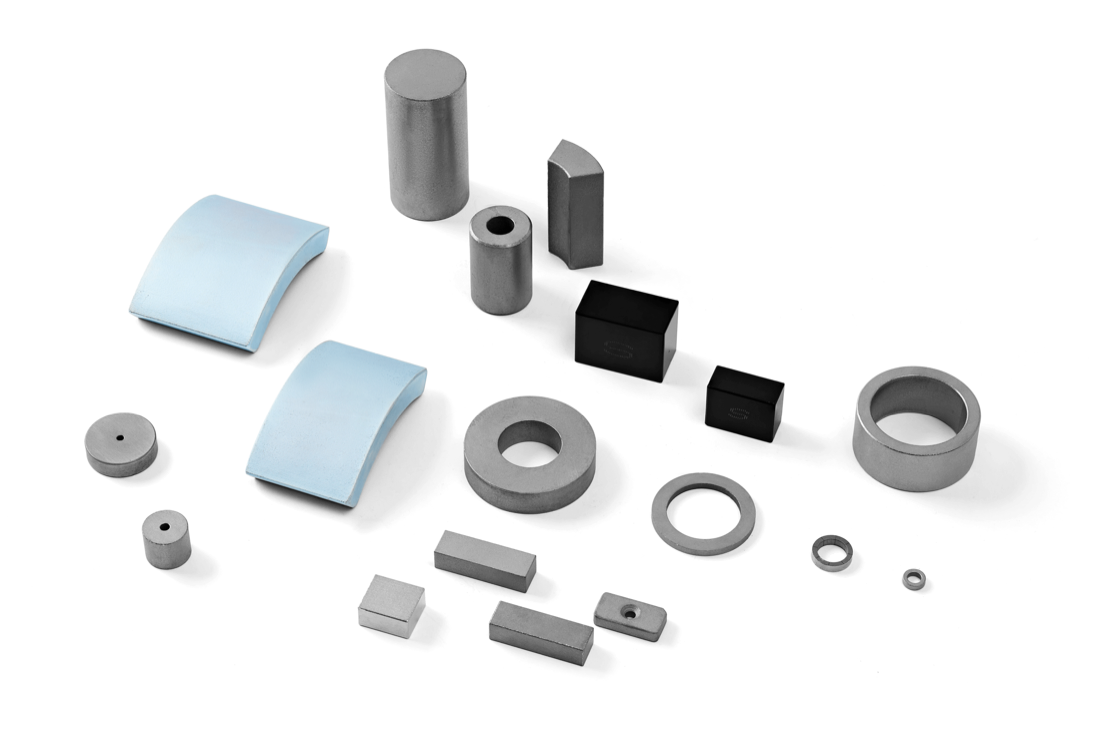 MENSINK Magnetics
›Samarium Cobalt (SmCo) Magnets
- Heat resistance up to 350 °C
- No corrosion — suitable for aggressive environments
- High magnetic performance
 MENSINK Magnetics
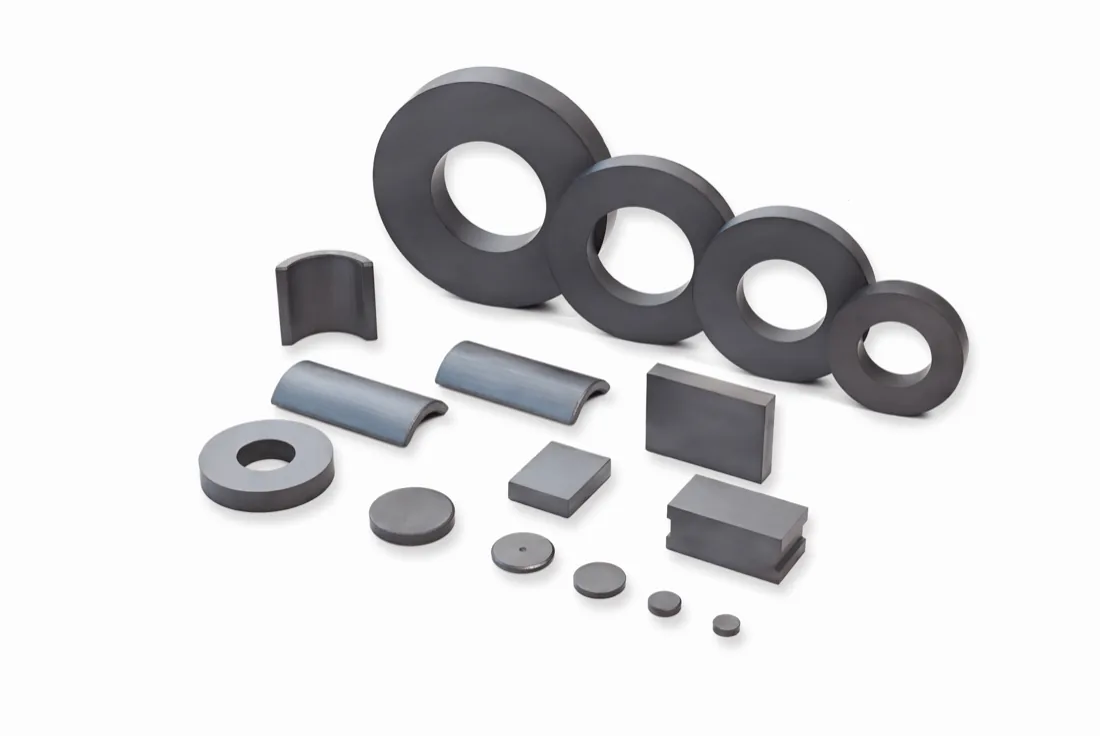
›Ferrite (Ceramic) Magnets
- Economical — low cost
- Natural rust/corrosion resistance
- High durability and stability
 MENSINK Magnetics
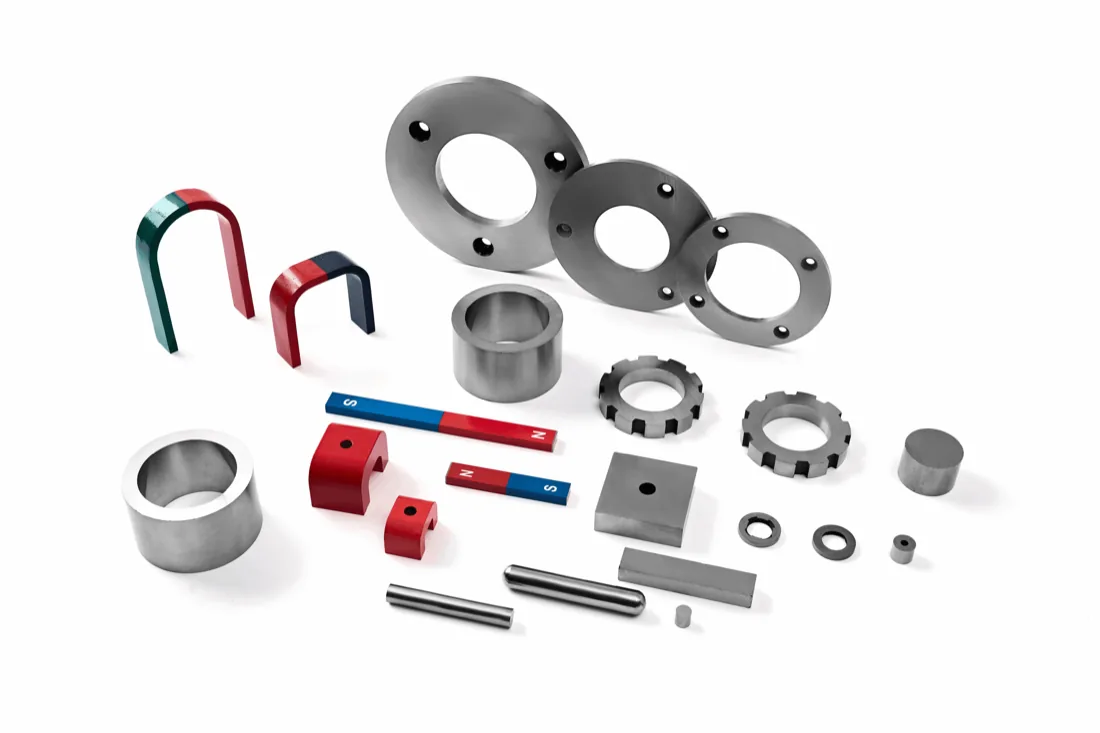
›AlNiCo Magnets
- Temperature stability up to 500 °C
- High machinability
- Linear magnetic properties
What Is a Permanent Magnet?
A permanent magnet is a magnet that keeps its magnetic field continuously once it has been magnetized. Unlike an electromagnet it needs no electrical supply to hold its strength; the magnetic field arises from the permanent alignment, at atomic level, of the magnetic regions (domains) within the material. The strength of the magnet is determined by the material composition and the production method.
Material types
- Neodymium (NdFeB) — the strongest magnet on the market; compact, high pull force.
- Samarium-Cobalt (SmCo) — excellent heat resistance, corrosion-free; ideal for high technology and aerospace.
- Ferrite (ceramic) — economical, rust-free; for applications requiring a low magnetic force.
- AlNiCo — high temperature stability and linear magnetic properties.
- Bonded magnets — flexible and easily shaped; for precision component and sensor assemblies.
- Hot-pressed magnets — high density and precise dimensions; for motors and drive systems.
Shapes
They are offered in countless geometries such as disc, block, ring, arc (segment), rod/bar and half-ring. Each shape affects the distribution of the magnetic field and is chosen according to the magnetic profile the application requires: disc (motor/sensor/holding), block (surface mounting), ring (rotation/coupling/Halbach arrays), arc (motor rotor/stator), rod (control/filter systems).
Magnetization directions
The magnetization direction determines the orientation of the magnetic field and is of great importance in design and assembly:
- Axial: the north and south poles face each other on the flat ends of the magnet; common in disc and ring magnets.
- Diametral: the poles face each other across the diameter; frequently used in rotation sensors.
- Radial: the magnetic lines run from the inside outwards; ideal for ring magnets in motors and couplings.
- Multipole: several north-south poles on a single face; in Halbach arrays and encoder systems.
The correct magnetization direction is essential to obtain the intended magnetic field profile and for the magnet to work optimally within the application.