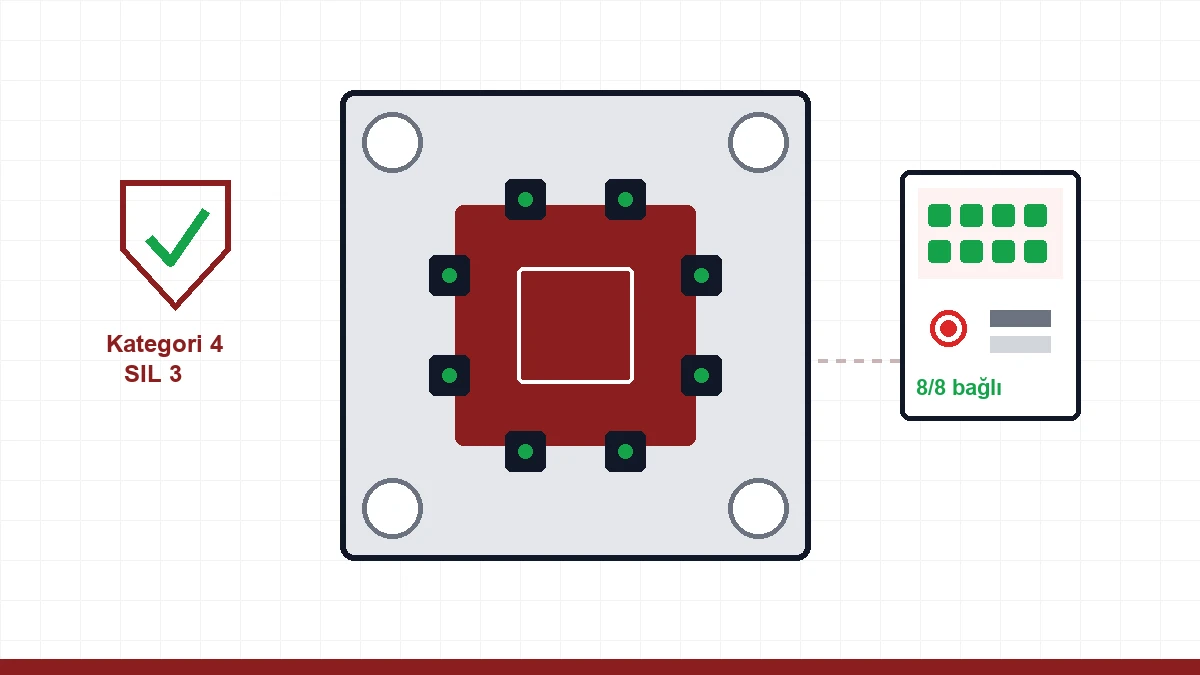
In the catalog a quick mold clamping system takes two pages: clamps, pump, control panel. In a real project, however, the same system means a technical specification, a safety architecture, a machine integration and months of engineering correspondence. In this article we describe, step by step, the hydraulic quick mold change (QMC) project we carried out for a 3200 ton injection molding press of a large manufacturer in Turkey — without names or commercial details. The aim is to show businesses considering a similar investment the side of the project that does not appear in the catalog.
The starting point: the cost of bolts at 3200 tons
At this tonnage molds weigh tens of tons; conventional bolt-and-clamp mounting is a shift of hours at the crane, most of it spent bent over inside the press. As important as the time is consistency: the torque of every connection depends on the operator, and a single loose clamp can go as far as the mold slipping in the middle of production. The project aimed to remove both of these costs by installing an eight-point hydraulic wedge clamp system (EAS MOD series) on the fixed and moving platens.
The corporate specification: not just "a clamp that holds"
The document that shaped the character of the project was the customer's written technical specification. The equipment specifications of large corporate buyers go far beyond a standard product quotation — a summary of what was required in this project:
| Heading | Requirement in the specification |
|---|---|
| Safety architecture | Category 4 / PL e according to ISO 13849-1, SIL 3 according to IEC 61508 |
| Control platform | Corporate standard PLC + separate safety PLC, PROFIsafe communication |
| Sensors | Dual-channel position monitoring on every clamp (a single sensor is not accepted) |
| Operator interface | Touchscreen HMI, menus in Turkish |
| Visualization | The clamped/unclamped status of each clamp separately on screen; pressure both digitally on screen and on analog gauges on the platens |
| Certification | CE on all components; national standards for piping, cabling and ducting work; ISO 9001 for the manufacturer and the installer |
The lesson here is this: the safety category and control platform requirements mean that the system's standard controls have to be redesigned from the ground up. Instead of saying "we roughly comply" at the quotation stage, marking every item one by one as compliant / alternative proposed / out of scope and running revision rounds with the manufacturer was the most labor-intensive part of the project — and it pulled the surprises forward from installation day to the quotation table.
Safety architecture: the mold must never fall under any circumstances
In practice, Category 4 / SIL 3 means that a single fault can never lead to a hazardous situation, and that the fault itself is also detected. In mold clamping this philosophy turns into a few concrete mechanisms:
- If the power fails, a hose bursts or the pressure drops, the mold must continue to be held. The self-locking geometry of the wedge clamp and the holding valve on each clamp guarantee this mechanically; pressure monitoring links any drop immediately to an alarm and a machine stop.
- Crane interlock: if the hook plug is not inserted, the system neither clamps nor unclamps. The rule is simple — if a clamp is released while the mold is not hanging from the crane, the result is a disaster; this possibility is entrusted not to software but to a physical interlock.
- Mode lock: a mold change can only be made in setup mode; no clamp can be released while in automatic cycle. The setup screen is password-protected and locks itself when idle.
Handshake with the machine: the language of dry contacts
A QMC is not an independent island; it talks continuously with the press control. In this project the interface was set up with three basic groups of signals: if any clamp is unclamped, the machine cannot enter the cycle; if all clamps are clamped, a "ready to run" confirmation is given; the emergency stop chains of the systems are linked to each other. A pressure drop in one clamp triggers the press's emergency stop. Defining this handshake pin by pin — which signal from which contact, with which logic — requires coordination between the machine manufacturer, the system manufacturer and the plant; we described the general framework of machine communication in our EUROMAP article.
Items that are not in the catalog
Most of the items that filled the quotation revisions of the project were not the equipment itself but what surrounds it:
- Handing over the system's 2D/3D CAD data to the plant at delivery
- Operating manual in Turkish, maintenance instructions, lubrication charts, exploded-view parts drawings
- A commitment to keep spare parts for 10 years — on condition that critical parts are stocked close to the plant; the manufacturer and the Turkey representative can only meet this item together
- An offer for a periodic maintenance program after commissioning
- Thirty percent spare space inside the cabinet for future expansion, end-to-end labeled cabling, burst protection sleeves and labels on the hoses
This list also describes the real role of the distributor: not selling the product, but translating the two sides' specifications into each other and taking on ten-year commitments backed by local infrastructure.
The customer's homework: mold back plates
The jaw of a hydraulic clamp needs a standard clamping edge. If the mold park has accumulated in different sizes over the years, standardizing the back plates comes onto the agenda before the system — this is the item most often skipped and left out of the budget in QMC projects. No promise of mold change time given without an inventory of the mold park is realistic.
Lessons that carry over from this project
1. Ask for the specification at the quotation stage and make an item-by-item compliance table; the phrase "generally compliant" becomes expensive in the middle of the project. 2. Fix the safety category at the start of the job — converting the control architecture to Category 4 afterwards is harder than building it that way from the beginning. 3. Clarify the machine interface at pin level in a single three-party meeting (machine manufacturer + system manufacturer + plant). 4. Write the acceptance criteria in measurable form: such as a target in seconds for the clamping and unclamping cycle, and position and pressure indication on every clamp. 5. Make standardization of the mold back plates item zero of the project.
You can find a comparison of the magnetic and hydraulic options for quick mold clamping in our mold change guide, and the product family on our mold clamping page. If you are evaluating a project of similar scale, talking to our technical team at the specification stage shortens every step that follows.