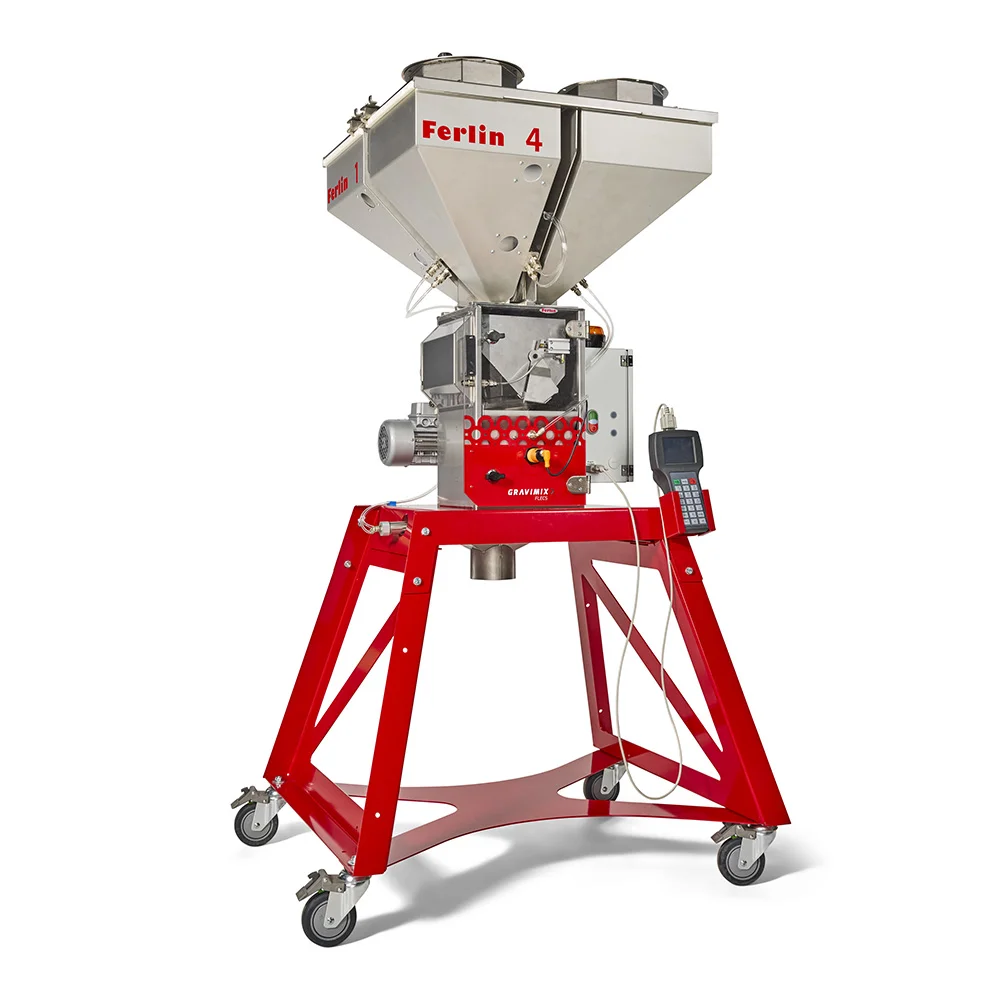
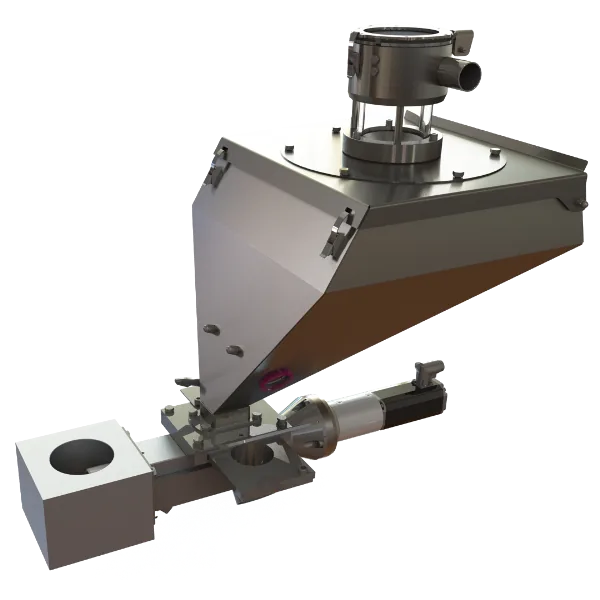
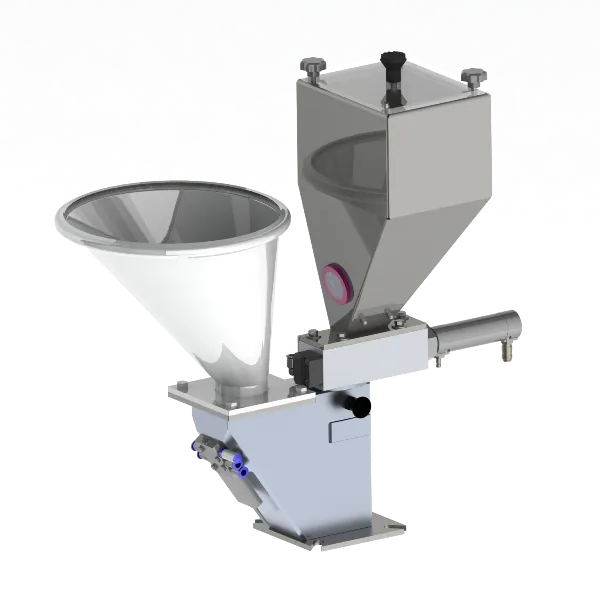
Gravimetric and volumetric dosers for color and additive masterbatch — selection, installation and savings
A masterbatch doser is a unit mounted on the feed throat of an injection molding machine or an extruder that adds color or additive masterbatch to the base resin at a set ratio. Masterbatch is the smallest share of the blend, but it is the most expensive component per kilogram; the doser therefore has two jobs: to hold the ratio on every shot and to keep that share no larger than necessary.
1. Shade variation. The ratio drifts unnoticed; the part comes out lighter on one shift and darker on the next. In units that measure by volume, the cause is usually a change in the pellet size of the masterbatch lot or in the fill level of the hopper. 2. Overconsumption. For fear of missing the shade, the recipe ratio is rounded up on the shop floor. The difference is a cost item nobody sees but that is paid every month. 3. Segregation. Material premixed in the bag or at a remote station separates by pellet size, even while it is being conveyed; the blend that reaches the screw is no longer the blend in the recipe. A doser that adds the masterbatch at the feed throat, just before it enters the screw, eliminates this problem by design.
The short rule is this: for a job with a single color, a fixed masterbatch supplier and no need for consumption records, a volumetric unit is sufficient and economical. Jobs with more than one color or additive, regrind in the blend, or a customer who requires lot-based records call for a gravimetric doser that measures by weight. A comparison table of the two methods and the capacities of all series are on our plastic raw material dosing systems page.
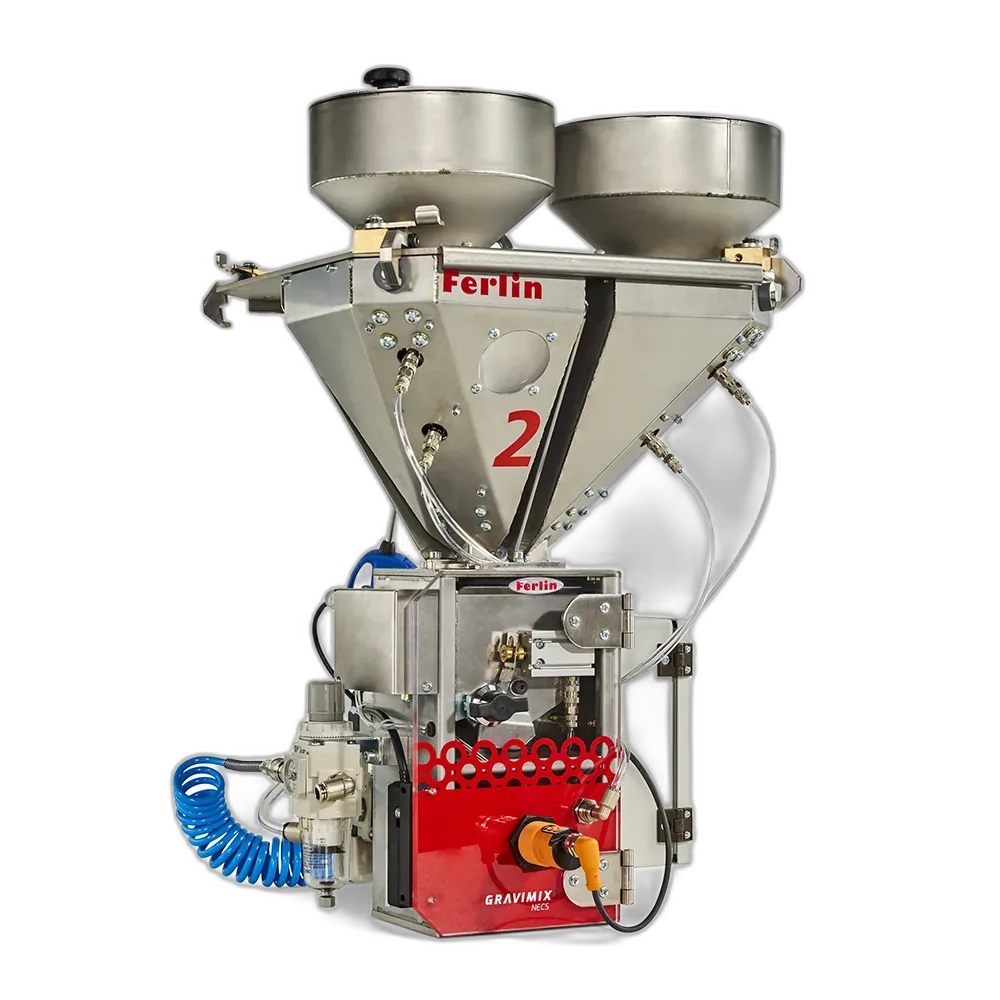
When selecting a doser, two throughputs are considered together: the machine's hourly material consumption and the masterbatch share within it. On a machine processing 40 kg per hour, masterbatch added at 2% amounts to only 0.8 kg per hour. The lower the ratio, the more it matters how evenly the doser delivers small quantities; for additives below 0.5%, micro-dosing units or a belt-type gravimetric doser are preferred. You can find the masterbatch throughput for your own machine with the masterbatch consumption calculator.
A machine processing 30 kg per hour and running 5,000 hours a year consumes 150,000 kg of material a year. If the recipe needs 2.6% but 3% is added on the shop floor, the difference of 0.4 percentage points amounts to 600 kg of masterbatch a year. You can see this difference with your own ratios and masterbatch price in the masterbatch savings calculator.
For color masterbatch the ratio is usually in the 1–4% range and is handled by standard units. For additives at 0.5% and below, micro-dosing units or a belt-type gravimetric doser give a more even result. The exact range depends on the machine's consumption and the selected model.
Yes. The doser is mounted on the feed throat with a suitable adapter flange. For a quote, simply send us the size of the feed throat, the clearance above the machine and the hourly consumption.
The dosers on this page are designed for pelletized masterbatch. Liquid color requires a different, pump-based dosing system.
It depends on masterbatch consumption and on the excess ratio being added on the shop floor today. In high-ratio color dosing and in jobs that use expensive masterbatch, payback can come within a few months; you can check it with your own values in the calculator.
Teknik Part is the Turkey representative of Ferlin GRAVIMIX and Digicolor dosers. Send us your machine's hourly consumption, masterbatch ratios and number of components; together we will plan the right model, mounting flange and calibration.