Plastic Raw Material Dosing Systems Products(9)
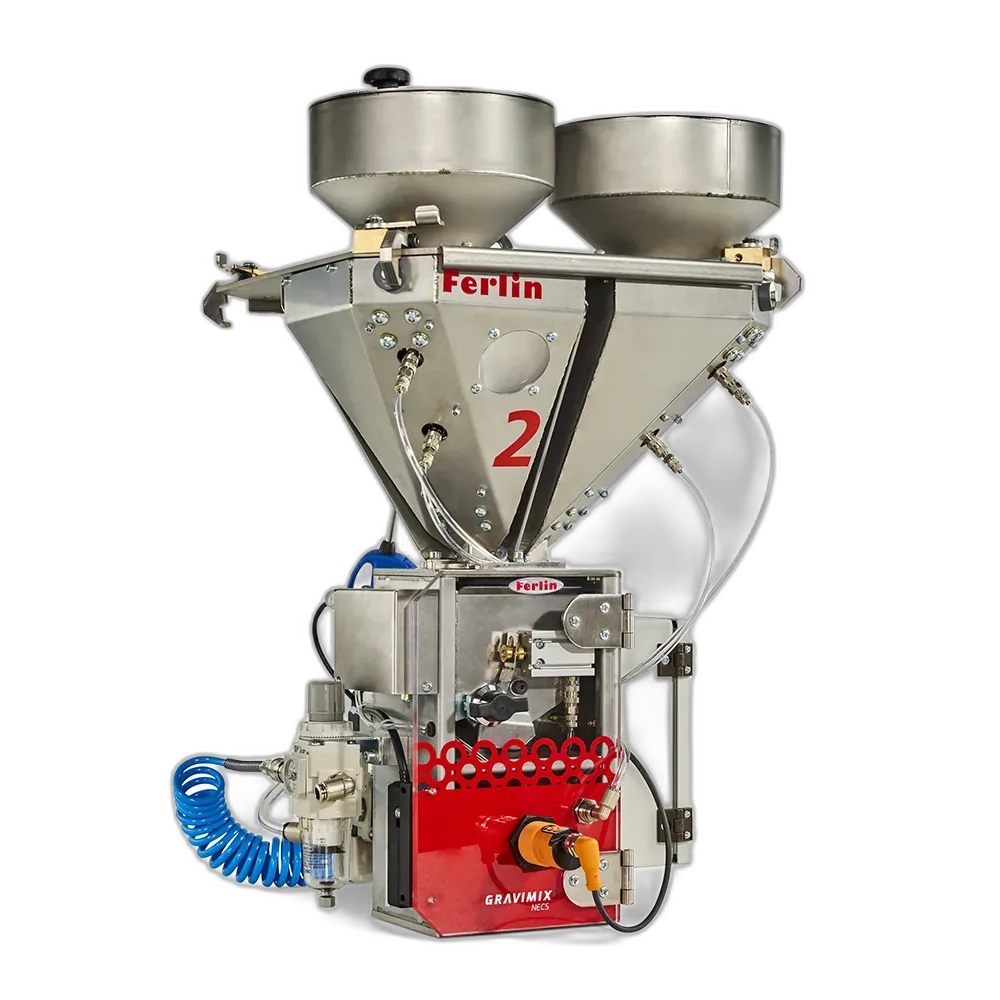 Ferlin Plastics Automation
›GRAVIMIX NECS
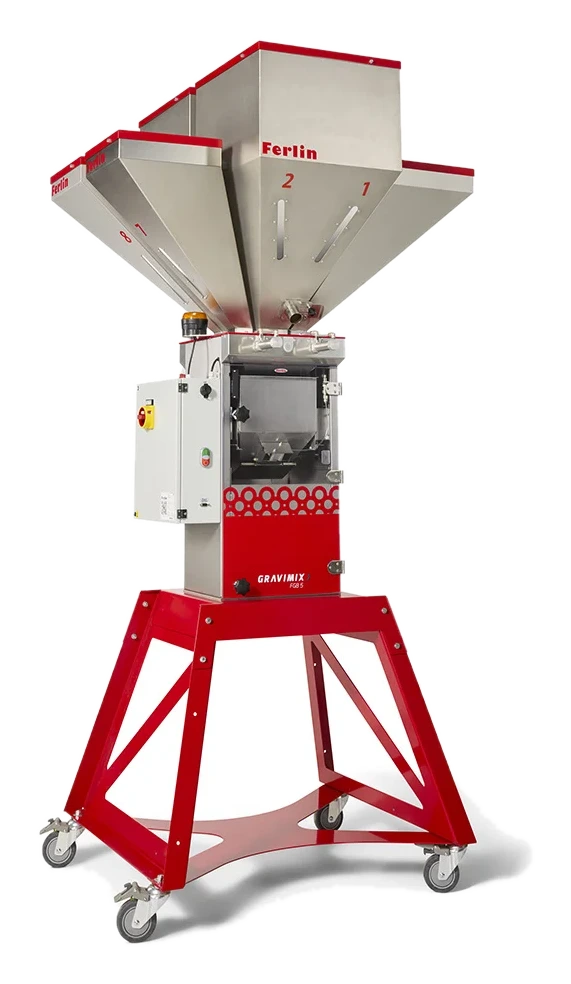 Ferlin Plastics Automation
›GRAVIMIX FGB5
 Ferlin Plastics Automation
›Ferlin One
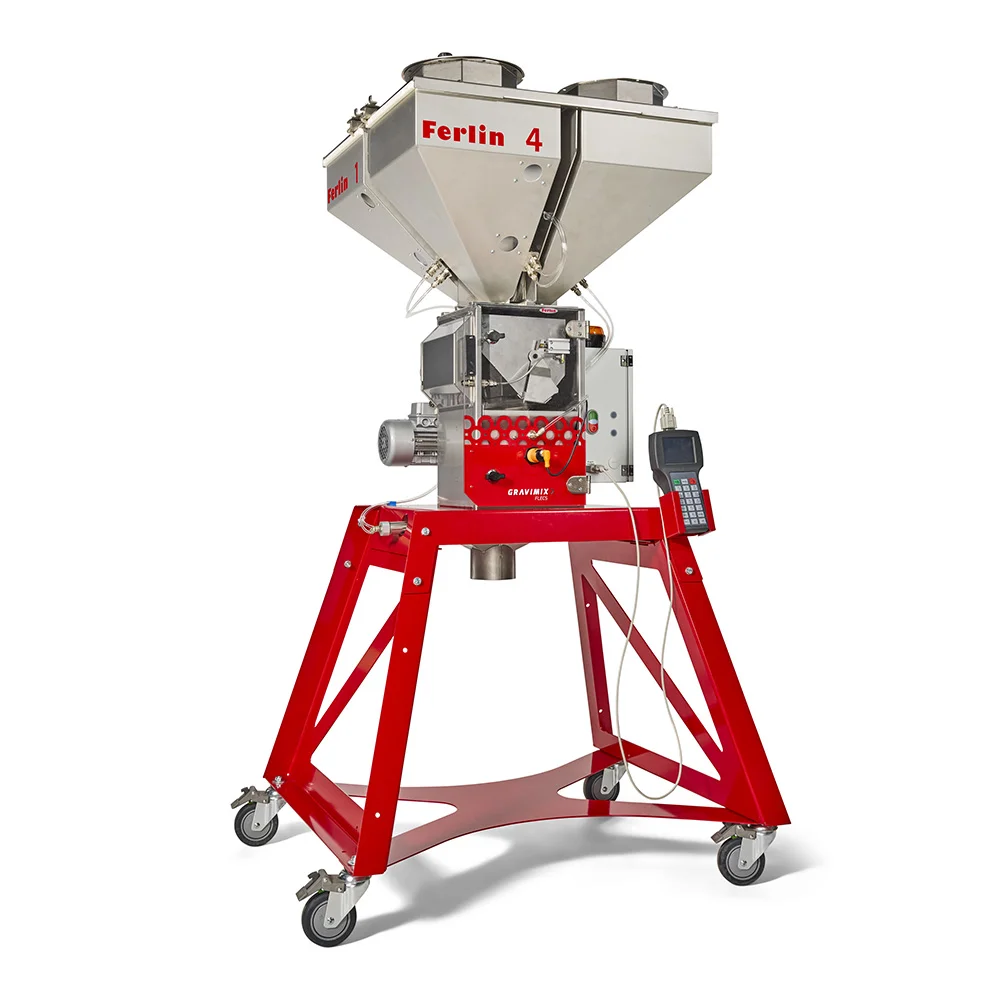 Ferlin Plastics Automation
›GRAVIMIX FLECS
 Ferlin Plastics Automation
›GRAVIMIX FGB10
 Ferlin Plastics Automation
›GRAVIMIX FGB25
 Ferlin Plastics Automation
›GRAVIMIX MECS
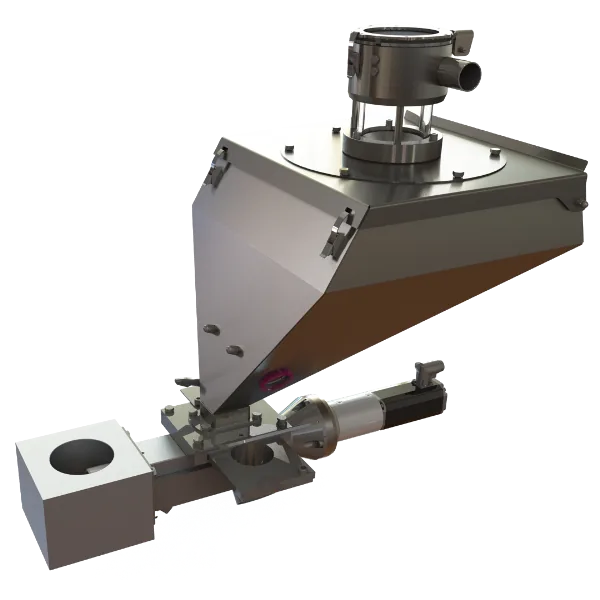 DIGICOLOR
›Volumetric Dosing Systems
What is plastic raw material dosing?
Plastic raw material dosing means adding color masterbatch, an additive or regrind to the base granulate at a set ratio, and at the same ratio in every shot. The device that does this job is called a doser (dosing unit). The doser usually sits directly above the feed throat of the injection molding machine or the extruder and prepares the mix of the material entering the screw right there.
A deviation of less than one percent in the ratio looks insignificant at first glance. Yet it directly changes the color shade, the work of the additive (UV protection, antistatic, slip effect) and the masterbatch bill. In a mix prepared by hand in the bag, the ratio shifts from batch to batch; a doser is used to eliminate this variation.
Which materials are dosed?
- Color masterbatch: the ratio is usually in the 1 – 4% range. Because it is the most expensive component of the mix, any excess is a direct cost.
- Additive masterbatches: such as UV stabilizer, antistatic, slip agent and flame retardant; they are generally added at low and precise ratios.
- Regrind: material ground from runners, flash and rejected parts. Its bulk density is lower than that of the granulate and changes from batch to batch. For details, see the guide to using regrind.
- Second raw material: blending two different granulates at a set ratio (for example two PP grades with different melt flow indexes).
Gravimetric or volumetric?
Dosers hold the ratio in two different ways: by volume or by weight. The choice depends on how variable the material in the mix is and how tightly the ratio has to be held.
| Volumetric doser | Gravimetric doser | |
|---|---|---|
| What does it measure? | Volume (revolutions of the dosing screw) | Weight (weighing with a load cell) |
| If the bulk density changes | The ratio drifts | The ratio stays constant |
| Calibration | Repeated whenever the material changes | The unit corrects continuously by weighing |
| Number of components | Usually 1 – 2 | Up to 8, depending on the series |
| Consumption record | None | In kilograms, per batch |
| Initial investment | Low | Higher; paid back through masterbatch saving |
| Suitable job | Single color, consistent granulate, low ratio | Multiple components, regrind, expensive masterbatch, quality records |
On a machine that adds a single color masterbatch to a consistent granulate and where no consumption record is required, a volumetric unit is sufficient: volumetric dosing systems. If regrind goes into the mix, if there is more than one component, or if your customer asks for a consumption record per batch, measurement by weight is needed: gravimetric dosing systems. A detailed comparison of the two methods is in our article on the difference between gravimetric and volumetric dosing.
Which doser suits which capacity?
| Series | Method | Capacity | Components | Where it is used |
|---|---|---|---|---|
| Ferlin ONE | Gravimetric (belt) | 0.1 – 25 kg/h | 1 | Low-ratio additive on a small machine |
| Digicolor DC-MICRO | Volumetric | Micro dosing | 1 – 2 | Very low-ratio additive |
| Digicolor DC-18 / DC-38 | Volumetric | 16 / 70 kg/h | 1 | Single color masterbatch |
| GRAVIMIX NECS | Gravimetric | Up to 50 kg/h | Up to 4 | Color dosing on the machine |
| GRAVIMIX MECS | Gravimetric | Up to 170 kg/h | Up to 4, incl. regrind | Color and regrind together; high-temperature (HT) version |
| GRAVIMIX FLECS | Gravimetric | Up to 350 kg/h | Up to 6 | Multi-component blend |
| GRAVIMIX FGB5 | Gravimetric | Up to 1,100 kg/h | Up to 8 | Large injection molding and extrusion |
| GRAVIMIX FGB10 | Gravimetric | Up to 2,000 kg/h | Up to 7 | High-consumption lines |
| GRAVIMIX FGB25 | Gravimetric | Up to 3,210 kg/h | Up to 8 | Highest capacity |
The capacities refer to the largest model in each series. To choose the right model within a series, check the model table on the relevant page; size the doser not for the average consumption but for the machine's peak consumption.
Six questions to ask when choosing a doser
1. How many kilograms per hour does the machine process at most? This figure determines the capacity; a unit selected on the average value cannot keep up in intensive cycles. 2. How many components will be dosed? Base material, one color, one additive and regrind make four components. 3. What is the lowest ratio? At low ratios such as 0.5%, precision becomes more important than capacity. 4. Do you use regrind? If you do, gravimetric measurement is essential; a variable bulk density upsets the volumetric ratio. 5. Is a consumption record required? Automotive and packaging customers often ask for a record per batch. 6. Where will the doser sit? The size of the feed throat, the space above the machine, the connection to the central material conveying line and how the dried material will reach the doser should be planned from the start.
How does a doser pay for itself?
When mixing by hand, the operator rounds the ratio up against the risk of the shade not matching: a recipe that says 2% becomes 2.5% on the shop floor. On a machine processing 50 kg per hour and running 6,000 hours a year, this half-point margin means 1,500 kg of extra masterbatch a year. Because a gravimetric doser weighs the ratio, it leaves no need for a safety margin; the difference is a direct saving. To calculate with your own figures, you can use the masterbatch consumption and masterbatch saving calculators.
Installation, calibration and support
Teknik Part is the Turkish representative of Ferlin's GRAVIMIX gravimetric dosers and Digicolor volumetric units. We work through the whole process with you, from the capacity and component calculation to mounting on the machine, and from calibration to operator training and spare parts. Our GRAVIMIX user guide covers the commissioning steps and alarm messages; for questions from the shop floor you can reach us through our technical support page.
Frequently asked questions
What does the price of a plastic raw material dosing machine depend on?
The price is determined by the measuring method (volumetric or gravimetric), the capacity, the number of components and the level of control. For an accurate quotation, it is enough to send us the hourly consumption of the machine, the number of components, the ratios and whether you use regrind through our contact page.
Which machines can a doser be fitted to?
It is fitted to injection molding machines, extruders and blow molding machines with a connection flange that matches the feed throat. High-capacity gravimetric systems can also be installed as a separate station instead of on top of the machine.
Are dosing and mixing the same thing?
No. Most gravimetric systems weigh the components one after another, then blend them in a mixing chamber and feed them to the machine. A volumetric unit, on the other hand, feeds the additive directly into the feed throat; the mixing is completed in the machine's screw.
Why is gravimetric dosing recommended for regrind?
The particle size and bulk density of regrind change with every grinding. A unit that measures volume delivers material of a different weight at the same screw speed; a unit that weighs keeps the ratio constant by weight. For short definitions of the terms, see the glossary entry on dosing.