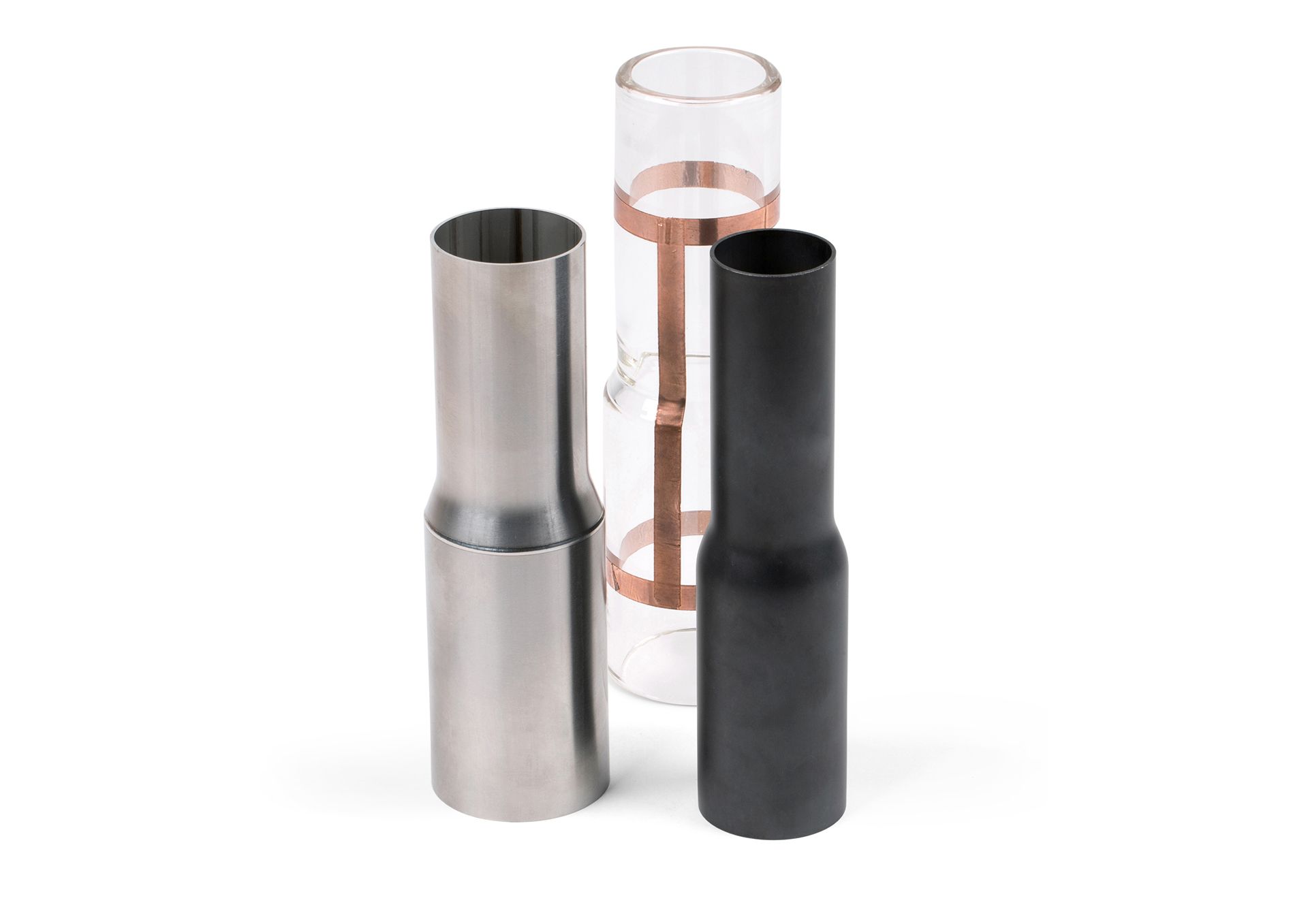
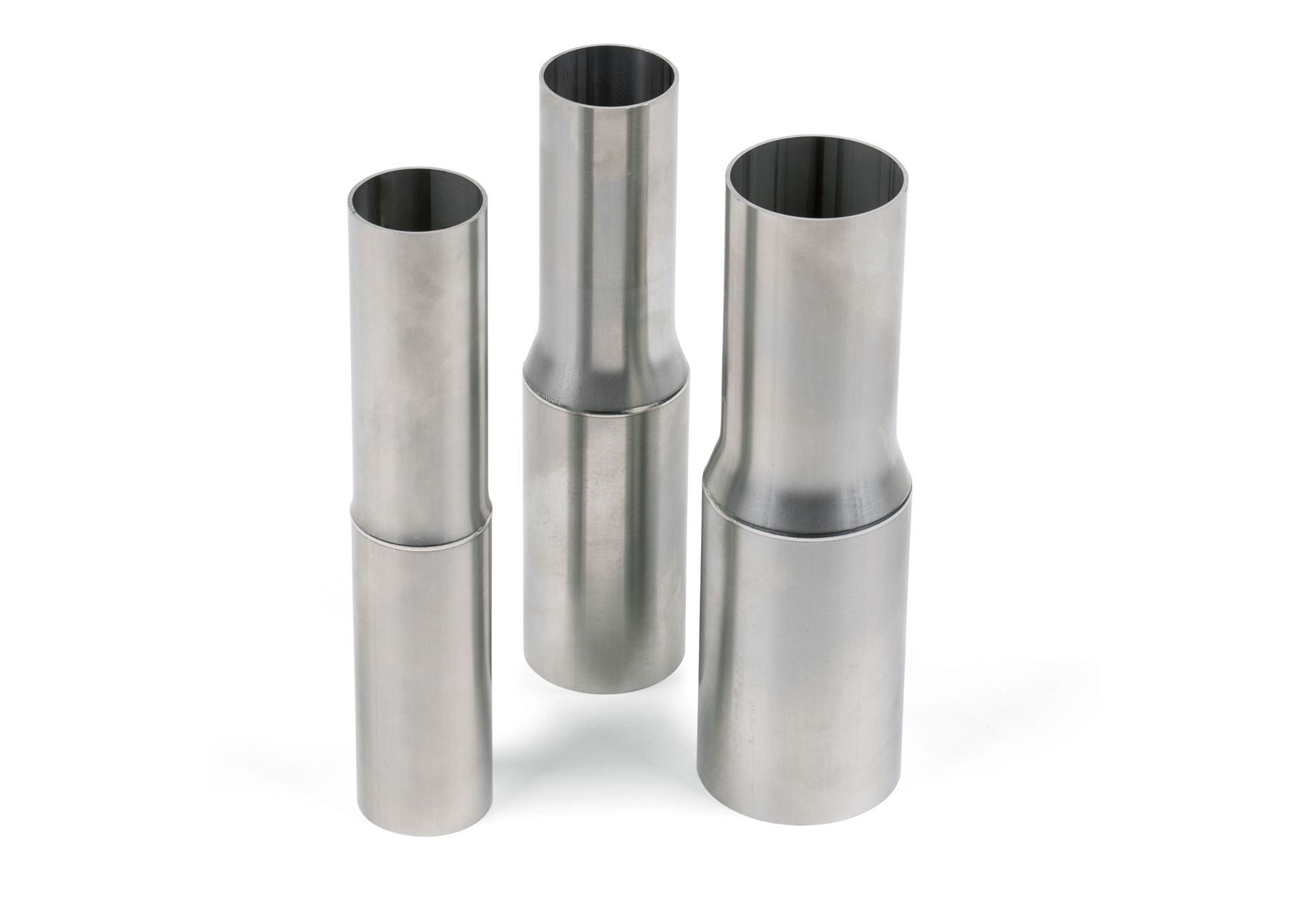
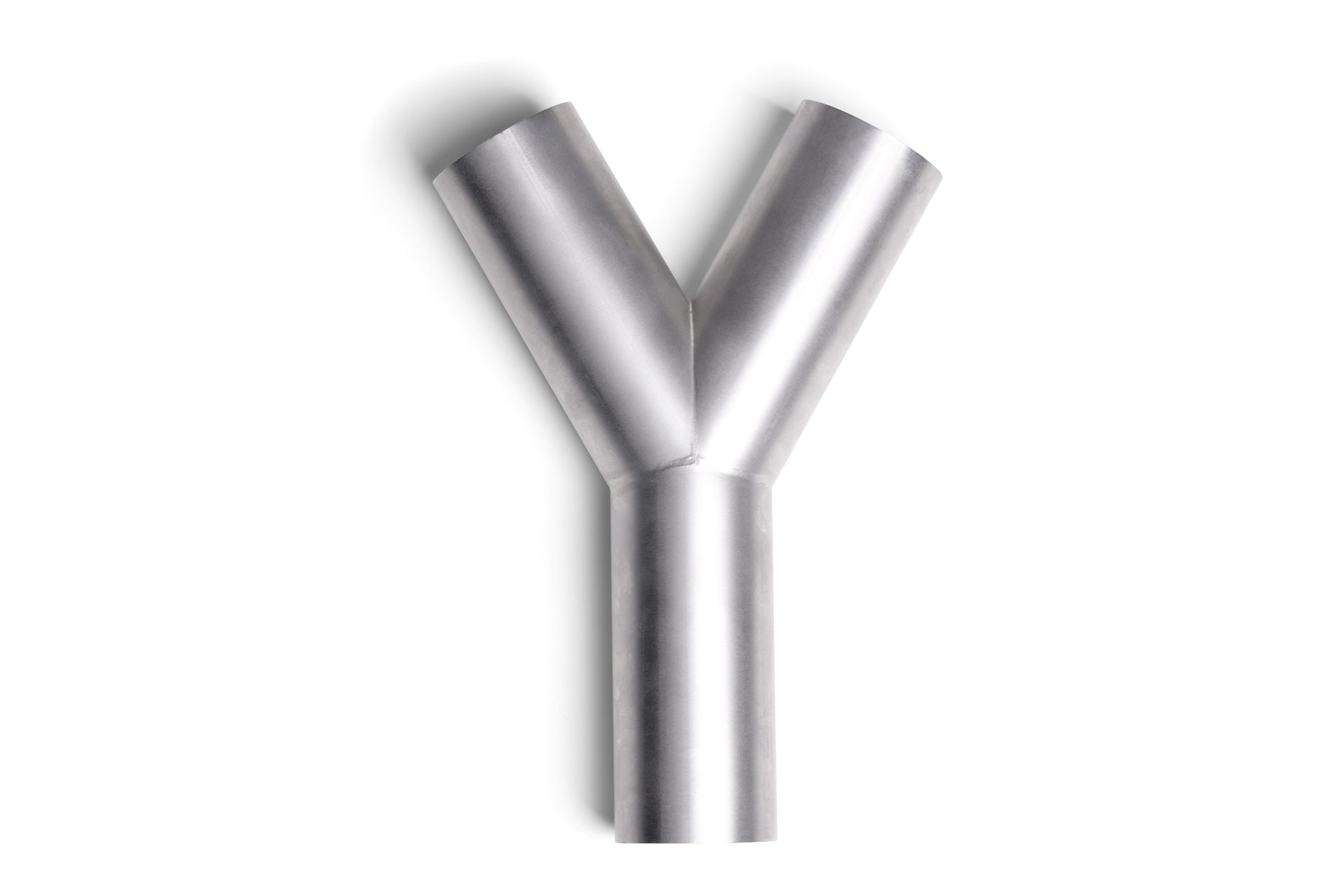
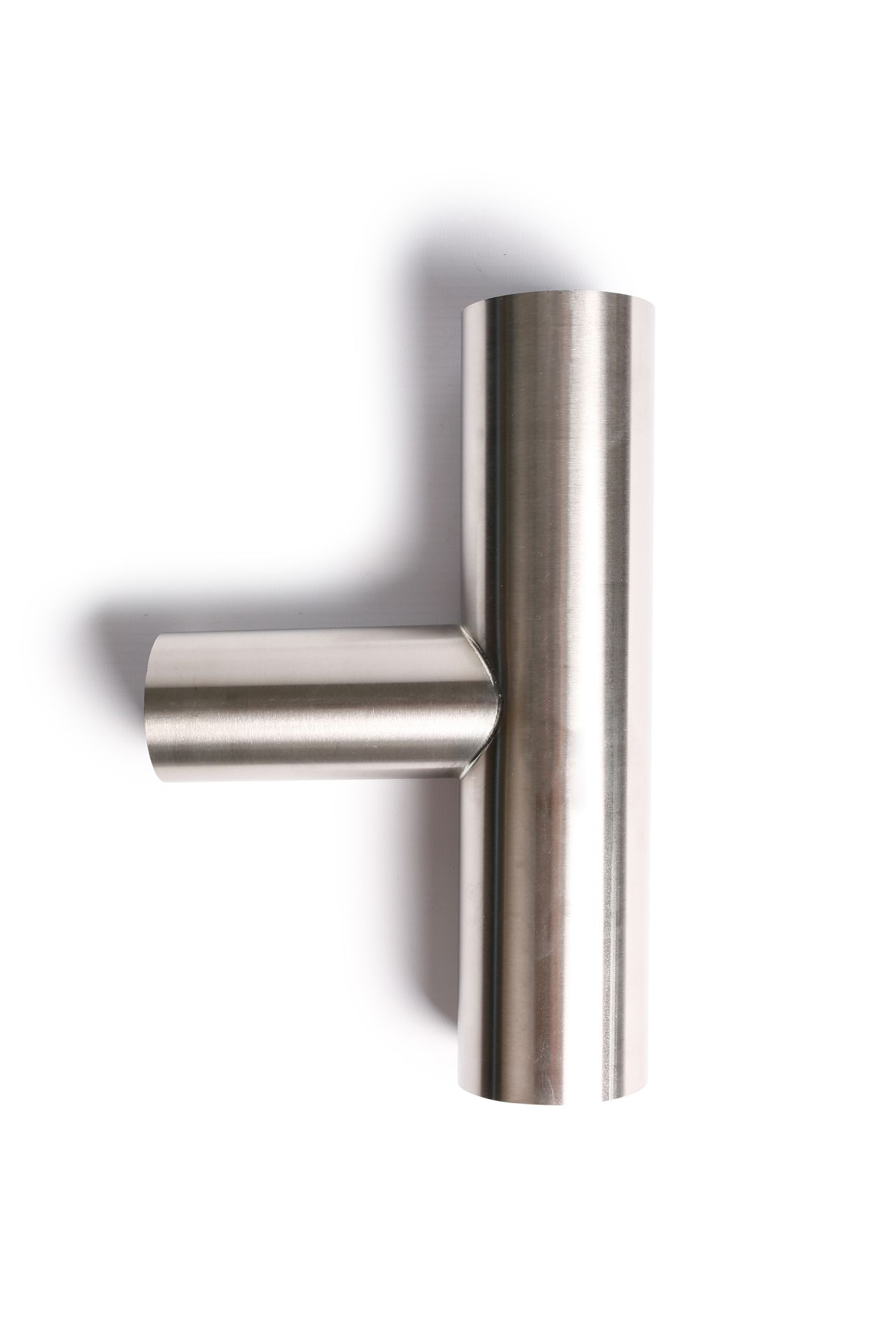
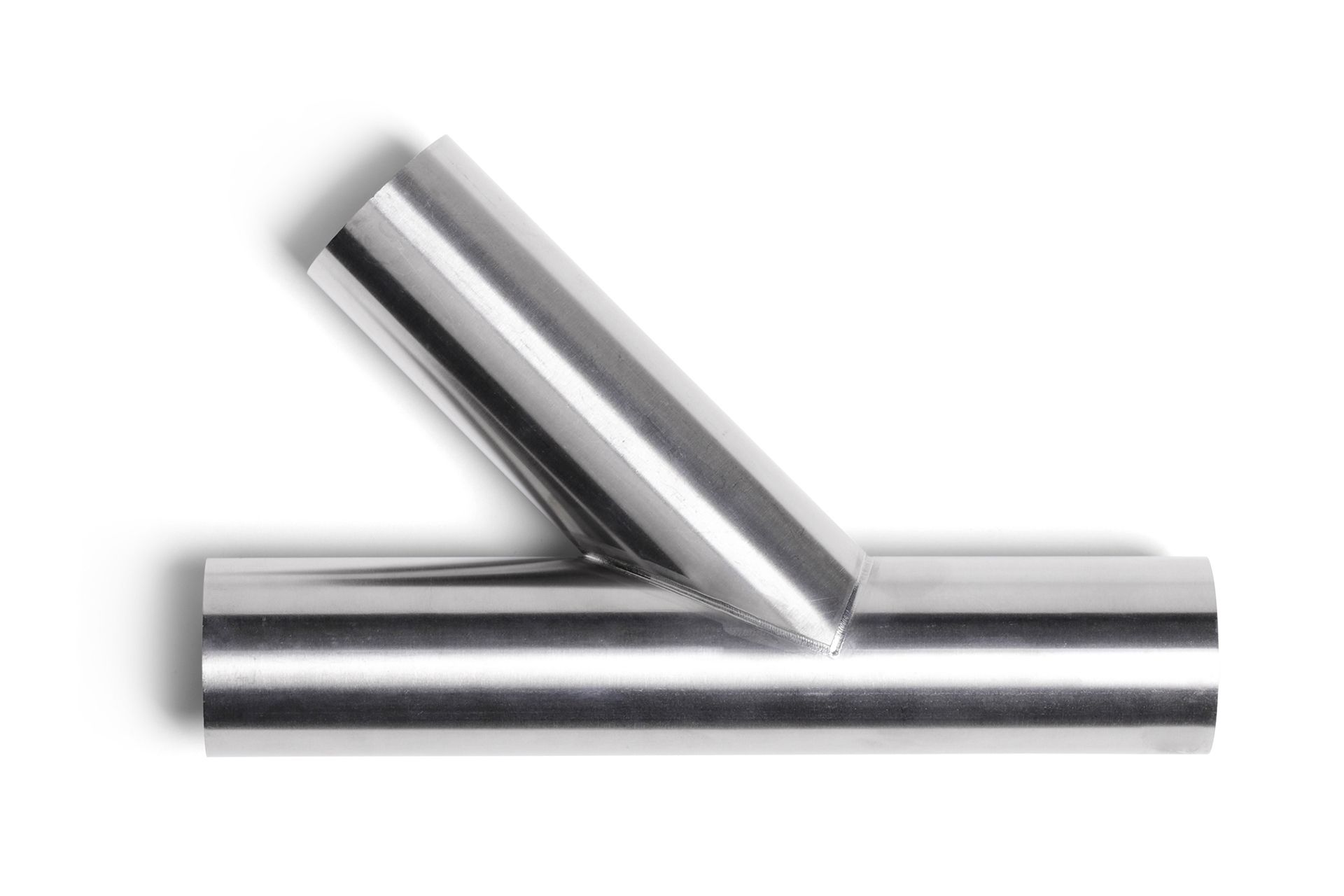
Glass fittings (Reducer, Abzweig/Y-connection, T-piece) are produced especially for the plastics processing industry. In these parts it is critically important that dimensional accuracy is guaranteed and that the glass is sufficiently stress relieved (relieved/annealed) — otherwise stress builds up in the glass and can lead to glass breakage.
Especially on lines conveying highly abrasive materials (e.g. glass fiber reinforced plastics), the use of glass fittings is recommended — thanks to its transparency, the material flow can be watched as well.
The reducer is the cone/adapter part used to connect tubes of two different diameters (a transition from a large diameter to a small one). There is a copper strip on the outer surface — it provides electrical conductivity (static discharge) when glass and stainless steel tubes are connected with special couplings. The available main diameters are Ø 50.0 / Ø 60.3 mm, and the reduced diameters Ø 40.0 / Ø 50.0 mm.
Being able to watch the change of diameter
The reducer is the point where the flow speed changes: when the diameter narrows the speed rises, and when it widens it falls. In both cases the behavior of the material changes and problems begin at this point. A glass reducer makes this transition observable; whether the material passes smoothly and whether there is build-up can be seen directly.
The risk of a speed drop
When the diameter widens, the conveying speed falls. If the speed drops below a certain threshold, the granulate stops being held in the air and settles on the bottom of the tube. This is the first stage of a blockage and, in a closed tube, is only noticed when the line stops. A transparent reducer shows early that settling has begun.
What glass parts require
Dimensional accuracy and a stress relieved (annealed) structure are mandatory for glass fittings. A dimensional deviation creates a step at the connection; a step is both a build-up and a wear point. Unannealed glass, on the other hand, cracks under temperature and installation stress.
Where it is not used
Routes with a risk of impact, forklift crossings and points of high vibration are not suitable for glass. In these areas a stainless or wear-resistant reducer is preferred; the options are listed on the pipe fittings page.