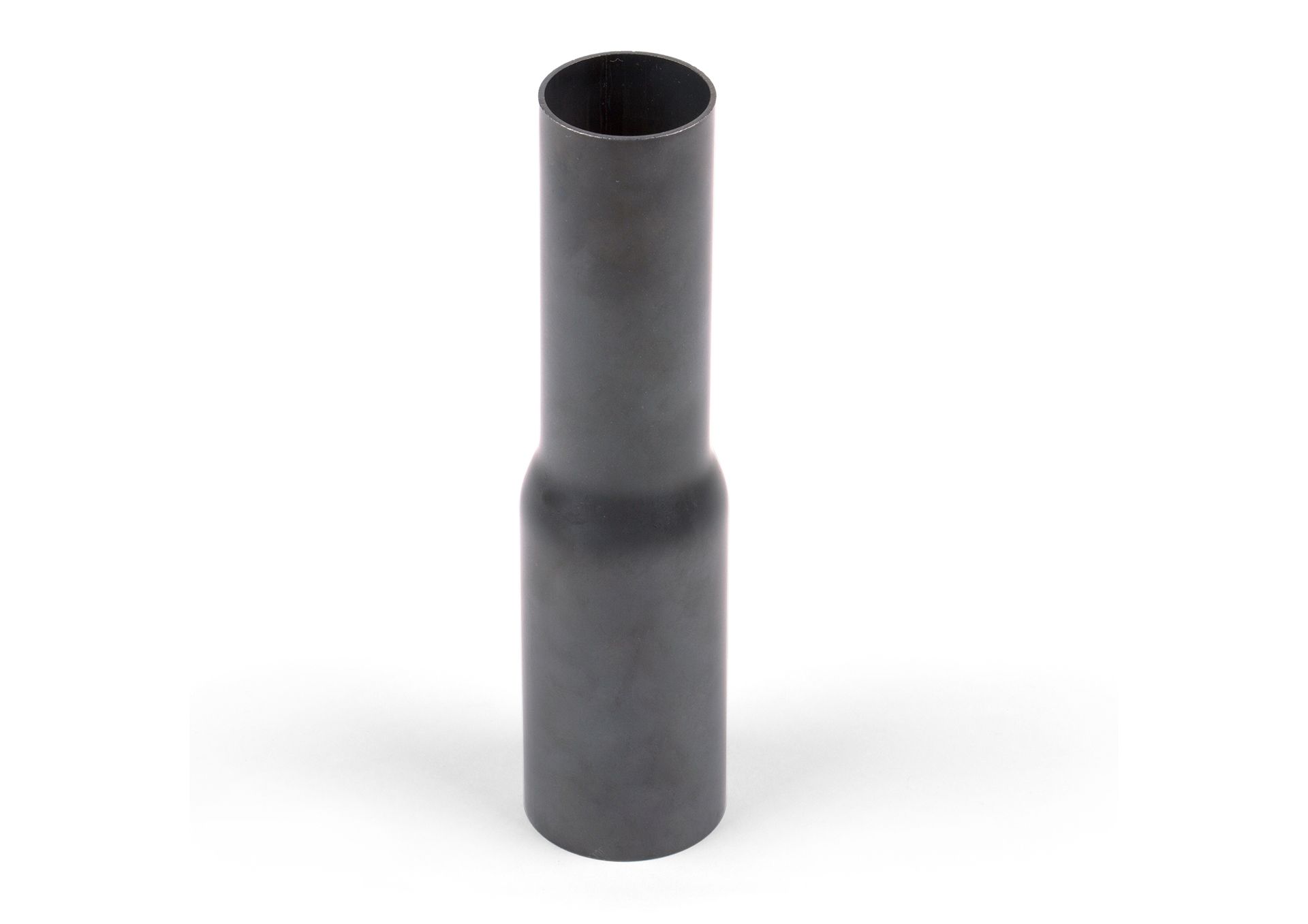
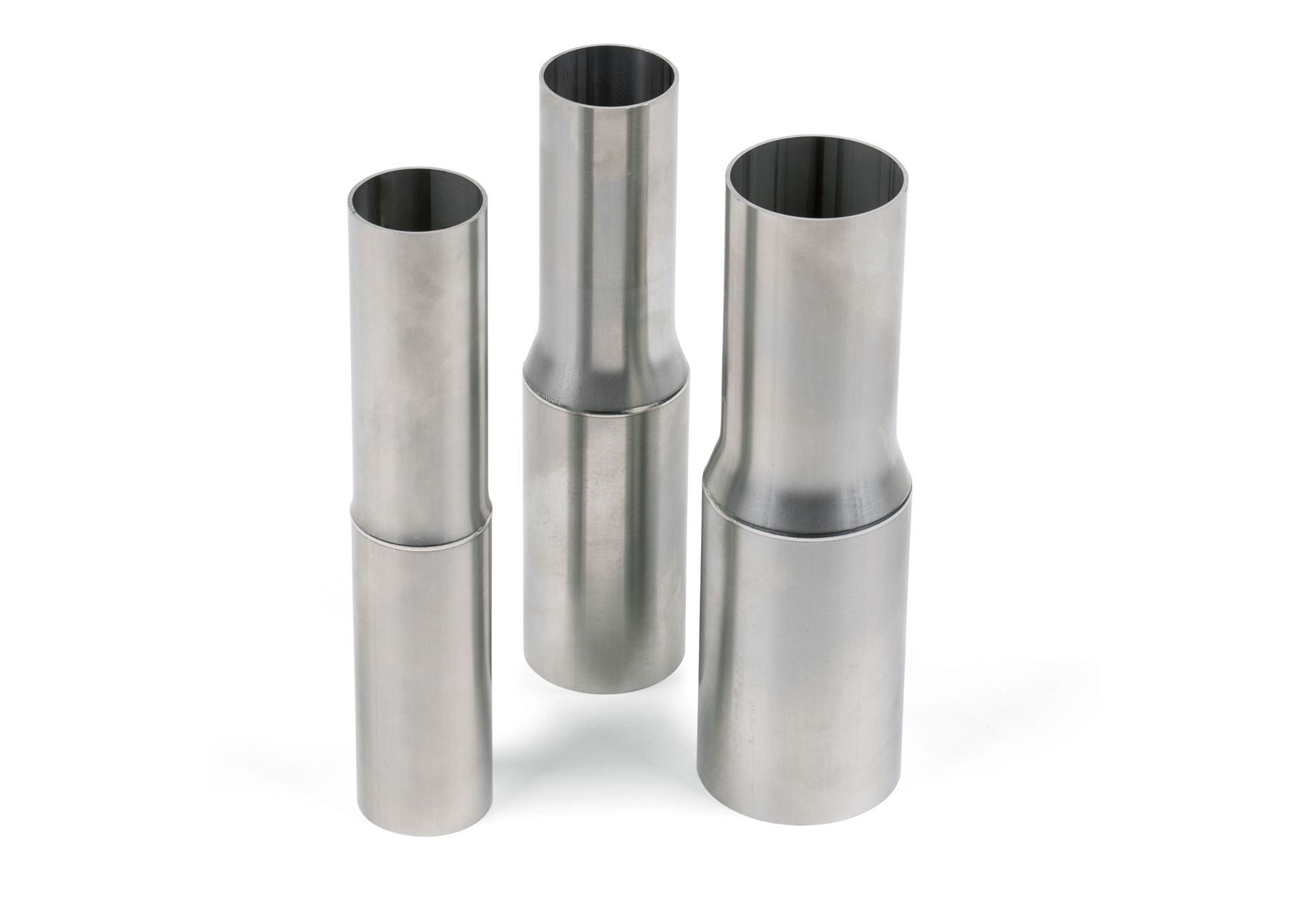
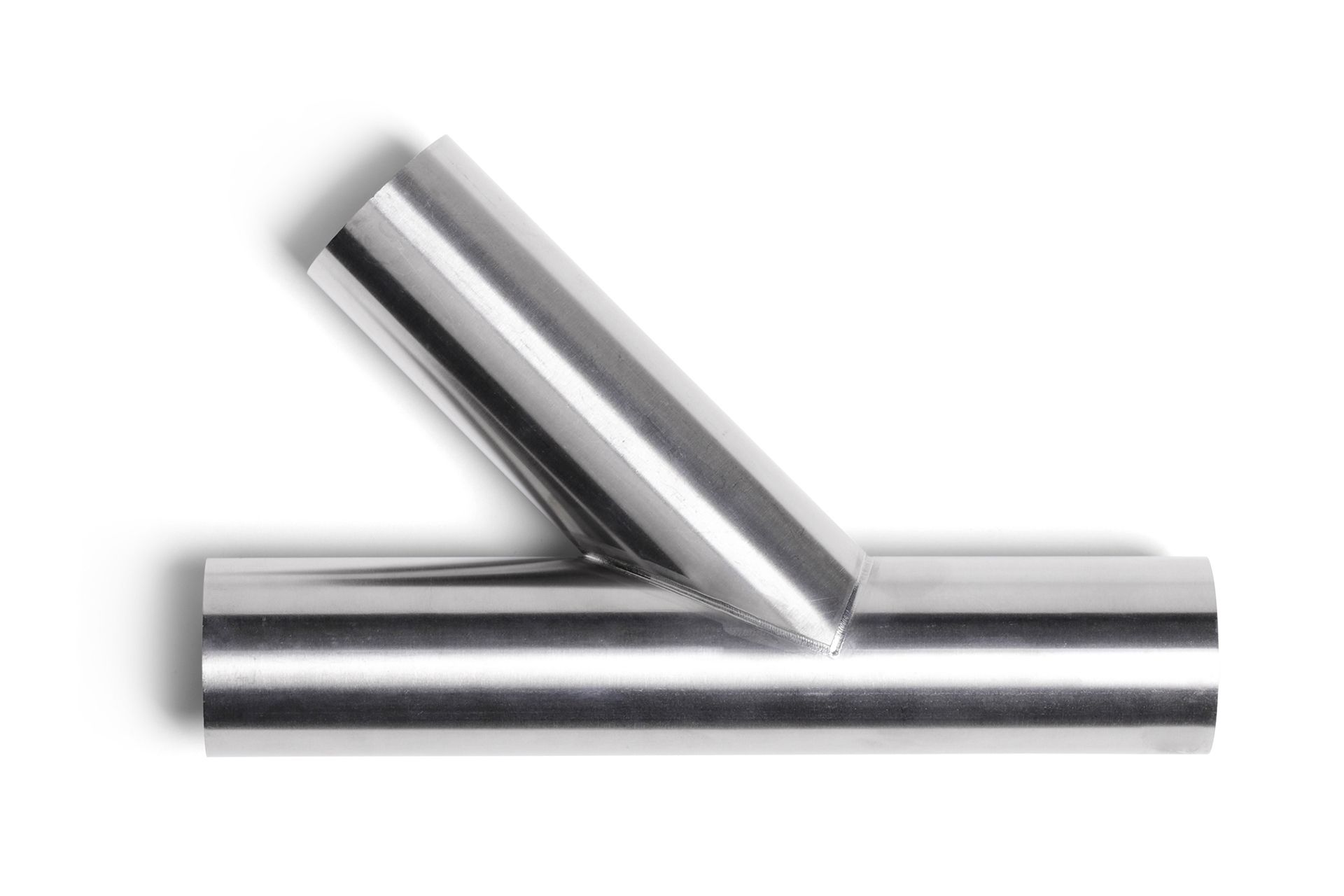
The wear-resistant reducer is used at points where the change of diameter raises the flow speed and accelerates wear. The area after the narrowing is one of the fastest wearing sections of the line with abrasive raw material.
The use of wear-resistant fittings is advantageous especially when they are used in assembly groups or where the use of glass fittings is not permitted.
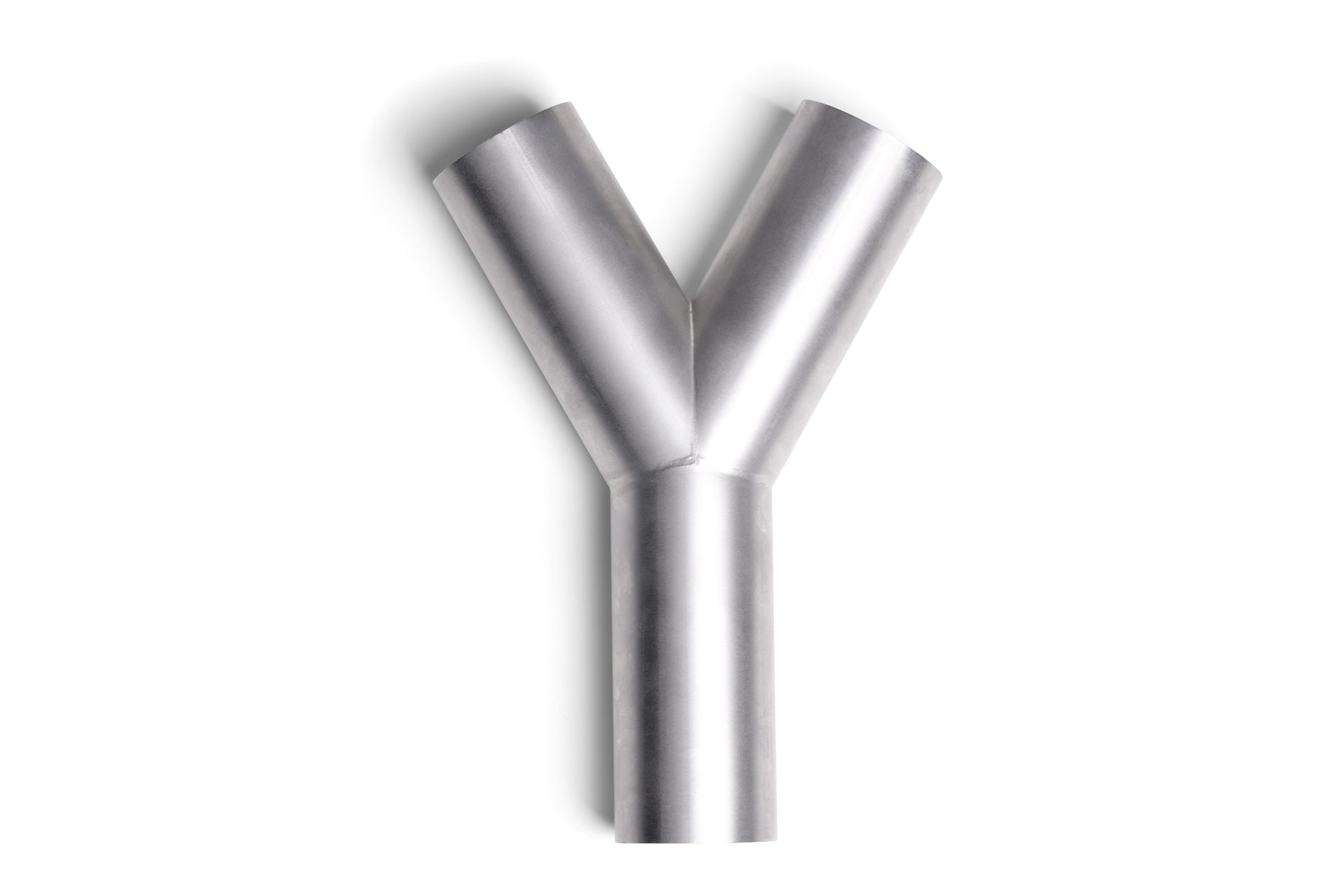
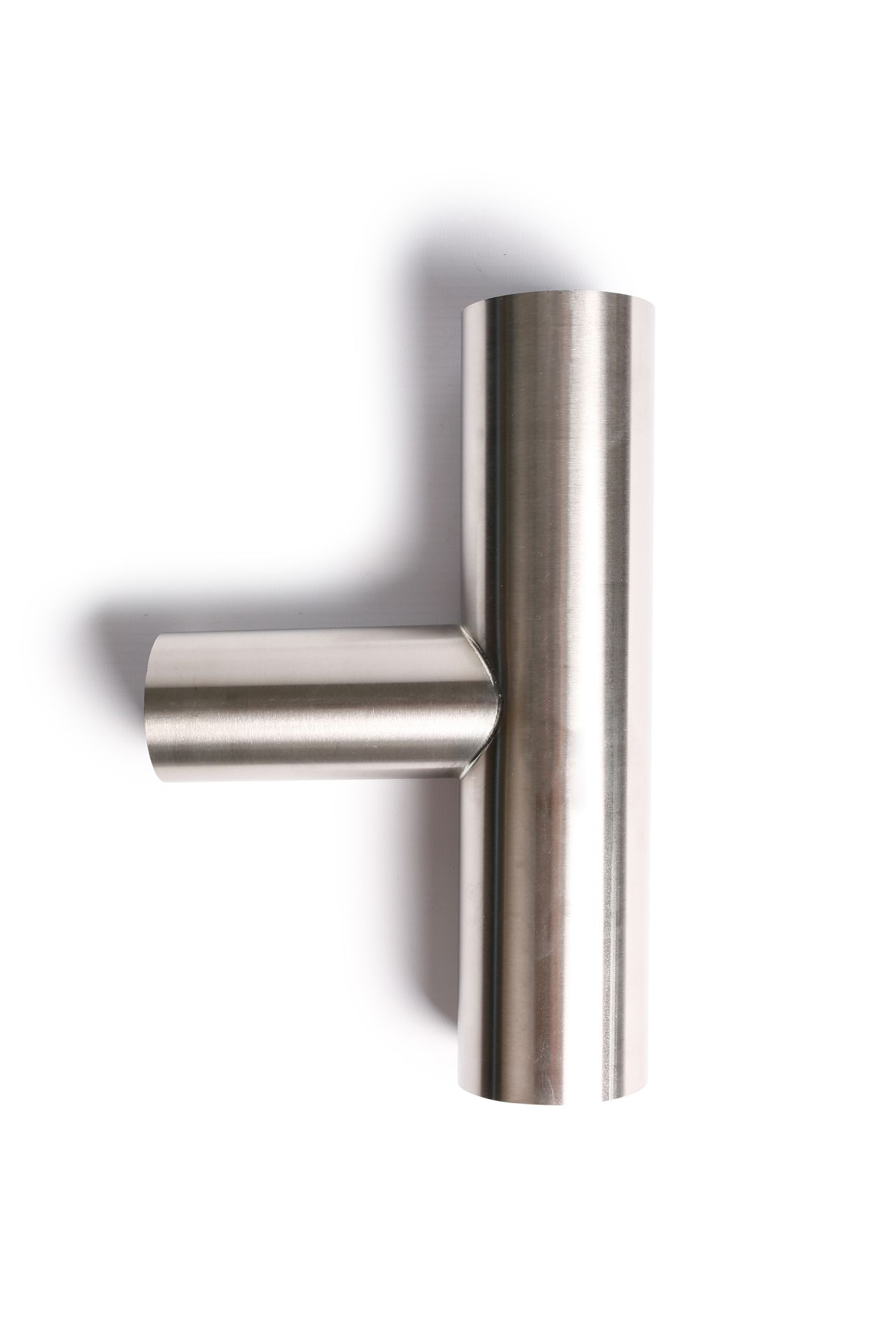
The wear-resistant reducer, T-piece and other fittings have a very high surface hardness and so prevent the conveyed material from abrading and wearing through the wall. Every application is of course customer-specific — the conveying speed, the conveyed material (fördermedium) and the installation space (bauraum) are the determining factors.
The reducer is the cone/adapter part used to connect tubes of two different diameters (a transition from a large diameter to a small one). The available main diameter range is Ø 40.0 – Ø 114.3 mm, and the reduced diameter range Ø 38.0 – Ø 108.0 mm. For a specific diameter combination please contact us — it may vary depending on stock.
Why a change of diameter increases wear
A reducer changes the tube diameter. When the diameter narrows, the flow speed rises at the same air flow rate — and wear grows not with the square of the speed but even faster. That is why the outlet of a narrowing reducer is an area that wears much faster than a straight tube.
With abrasive raw material this effect becomes pronounced: glass fiber granulate strains the wall intensely in the first meters after the narrowing.
The positioning rule
A reducer must not be positioned immediately after an elbow. At the elbow outlet the flow is already irregular; a change of diameter immediately afterwards increases that irregularity and creates both a build-up and a wear point. Leaving a straight distance of a few tube diameters between the two is good practice.
The speed window
The conveying speed is a problem at both ends: if it is too low the granulate settles on the bottom of the tube and blockage begins, and if it is too high wear and angel hair form. When choosing a reducer, the target speed must stay within this window; as the diameter difference grows, the speed changes in the same proportion.
Monitoring
The first straight section after the narrowing is one of the points where the wall thickness should be checked on lines processing abrasive raw material.
For other fittings you can look at the pipe fittings page.