 3 models
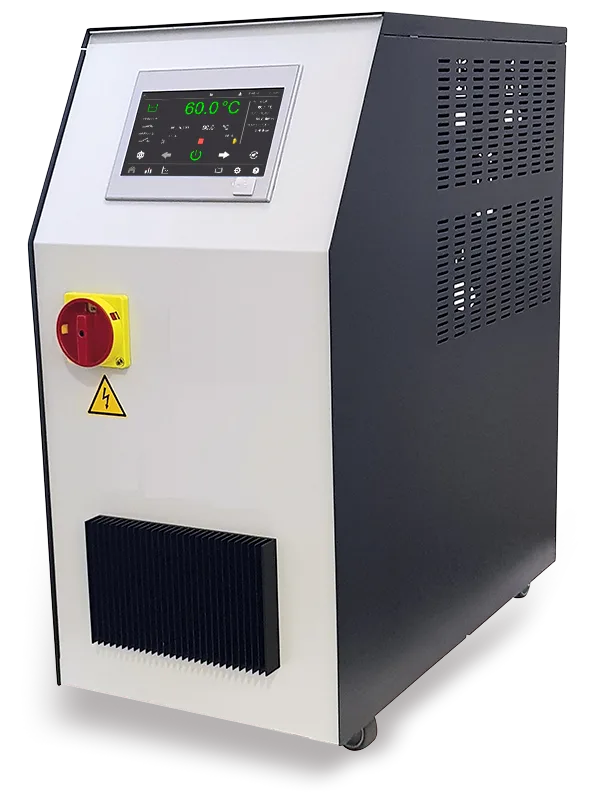
Oil-based mold temperature control unit — 6 kW heating, 0.5 kW pump, max. 200°C
- ✓ Max. 200°C heat transfer oil temperature
- ✓ Electronic PLC control with a 7" touch screen and PID control
- ✓ Speck seal-less immersion pump
- ✓ Indirect cooling with a copper/brass tube bundle heat exchanger
- ✓ Open tank system — stainless steel tank (max. 20 l, 13 l oil)
TEMP-L 200 °C OIL Series — Oil-Based Mold Temperature Control Unit
An oil-based series working up to 200 °C. It is used at temperatures water cannot reach safely; TEMP-L, TEMP-XL and TEMP-XXL body sizes are available.
When the move to oil is made
The decision depends on a single question: is the target mold temperature above 160 °C? Pressurized water systems reach that value, and in every application below it water is the better choice. Above 160 °C oil becomes mandatory.
The materials requiring this band are high performance engineering plastics: PEEK, PPS, PEI, PES and some high temperature polyamides. In these materials the mold temperature directly determines the crystallinity and the dimensional stability.
The difference in how oil behaves
The heat transfer coefficient of oil is lower than that of water. This has two practical consequences: a higher flow rate is needed to carry the same heat, and the system responds more slowly to a change in temperature. On a recipe change it takes longer for the mold to reach the target temperature than with water; the production plan has to take this into account.
In return, oil does not require a pressurized circuit — there is no boiling problem.
Oil maintenance: a silent loss of performance
Oil oxidizes in time. Its viscosity changes, its heat transfer capability falls and deposits build up in the circuit. This deterioration is gradual: the unit keeps working but reaches the target temperature late, and the temperature stability breaks down. The symptom is usually taken for a unit fault.
Maintenance items:
- The oil change interval has to be planned according to the manufacturer's data and must not be delayed
- Sealing elements must be of a material suited to high temperature and checked regularly
- The circuit filter limits the build-up of deposits
- The oil level and color should be observed periodically
Safety
At a high temperature an oil leak carries a burn risk. Connection points, hoses and insulation should be on the periodic check list; no flammable material should be kept around the unit. The circuit should be allowed to cool before maintenance.
Brand and technology
The shared features of Rummel temperature control units — self-optimizing PID control, a 7 inch touch screen, communication with the injection molding machine over OPC-UA / Profinet / Modbus, and the multi-circuit distributor option — are explained in detail on the what is a mold temperature control unit page.
For a higher temperature the 300 °C series, and for requirements up to 160 °C water-based systems, should be preferred.