Oil Temperature Control Units Products(2)
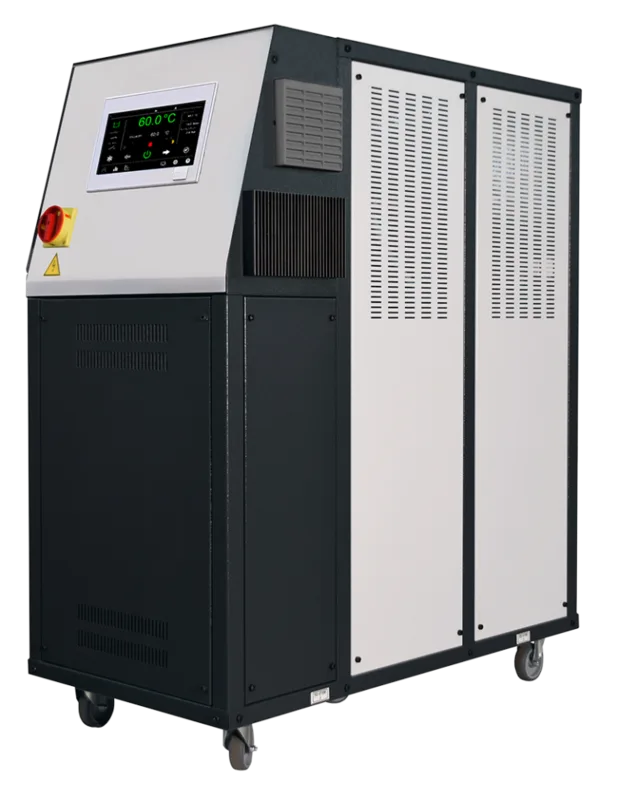 RUMMEL
›TEMP-XXL 300 OIL TS
- Max. 300°C heat transfer oil temperature
- Electronic PLC control with a 7" touch screen and PID control
- Speck magnetically coupled pressure pump
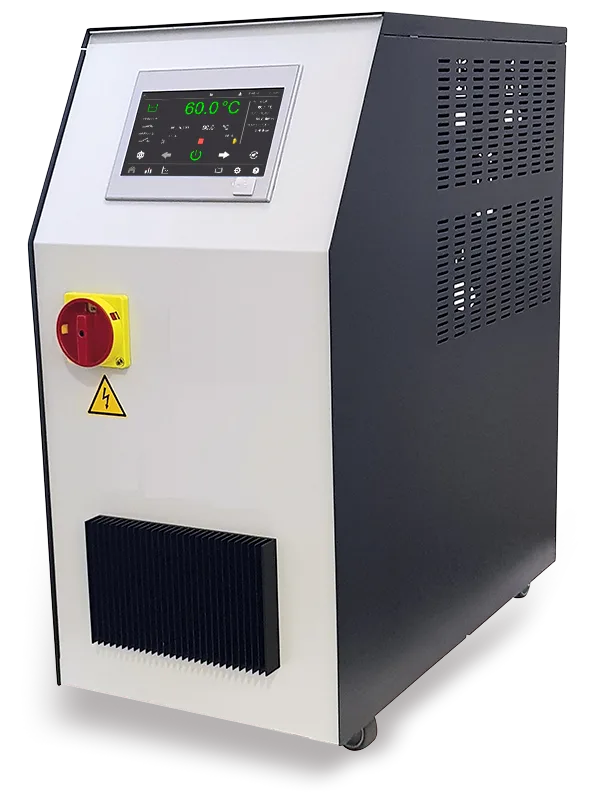 RUMMEL
›TEMP-L 200 OIL TS
- Max. 200°C heat transfer oil temperature
- Electronic PLC control with a 7" touch screen and PID control
- Speck seal-less immersion pump
Oil Temperature Control Units
Oil-based mold temperature control units use heat transfer oil (thermal oil) as the temperature control fluid and hold the mold temperature in the 200 – 300 °C range. These temperatures, which water cannot reach, are mandatory for processing high temperature engineering plastics.
Why oil?
Water cannot be taken safely above a certain temperature, even under pressure. Heat transfer oil, on the other hand, stays in the liquid phase up to 300 °C at close to atmospheric pressure. A high mold temperature is thus obtained without requiring a high pressure closed circuit.
In return, the heat transfer coefficient of oil is lower than that of water; the mold temperature changes more slowly and a higher flow rate is needed to carry the same heat. For that reason oil is not preferred unless it is needed.
Which materials require oil?
| Material | Typical mold temperature |
|---|---|
| PEEK | 170 – 200 °C |
| PPS | 140 – 150 °C |
| LCP | 80 – 120 °C (some types higher) |
| PEI / Ultem | 140 – 180 °C |
| PES | 140 – 180 °C |
| High temperature PA (PPA) | 120 – 160 °C |
In addition, the preheating of hot runner manifolds and some composite / thermoset applications require an oil-based system. For values by material you can look at the material processing data table.
Points to watch
- Oil selection — a heat transfer oil suited to the maximum film temperature the unit permits must be used
- Periodic oil change — oil oxidizes in time, the heat transfer efficiency falls and deposits form
- Sealing — at high temperature the selection of seals and hoses is critical
- Heat-up time — it takes longer than water at start-up and has to be included in the production plan
- Safety — contact with hot oil carries a serious burn risk; lines and connections must be insulated
Series
| Series | Range | Use |
|---|---|---|
| TEMP 200 °C OIL | up to 200 °C | High temperature engineering plastics, hot runner |
| TEMP 300 °C OIL | up to 300 °C | PEEK, PPS, PEI; the most demanding applications |
In applications at 160 °C and below, water-based systems are faster and more economical — see the water mold temperature control units. For general information: Mold Temperature Control Units