Material Storage and Containers Products(5)
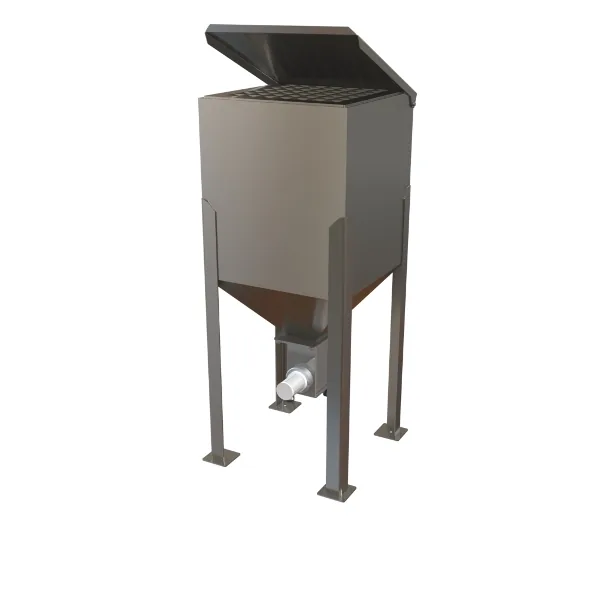 DIGICOLOR
›Digicolor Granule Container C-50 and C-100
- All surfaces in contact with the granulate are stainless
- C-50: 390 × 410 mm, approx. 883 mm high
- C-100: 490 × 505 mm, approx. 984 mm high
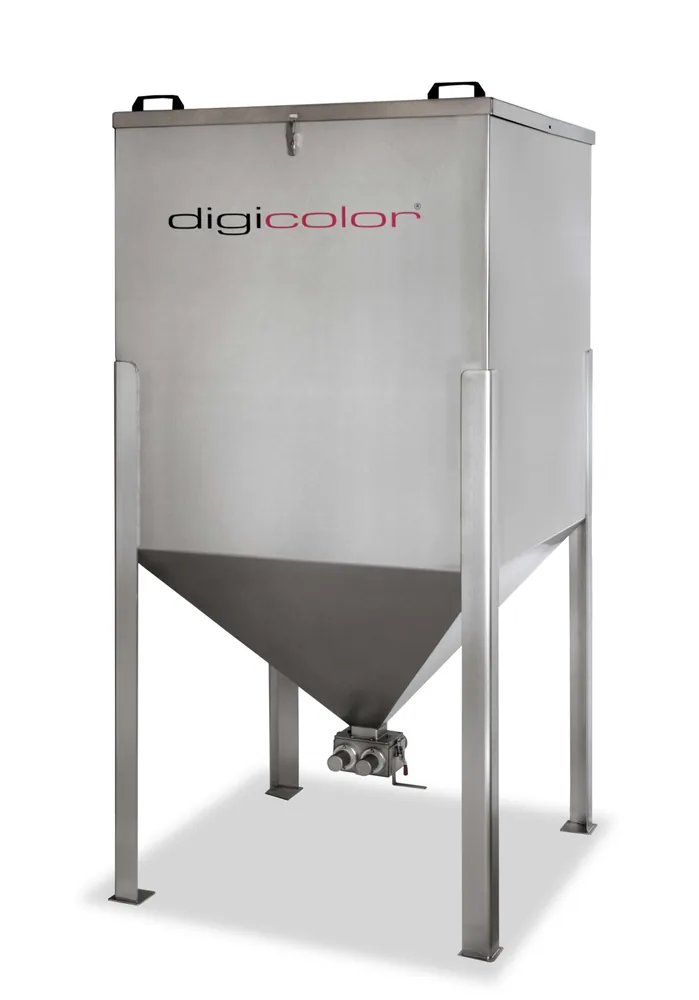 DIGICOLOR
›Digicolor Granule Container C-180 / C-300 / C-700 / C-1250
- All surfaces in contact with the granulate are stainless
- C-180 / C-300 same footprint: 650 × 665 mm
- C-700 / C-1250 same footprint: 1070 × 1070 mm
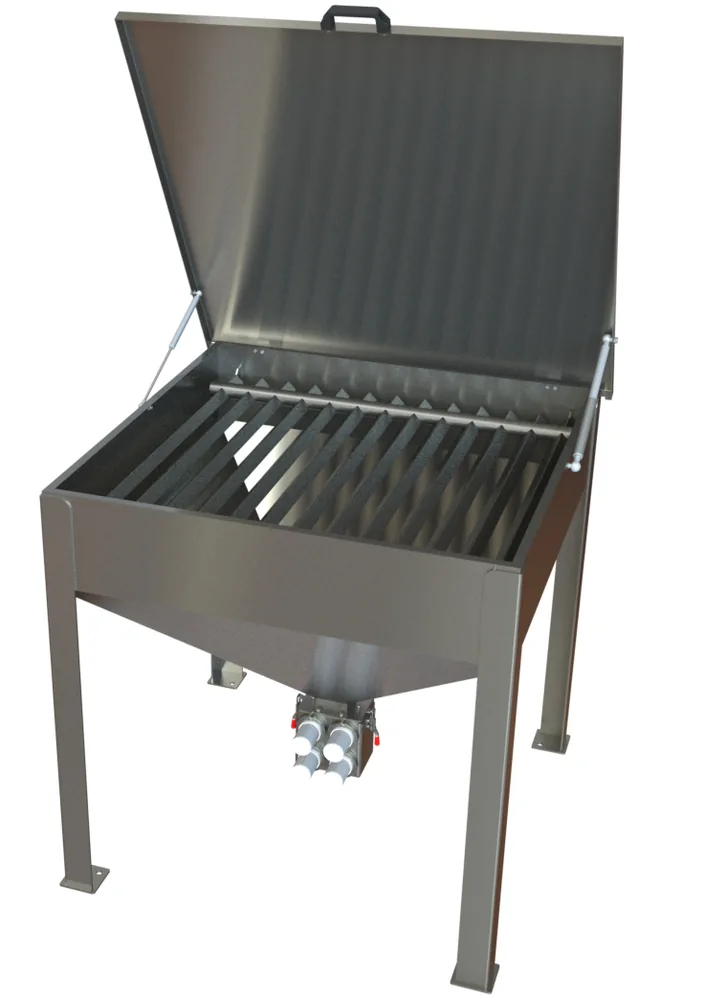 DIGICOLOR
›Digicolor Sack Emptying Station SAS-230 / SAS-380
- Entirely stainless steel
- Gas-spring hinged lid, one-handed operation
- Wide filling grid, the sack is cut open on top of it
 DIGICOLOR
›Digicolor MB-240 Mobile Granule Container
- PE-HD body, silver metallic
- 240 liter volume
- Twin suction connection, 40 or 50 mm
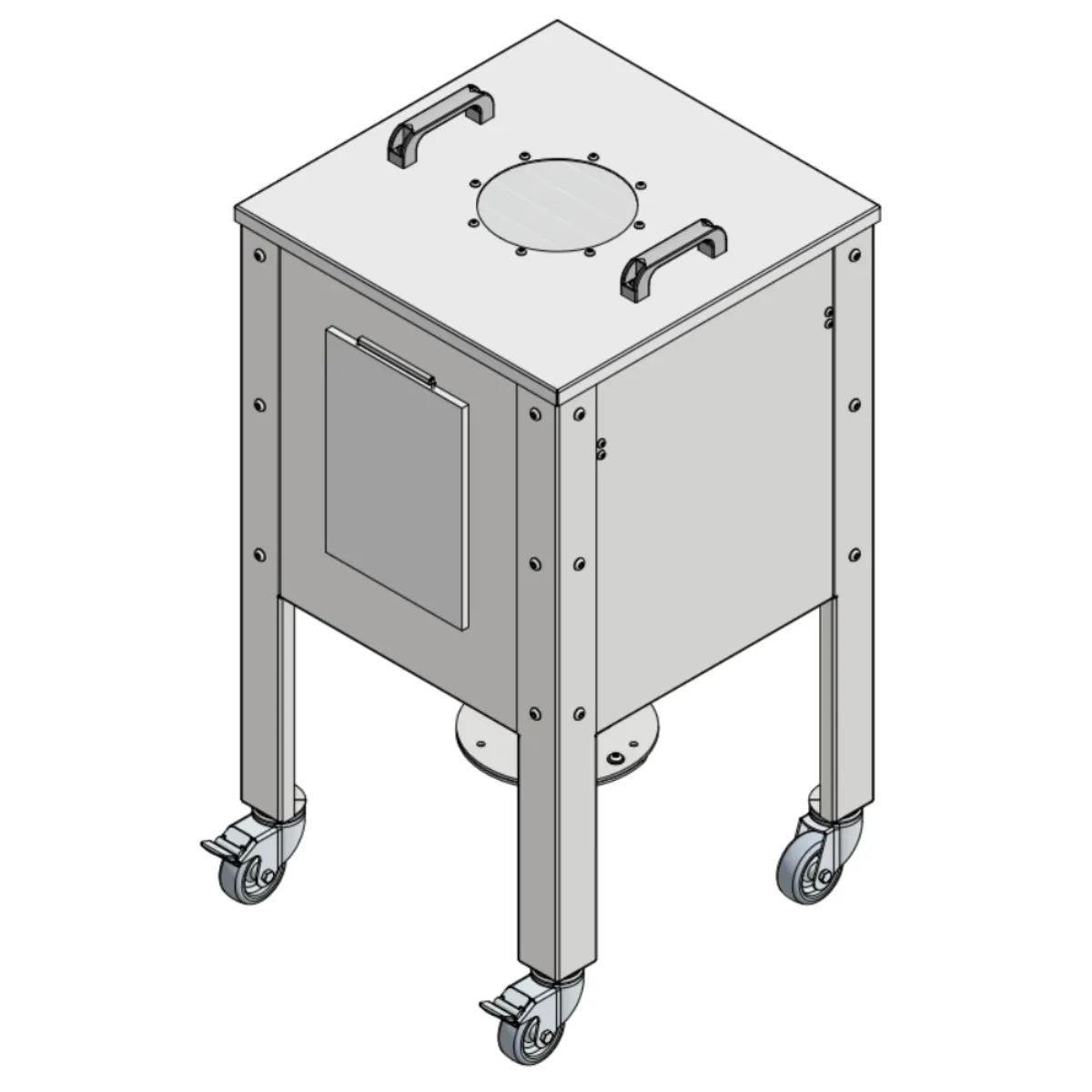 Michel Tube Engineering
›Material Container
- Aluminum body — 100 to 400 liters
- 2 fixed (lockable) + 2 swivel casters included
- Controlled emptying with the tipping plate
Raw Material Storage and Containers
After the granulate leaves the bag or the octabin, it stands somewhere until it reaches the machine. In most plants that place is chosen carelessly: an open drum, a barrel without a lid, a bag standing on the floor. The result is the return of moisture, dust and contamination. Dried material waiting in an open vessel means that the energy spent on drying is wasted.
Why stainless steel?
A surface in contact with the granulate that is smooth and free of corrosion provides two things. The first is cleaning: no residue stays inside the vessel on a color or material change, and dust sticking to the surface is removed easily. The second is the contamination risk: a stainless surface leaves no particles in the material. In technical parts, medical and automotive applications this is not a preference but a requirement.
We explained where the residue in a color change comes from in our article on color and material change; the storage vessel is the first link of that chain.
Selection by capacity
| Volume | Typical use |
|---|---|
| 50 – 100 liters | Masterbatch and additive; daily vessel |
| 180 – 300 liters | Medium consumption; daily vessel beside the machine |
| 700 – 1250 liters | High consumption; central feeding source |
| 230 – 380 liters (bag dump) | Transferring the bag directly to the line |
The Digicolor container program runs from 50 liters to 4,800 liters and is built modularly: the suction port diameter, the lid, the filling grid and the wheels are selected according to the application.
The suction port and connecting to the line
A suction port is fitted to the granulate outlet of every container. Its diameter can be 40, 50 or 60 mm; which diameter is chosen is determined by the conveying line it will connect to. Thanks to this port the container is connected directly to the central conveying line, and the dosing hopper or material distributor is fed automatically.
What does a bag dump station do?
Lifting a bag by hand and emptying it into a vessel is both a physical load and a source of dust. A bag dump station has a gas-spring lid and a wide filling grid: the bag is placed on the grid, cut open, and the granulate falls straight into the chamber. When the lid closes, the line becomes closed.
Aluminum buffer chambers
Besides stainless steel containers, there are also aluminum containers used as a buffer chamber within the line. These hold the material temporarily at a point on the conveying line; they are offered in volumes between 100 and 400 liters, on wheels and with a tipping plate. The Michel Tube material container is in this group and works as part of the central conveying line.
For dried material
If material waits in an open vessel after drying, it takes the moisture back. A container with a lid is therefore needed after the dryer as well; for the counterpart on the drying side you can look at the material drying section. We explained the relationship between dew point and residual moisture in detail in our article on moisture and dew point measurement.