Conveyor Systems Products(3)
 Teknik Part
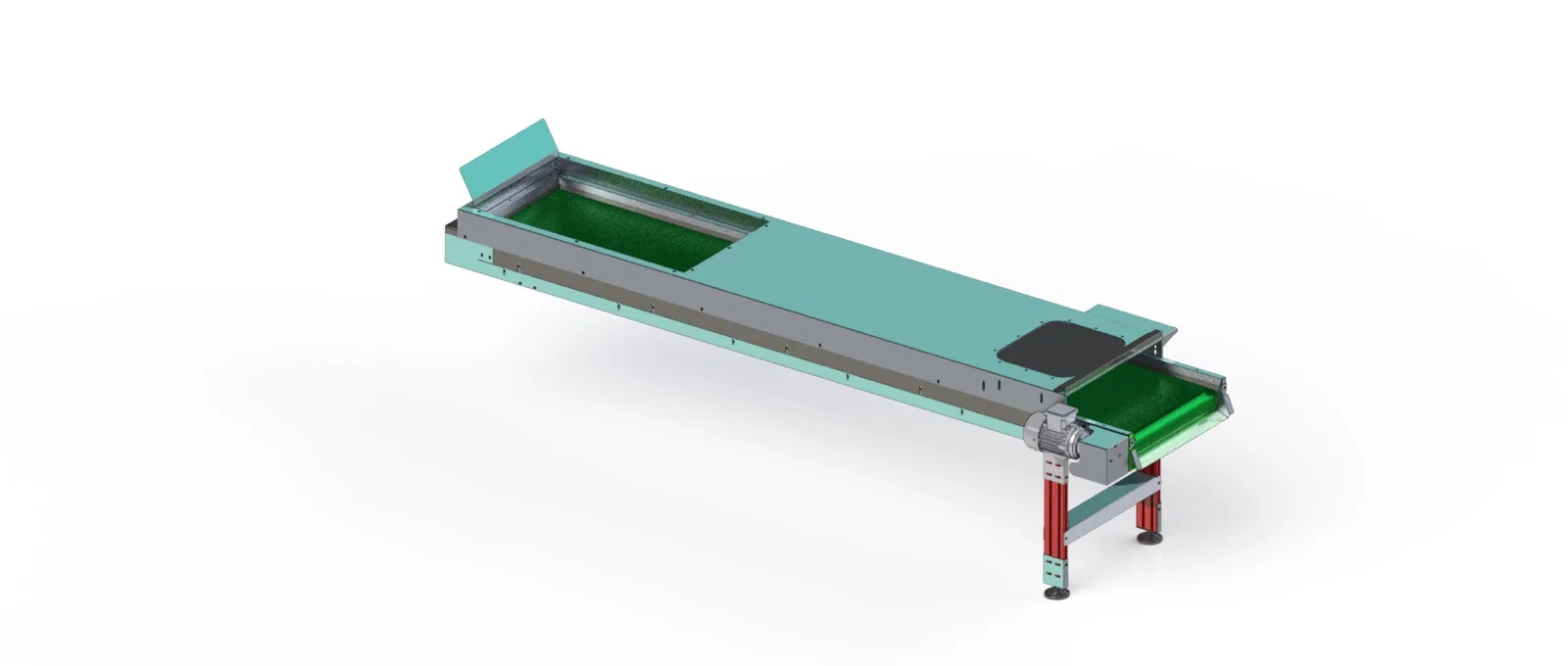
›Below-Machine Conveyor
- Low entry that fits under the clamping unit
- Enclosed sheet metal body, anti-splash cover
- Control box with emergency stop and main switch
 Teknik Part
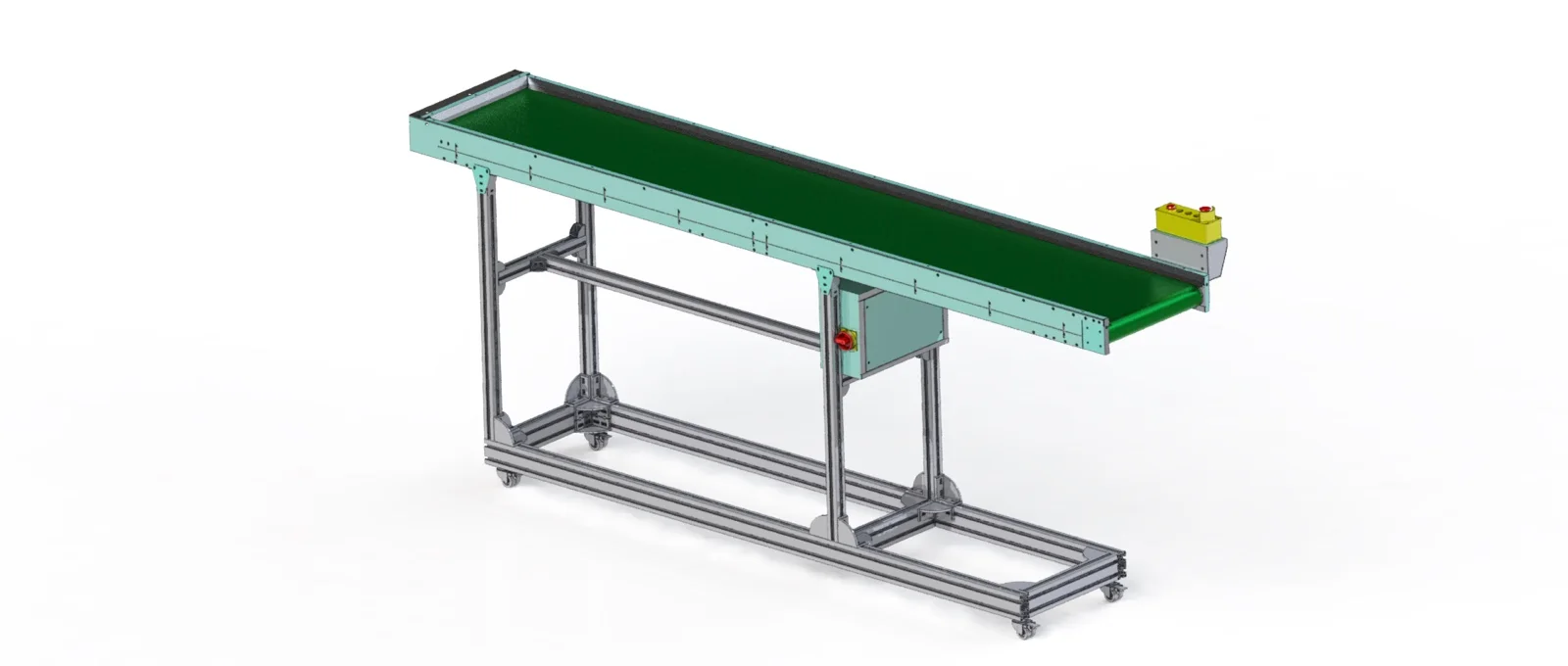
›Flat Belt Conveyor
- Aluminum sigma profile frame
- Braked casters or adjustable feet
- Protection against parts falling off with a side barrier
 Teknik Part
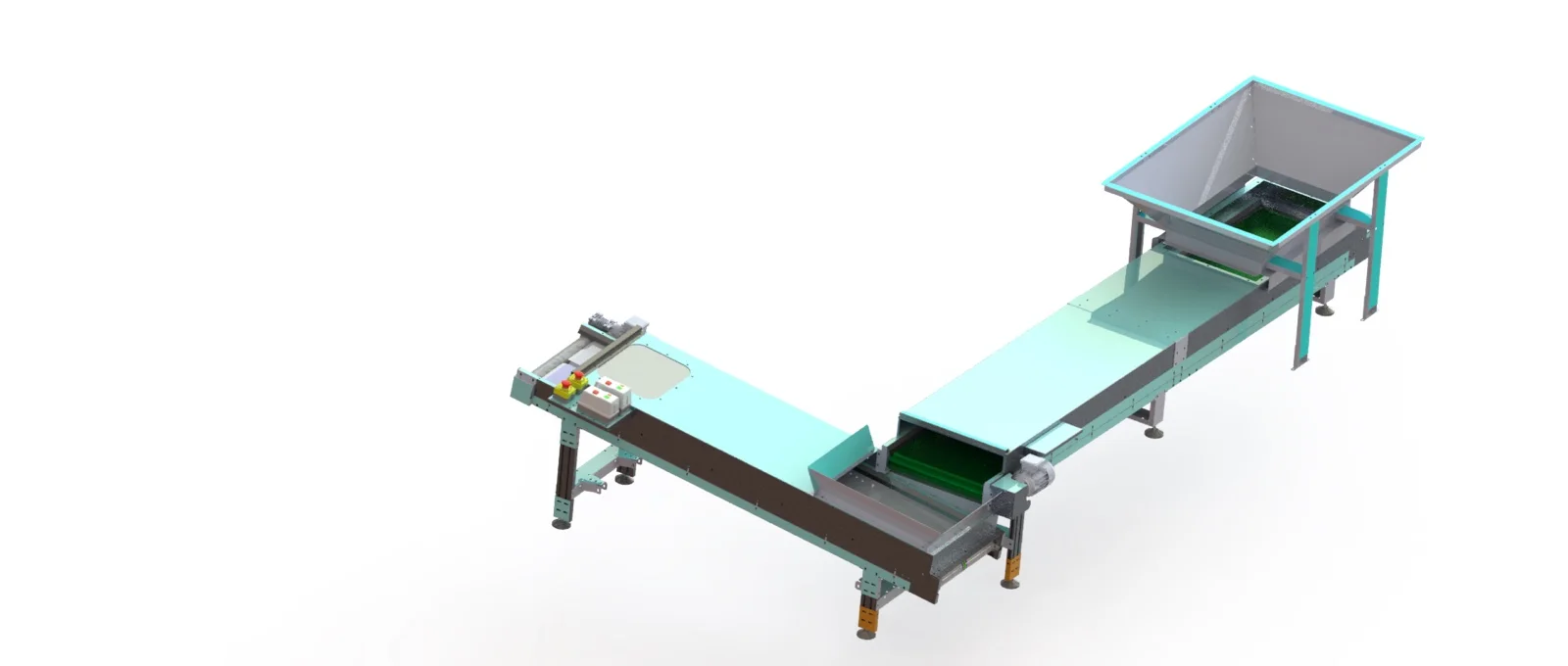
›Z-Type Incline Conveyor
- Three-stage horizontal–incline–horizontal body
- Wide-mouthed feed hopper
- Cleated belt prevents slipping back
Conveyor Systems
A conveyor is the equipment that bridges the few meters between the injection molding machine and the box. But those few meters are different in every plant: the clearance under the clamping unit, the height of the machine above the floor, where the box will stand, the walkway, the distance to the neighboring machine. For that reason a conveyor is much less a product taken off the shelf than a part made to measure.
We manufacture conveyors to the dimensions of the line itself. The clearance in your machine park is measured, the layout is drawn, manufacturing starts after approval and commissioning is done on site.
Which body type?
We work with three basic body types. What determines the choice is where the part falls and where it has to go.
| Type | Where it is used | Distinguishing feature |
|---|---|---|
| Under-machine conveyor | A line that goes under the clamping unit, where the part falls directly onto it | Closed sheet metal body, low inlet throat, covered top |
| Flat belt conveyor | Beside the machine, assembly table, inspection and packing line | Open profile frame, movable, edge barrier |
| Z-type incline conveyor | Lifting from floor level to a box, container or granulator throat | Horizontal–inclined–horizontal in three stages, feed chute |
More than one type can work together on the same line: a part leaving from under the machine can be transferred to a flat belt, and from there to an inclined belt and tipped into a container.
What is standard in the manufacturing?
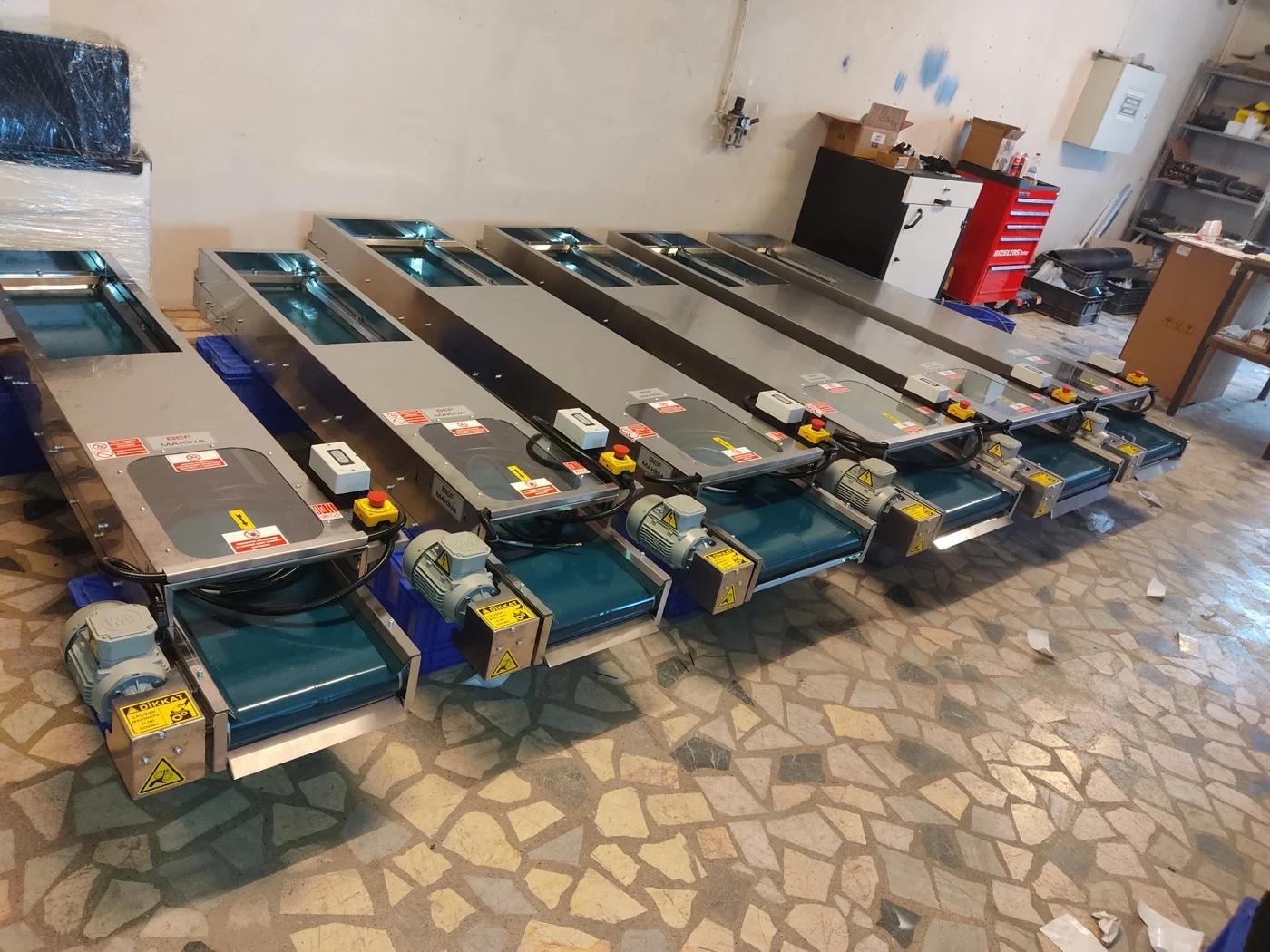
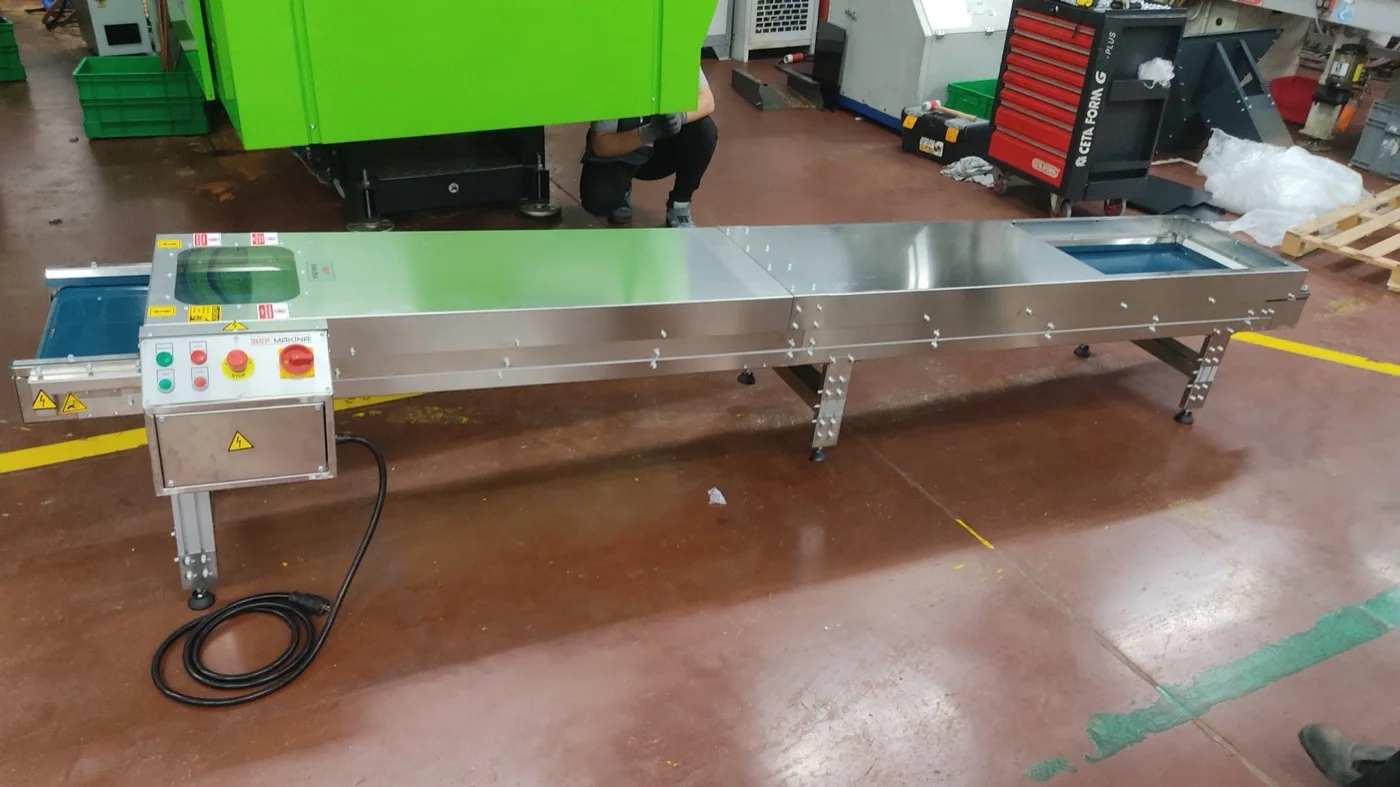
The common structure found in all of the units in the photographs:
- Body: stainless or galvanized sheet; in the under-machine type the top is closed, with a cover plate that stops the falling part from bouncing out
- Frame: aluminum sigma profile; adjustable feet (compensating the floor slope and the height) or braked castors
- Drive: geared motor with a guard cover over it
- Control: a box carrying start–stop buttons, a mushroom-head emergency stop and a main switch; connection in cable trunking
- Safety: guard plates on moving parts, warning labels in Turkish
- Belt: a PVC belt selected according to the type of part; an edge barrier is added when required
What determines the dimensions?
What we need to know before preparing a quotation — this list is also useful when you assess your own line:
1. Clearance under the clamping unit. The total height of an under-machine conveyor is limited by this dimension; if it is tight, a low-profile body is required. 2. The side the belt will exit and its length. It must not cut across the operator's walkway, a door opening or the neighboring machine. 3. Discharge height. A box, a container on a pallet, or a granulator throat? If lifting is required, an inclined body is chosen. 4. Size and weight of the part. The belt width and the motor are determined accordingly. 5. Does the part come out hot? With thick-section parts the belt length is deliberately kept long, for cooling. 6. Will the runner be collected separately? If a separate line is to be built, the runner line is routed directly to the granulator. 7. Fixed or adjustable speed? If it is to work in step with the cycle time, speed adjustment is planned from the start.
The relationship with the rest of the line
A conveyor is not a solution on its own but a link. If you are setting up a scrap line, metal separation over the belt should be considered; if the ground material will enter the regrind loop, the dosing side has to be set up accordingly. If a container will be used at the discharge point, the height has to be taken into account from the start.
For a detailed account of the role of the conveyor within the production cell, the types and robot integration, you can look at our guide to part handling after injection molding.
Let us measure the right conveyor for your line together: contact us.