Digicolor Goliath Granulators Products(7)
 DIGICOLOR
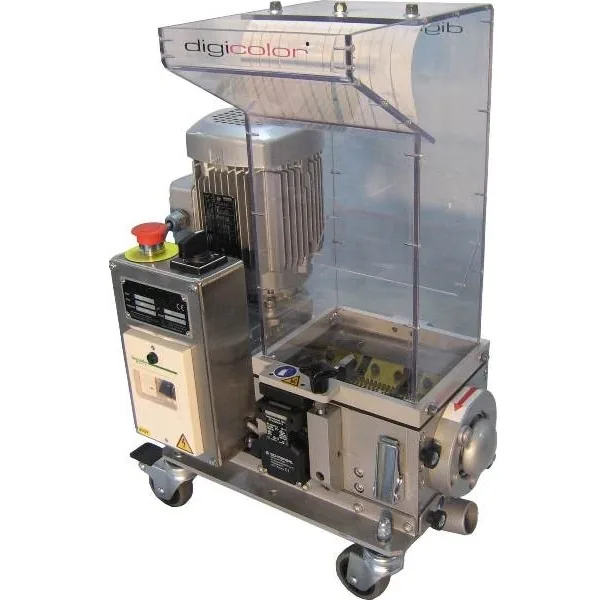
›Digicolor Mini Goliath Granulator
- Low speed: 25 rpm, very little dust
- Total connected load only 0.55 kW
- 585 mm with the standard hopper, ~505 mm at the lowest arrangement
 DIGICOLOR
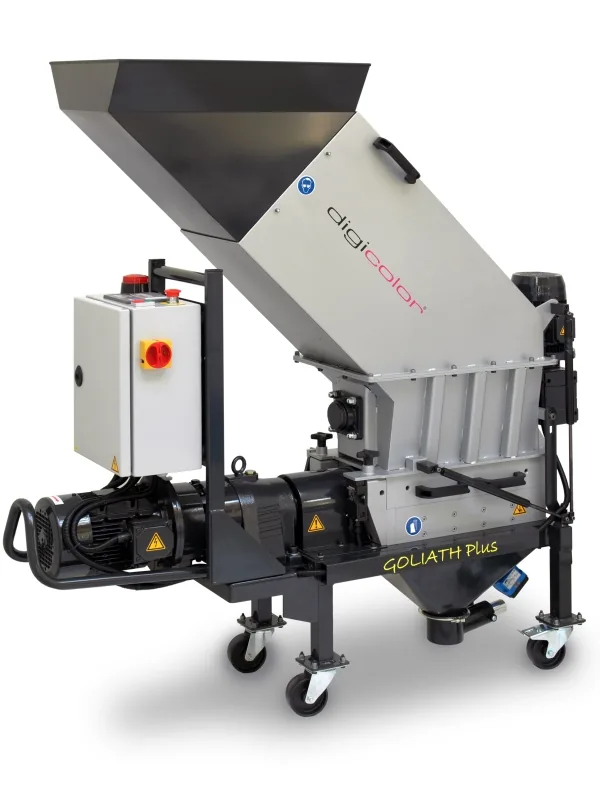
›Digicolor Goliath Plus Granulator
- Trapezoidal tooth cutting geometry, uniform granule size
- Four cutting chamber sizes, 0.75-2.2 kW motor
- Reversible combs and pre-cutters, double the life
 DIGICOLOR
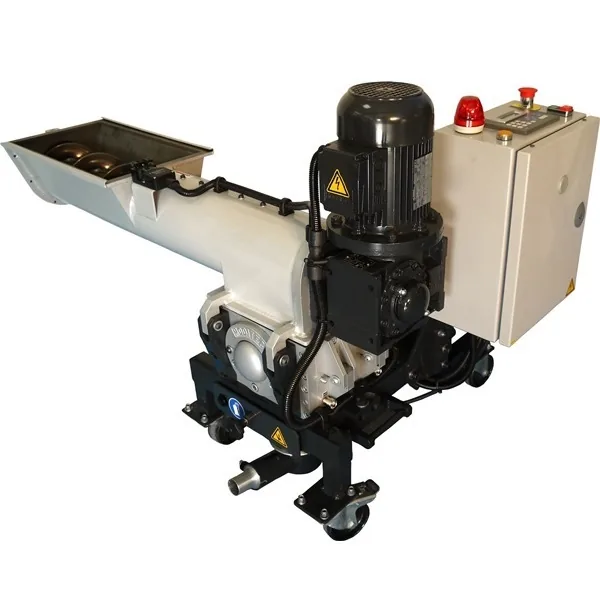
›Digicolor Goliath Plus VIS Granulator
- Horizontal screw conveyor discharge, low installation height
- Can be placed directly under the mold
- Small footprint
 DIGICOLOR
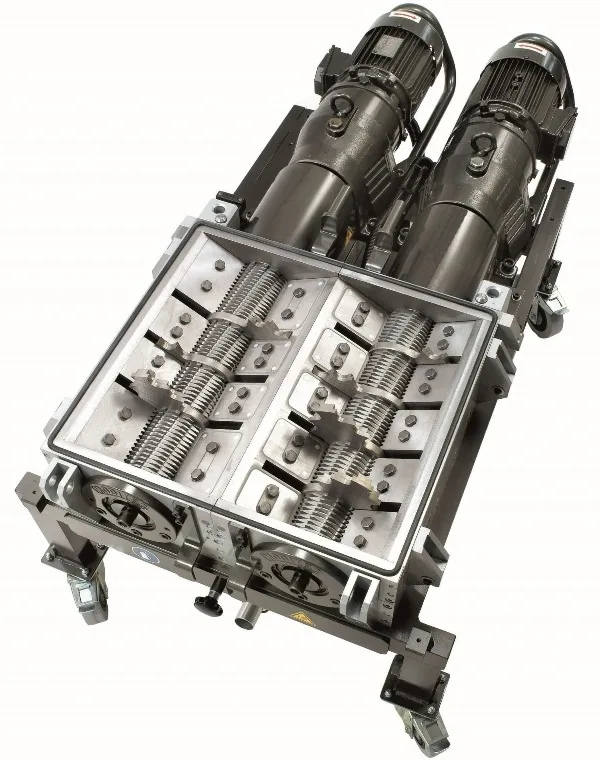
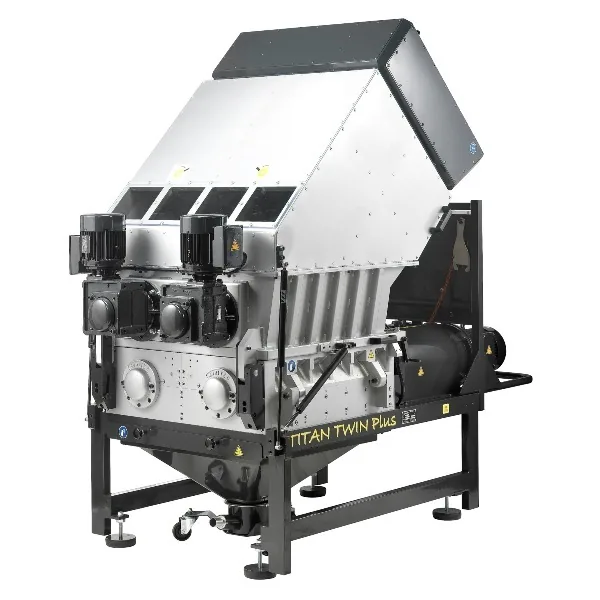
›Digicolor Goliath TWIN Plus Granulator
- Twin cutting chamber, two rotor shafts
- Seven pre-cutting elements, accepts large parts
- Double parting line for fast and safe cleaning
 DIGICOLOR
›Digicolor Titan Plus Granulator
- The largest cutting capacity in the series
- Sound-insulated feed hopper
- Rotor anti-blocking with the ABS system
 DIGICOLOR
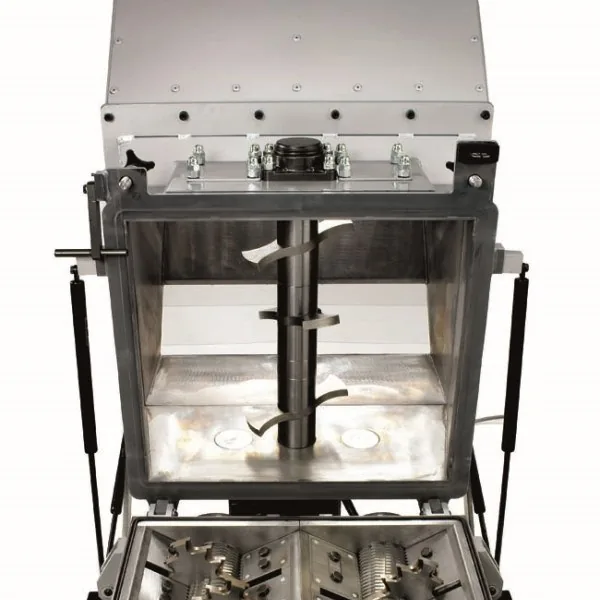
›Digicolor MASHER Feeding System
- Automatic feeding for bulky parts
- Feed blades on one or two additional shafts
- Pre-shredding in the hopper
 DIGICOLOR
›Digicolor IMD All-Metal Detector System
- Detects all metals, not only ferromagnetic ones
- 40 ms response time, the shaft stops instantly
- Error message on the text display and alarm lamp
Digicolor Goliath Granulators
The Goliath series consists of low-speed toothed roller granulators. What sets them apart from classic blade mills is that instead of shattering the material at high speed, they cut it at low speed between toothed rollers. That has three practical consequences: the noise level falls, dust generation is reduced and the grain size of the ground material comes out more uniform.
Uniformity of grain size is the decisive factor if you plan to return the ground material to production. Irregular, dusty regrind shifts the bulk density in the dosing unit and therefore moves the blend ratio; dust, in turn, creates a separate problem in the dryer and in the conveying line. We covered this subject in detail in our article on regrind and recovery.
Choosing a model within the series
| Model | What it is for |
|---|---|
| Mini Goliath | Small sprues and parts; 25 rpm, 0.55 kW, the lowest build |
| Goliath Plus | General purpose; four cutting chamber lengths, 0.75–2.2 kW |
| Goliath Plus VIS | Layouts where it has to fit directly beneath the mold |
| Goliath TWIN Plus | Large parts and high capacity; twin cutting chamber |
| Titan Plus | The largest in the series; plants producing high volume parts |
Two things determine the choice: the largest dimension of the part to be ground and how many kilos an hour will be ground. If the part does not pass through the cutting chamber mouth, you will need a larger model or the MASHER feeding system.
Two components that protect the machine
The most expensive failure on a granulator is a piece of metal entering the cutting elements along with the material. When the IMD all-metal detector system detects metal it stops the shaft within 40 milliseconds; the damage is prevented before it starts at the cutting elements. The second component, MASHER, pushes bulky parts into the hopper and keeps the feed continuous.
Returning ground material to production
Granulating on its own is not a solution; the ground material has to be blended into the virgin raw material in a controlled ratio. For that, a volumetric or gravimetric dosing unit is installed at the machine feed area. If ratio accuracy is critical and the weight proportions of the blend are to be recorded, gravimetric batch dosing is preferred. When the granulator, the conveying line, the dryer and the dosing unit are installed together, ground material becomes usable in technical part production as well.
For the effect of the granulator on the screw and barrel you can look at our article on screw and barrel wear: dusty regrind containing metal is one of the fastest routes to wear.