Magnetic Systems Products(3)
 MENSINK Magnetics
›Magnetic Couplings
- Magnetic Couplings — Mensink Magnetics
- Industrial quality, durable construction
- Powerful permanent magnet technology
 MENSINK Magnetics
›Magnetic Motor Assemblies
- Magnetic Motor Assemblies — Mensink Magnetics
- Industrial quality, durable construction
- Powerful permanent magnet technology
 MENSINK Magnetics
›Plastic-Integrated Magnets
- Plastic-Integrated Magnets — Mensink Magnetics
- Industrial quality, durable construction
- Powerful permanent magnet technology
What Are Magnetic Systems (Assemblies)?
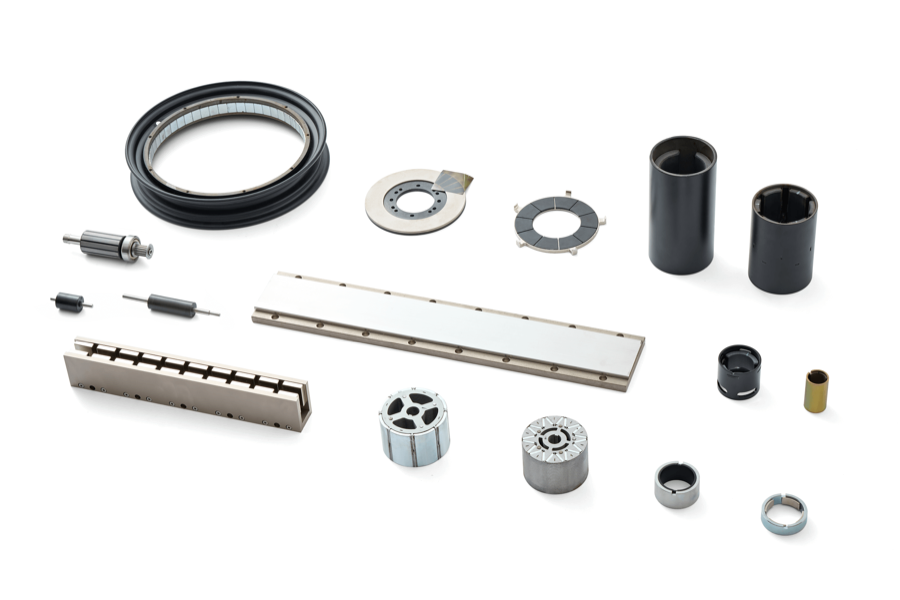
Magnetic systems are composite components in which one or more permanent magnets are integrated into a carrier or a housing in order to direct magnetic force within mechanical or electrical systems. They provide rotation, coupling, positioning and sensing while offering compactness, wear-free operation and precise force transfer. They are widespread in automotive, high technology, aerospace, energy and industrial automation; by eliminating mechanical contact points they deliver long life and stable performance.
Advantages: contactless power transfer, minimal maintenance, high reliability, lightweight design.
Magnetic Couplings
They transfer torque between two shafts by a magnetic field across a hermetically sealed barrier, without physical contact. They are common in pumps and mixers where leakage has to be prevented and wear eliminated, and in chemical, medical and vacuum applications.
Magnetic Motor Assemblies
They consist of rotors and stators with integrated permanent magnets and form the core of electric drives and servo motors. Precise magnet placement and balancing deliver optimum torque with minimum vibration.
Plastic-Integrated Magnets
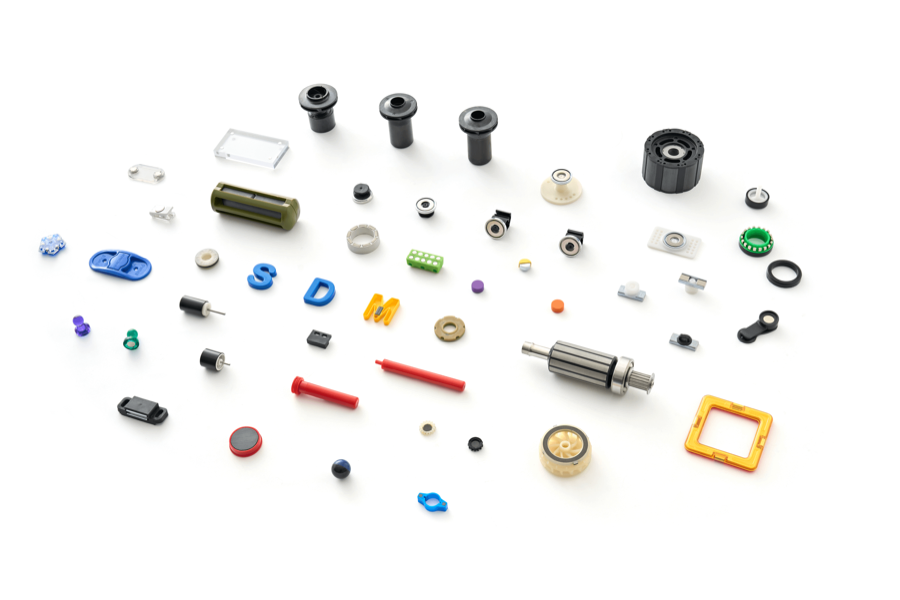
Magnets are embedded directly into injection molded plastic parts; compact, robust units with precise positioning and high repeatability are produced at low cost. They are common in sensor, actuator and dosing systems.
Three different application areas
Under the heading of magnetic systems there are three separate solutions, and what they have in common is that the magnet is part of a moving system:
| Product | Function |
|---|---|
| Magnetic coupling | Contactless torque transfer between two shafts |
| Motor assembly | The rotor-stator core of an electric drive |
| Plastic-integrated magnet | A magnet embedded in an injection molded part |
The common technical issue: temperature
In all three the decisive constraint is temperature. When a magnet exceeds the temperature limit of its class it suffers a permanent loss of strength, and that is invisible from outside — the system keeps running but its performance drops. Because the temperature inside a motor rises faster than expected under load, the material class must be selected for that condition.
For applications that will run above 150 °C, SmCo magnets are required; standard neodymium grades struggle at that temperature.
It must be settled at the design stage
What these products have in common is that they involve decisions that cannot be corrected later: the class of an embedded magnet cannot be changed, and the magnet layout of a rotor cannot be put right afterwards. The material and geometry choice must be settled at the design stage.
A comparison of the magnet materials is on the permanent magnets page.