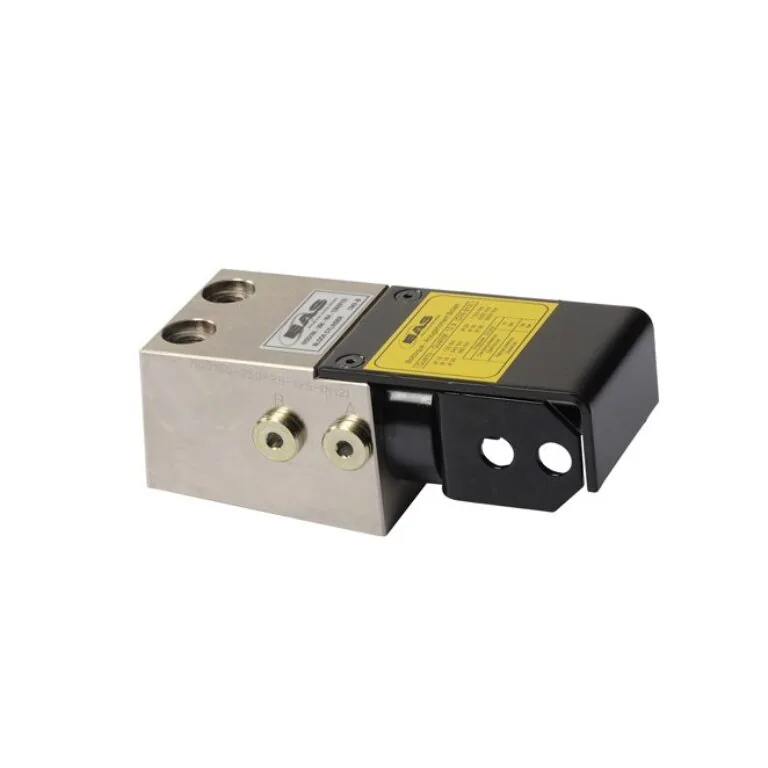
 5 models
EAS MOD250-250-RH-250-P500-M16 — self-locking double-acting hydraulic wedge clamp. Compatible with the EUROMAP drilling pattern.
- ✓ Self-locking double-acting hydraulic clamp (5° angle)
- ✓ Compatible with the EUROMAP drilling pattern
- ✓ Clamping force between 1.5 and 120 tons
- ✓ Inductive sensors for the locked/open position
- ✓ Can be mounted on flat backplates
MOD / WOD Wedge Clamp
The MOD series wedge clamps are self-locking double-acting hydraulic clamps. Thanks to the 5 degree angle at the piston tip, no continuous hydraulic pressure is required once clamping is achieved — the mold stays clamped even if the hydraulic unit stops.
Technical specifications
| Clamping force | 1.5 Ton – 120 Ton |
| Measuring system | Metric and imperial versions |
| Operating type | Double-acting, self-locking |
| Locking | 5° angle at the piston tip — stays locked when the pressure is cut |
| Position feedback | Inductive sensors |
| Hole pattern | For machines conforming to the EUROMAP standard |
| Clamping surface | Flat backplates |
The difference between MOD and WOD
WOD is the equivalent of the MOD series produced for the American market. The technology is the same; the measuring system and the connection standards differ.
Where is it used?
- Plastic injection molding machines
- Blow molding machines
- Die casting machines
- Mold carriers
- Presses and stamping machines
Because the self-locking feature keeps the mold clamped even during a hydraulic line failure, it is decisive in terms of safety.
Other hydraulic solutions: ECA · MHC · MTR · General information: the mold clamping range
What the 5° angle means: self-locking
The most critical feature of the MOD and WOD wedge clamps is the 5° angle at the piston tip. That angle makes the system self-locking: even if the hydraulic pressure is cut, the mold stays clamped. This is the answer to the safety question asked most often about hydraulic clamping systems.
Force range
Models are available between 1.5 and 120 Ton. That wide band makes it possible to produce a solution with a single product family, from small machines to heavy presses. The double-acting construction controls both the clamping and the releasing movement hydraulically.
Position verification and the standard
The inductive sensor reports to the machine whether the clamp is really engaged; the cycle does not start until the mold is fully clamped. EUROMAP conformity keeps the interface on the machine side standard and makes integration easier.
The difference between MOD and WOD
The two are functionally equivalent; WOD is the counterpart produced to American market dimensions and standards. The origin of your machine and its existing connection layout determine which one is appropriate.
The magnetic alternative
If the mold backplates are not standard and it is difficult to plan clamping points, magnetic plates are more flexible; the comparison is on the quick mold clamping page.