Hose Assemblies Products(3)
Hose Assemblies
The hose is the moving part of the line: it is used between the machine and the fixed pipeline, in the sections that are taken apart and refitted at a mold change or a material change.
Three types, three duties
| Type | Material | Use |
|---|---|---|
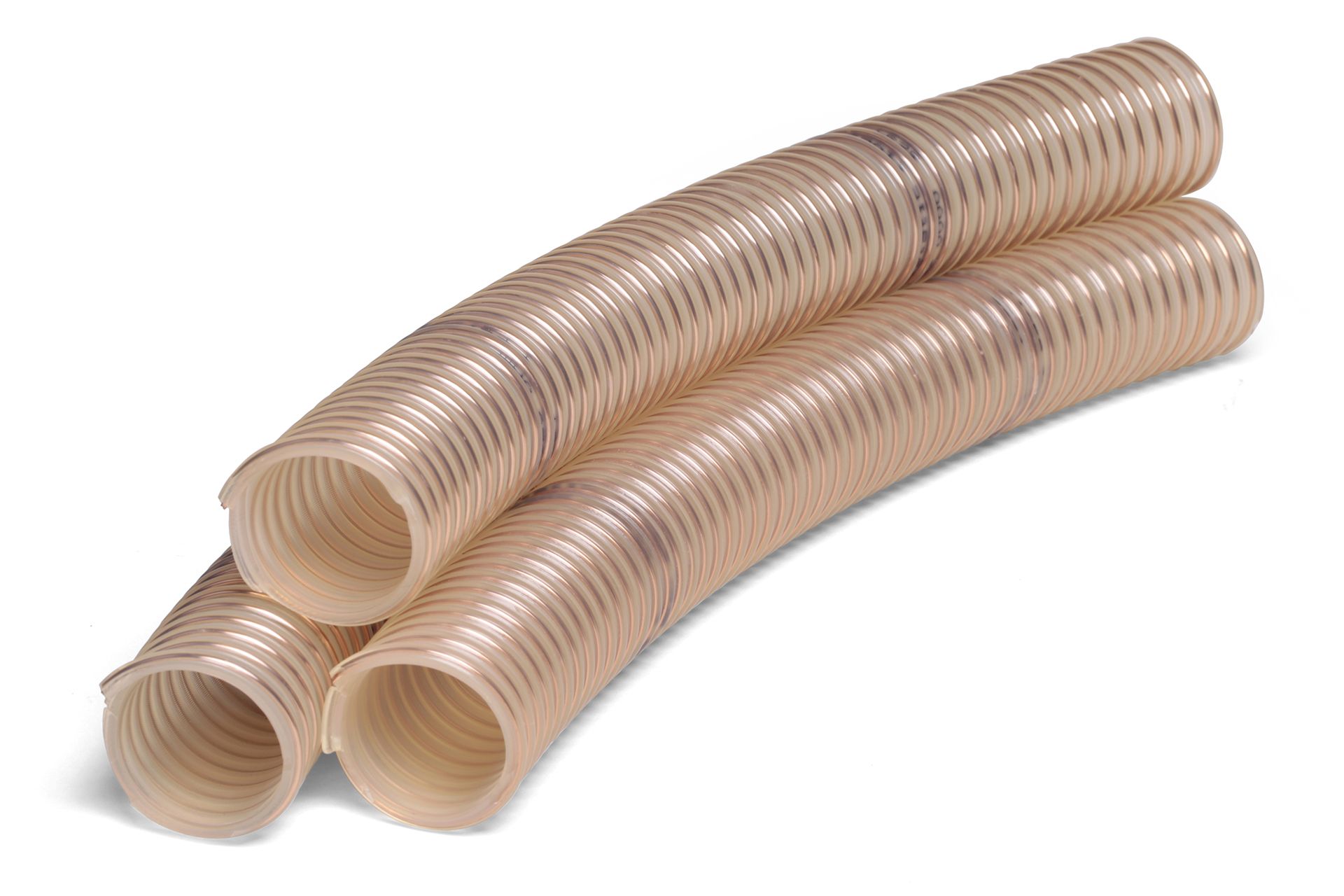
| Conveying Hose | PUR / PVC | The main line along which the material is carried |
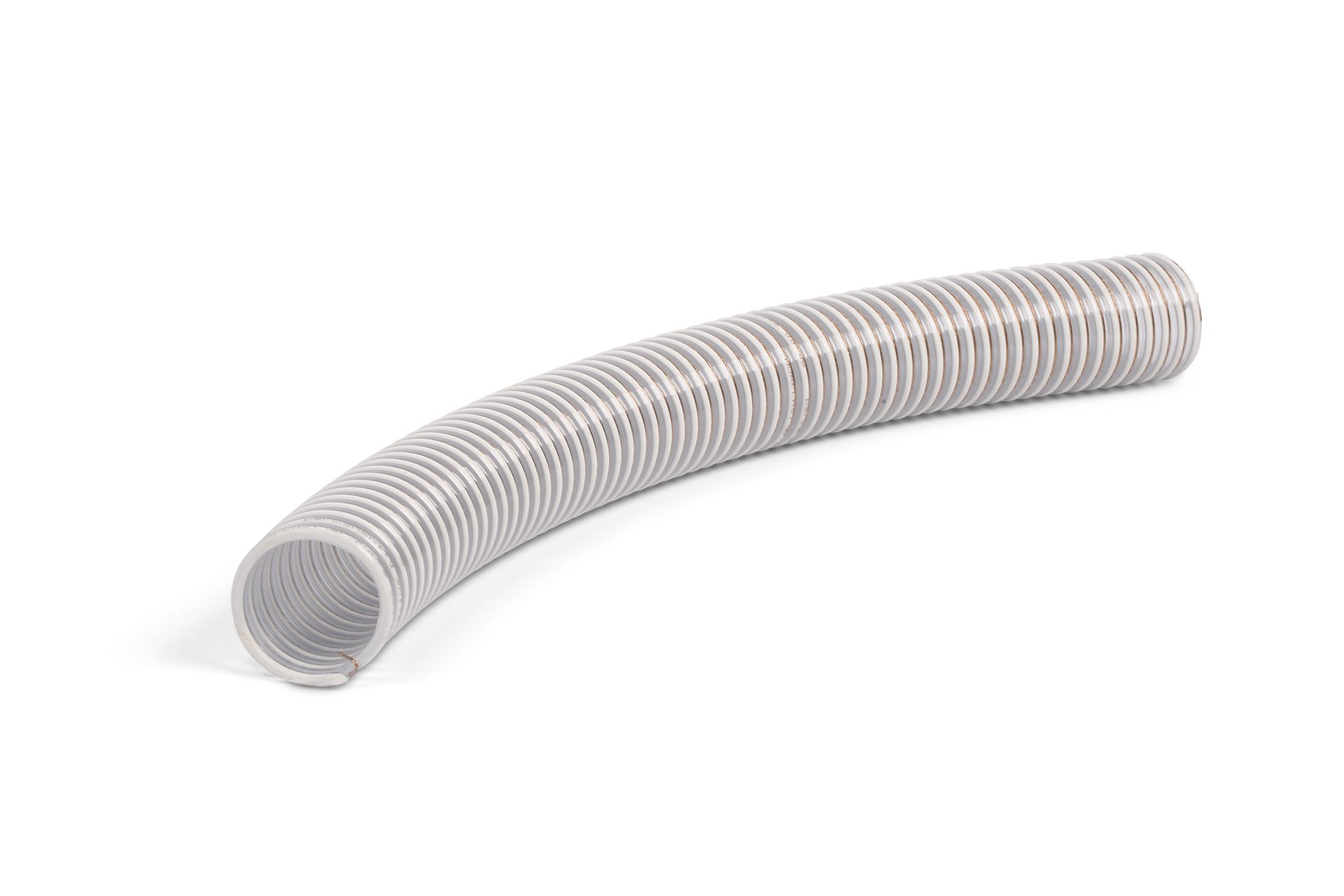
| Vacuum Hose | Rigid PVC | The vacuum side — does not collapse under negative pressure |
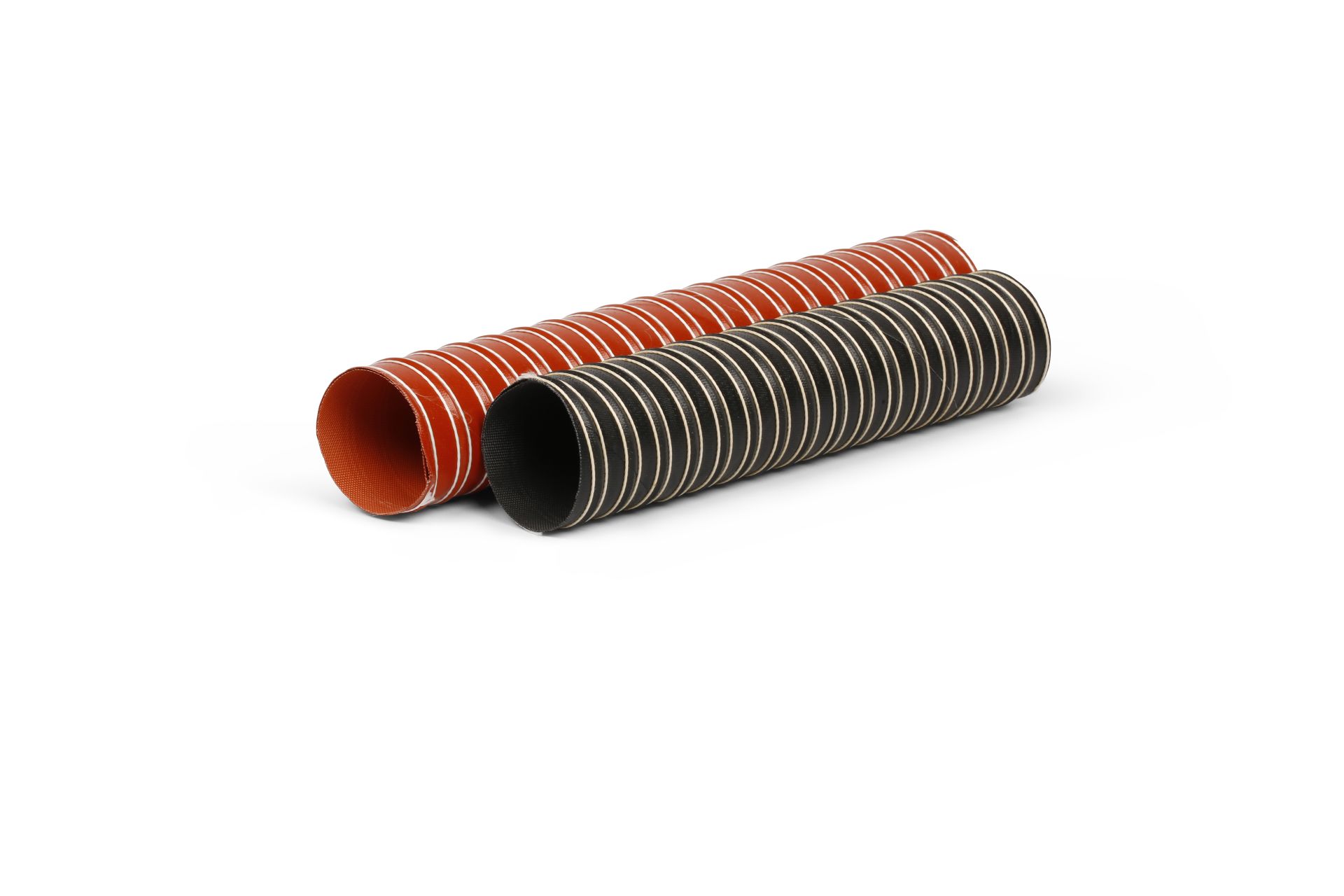
| Dryer Hose | Silicone (+260 °C) or neoprene | Hot material and air from the dryer to the machine |
Why does the right hose matter?
If a vacuum hose is not rigid enough it shrinks under negative pressure and the cross-section narrows — conveying slows down and the line blocks.
If a dryer hose is not heat resistant it softens, deforms over time and its inner surface deteriorates. Because the material and the air leaving the dryer are at high temperature, a standard conveying hose cannot be used here; silicone types withstand up to +260 °C.
Related: Hose Couplings · Drying Systems · The system as a whole: the complete material feeding line
Three hoses, three different requirements
| Use | Required property | Product |
|---|---|---|
| Material conveying | Wear resistance, antistatic | Conveying hoses |
| Vacuum line | Rigidity — no collapse | Vacuum hoses |
| Dryer line | Temperature resistance | Dryer hoses |
These three requirements are not interchangeable. A vacuum hose wears quickly on a material line; a conveying hose collapses under vacuum; and neither withstands the temperature at the dryer outlet.
Temperature: the criterion most often overlooked
The granulate leaving the dryer stays hot for longer than expected. A standard hose softens on that line, its cross-section deforms and it becomes unusable in a short time. Because silicone hoses can work up to +260 °C, they are the standard solution on dryer lines.
Antistatic and grounding
Granulate rubbing inside the hose generates a static charge. If the charge is not discharged, dust sticks to the wall and the flow narrows; in environments with a dust explosion risk it creates a spark hazard. For an antistatic hose to do its job, the spiral wire must be connected to the grounding — this step is frequently skipped, and the hose has been bought antistatic for nothing.
Installation rules
Observe the minimum bending radius, do not stretch the hose, protect the sections that rub on the floor and do not use a longer hose than necessary; every extra meter adds a pressure loss.