Tube Connectors Products(3)
Pipe Connectors
Connectors join two tubes tightly and in alignment. A poor connection produces two problems: false air (Falschluft) being drawn in, and a step between the tube ends.
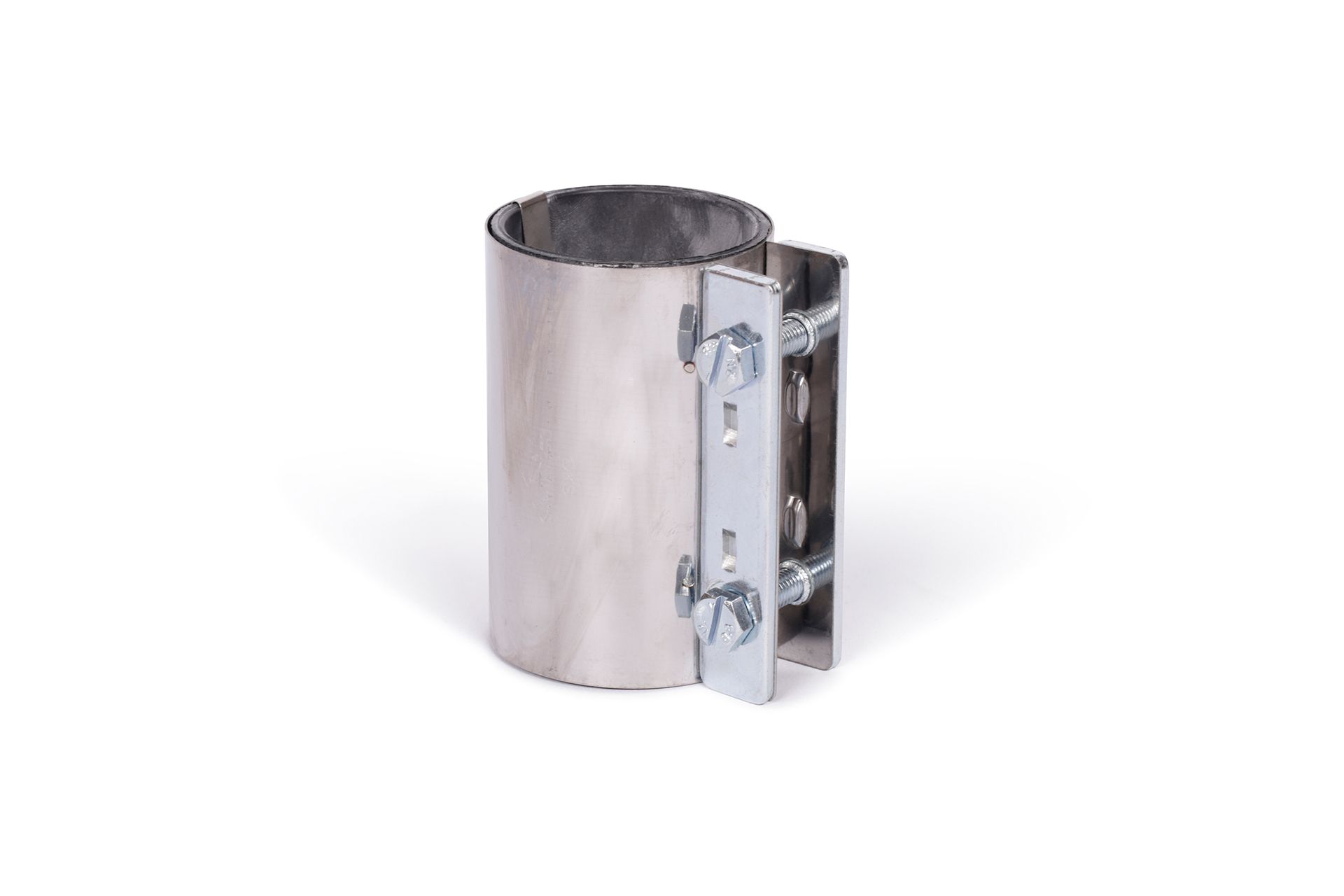
Types
| Type | Use |
|---|---|
| Standard Connector | General purpose conveying lines |
| Food and High Temperature | Food production and lines carrying hot material; FDA compliant silicone, +220 °C |
| Protected Seal (inliner) | Thanks to the inner liner the seal does not touch the material flow |
Two problems, two consequences
False air: air leaking in through a connection lowers the conveying vacuum. On long lines, when several leaks combine, the material struggles to reach the machine and the pump is strained unnecessarily.
Step: if the two tube ends are not perfectly aligned, the resulting ledge turns into a point where the particles strike. Wear begins there and angel hair is formed. Connectors with a protected seal smooth out that transition with an inner liner.
Related: Pipe Couplings · Round Tubes · The system as a whole: central material conveying systems
Connector selection table
| Condition | Suitable type |
|---|---|
| Standard indoor area, room temperature | Standard connector |
| Food production or a high temperature line | Food / high temperature connector |
| Abrasive raw material, expectation of long seal life | Protected seal (inliner) |
The symptoms of false air
Problems caused by connections rarely appear as a sudden failure. The typical symptoms are: longer conveying times, insufficient feeding of the machine at the end of a long line, a drop in the vacuum value, the pump running continuously. In this picture the pump is usually suspected; whereas the cause may be a small leak at one of dozens of connection points.
A simple checking method: hold a fine powder or a paper strip close to the connection points while the system is running. Movement is seen at the point where air is entering.
Points to watch during installation
- The tube ends must be axially aligned, with no step left
- The seal seating surface must be clean; granulate dust spoils the seal
- Seals are consumables; hardened or crushed seals should be replaced
- A connector does not carry a tensile load — the fixing must be planned separately
Keeping spare seals in stock
Seals are consumables and are the most frequently replaced part of the line. Keeping a reasonable stock of the types in use prevents the capacity loss caused by a single seal from lasting for days. Seal replacement should be one of the routine items of planned maintenance.