Material Distributors Products(3)
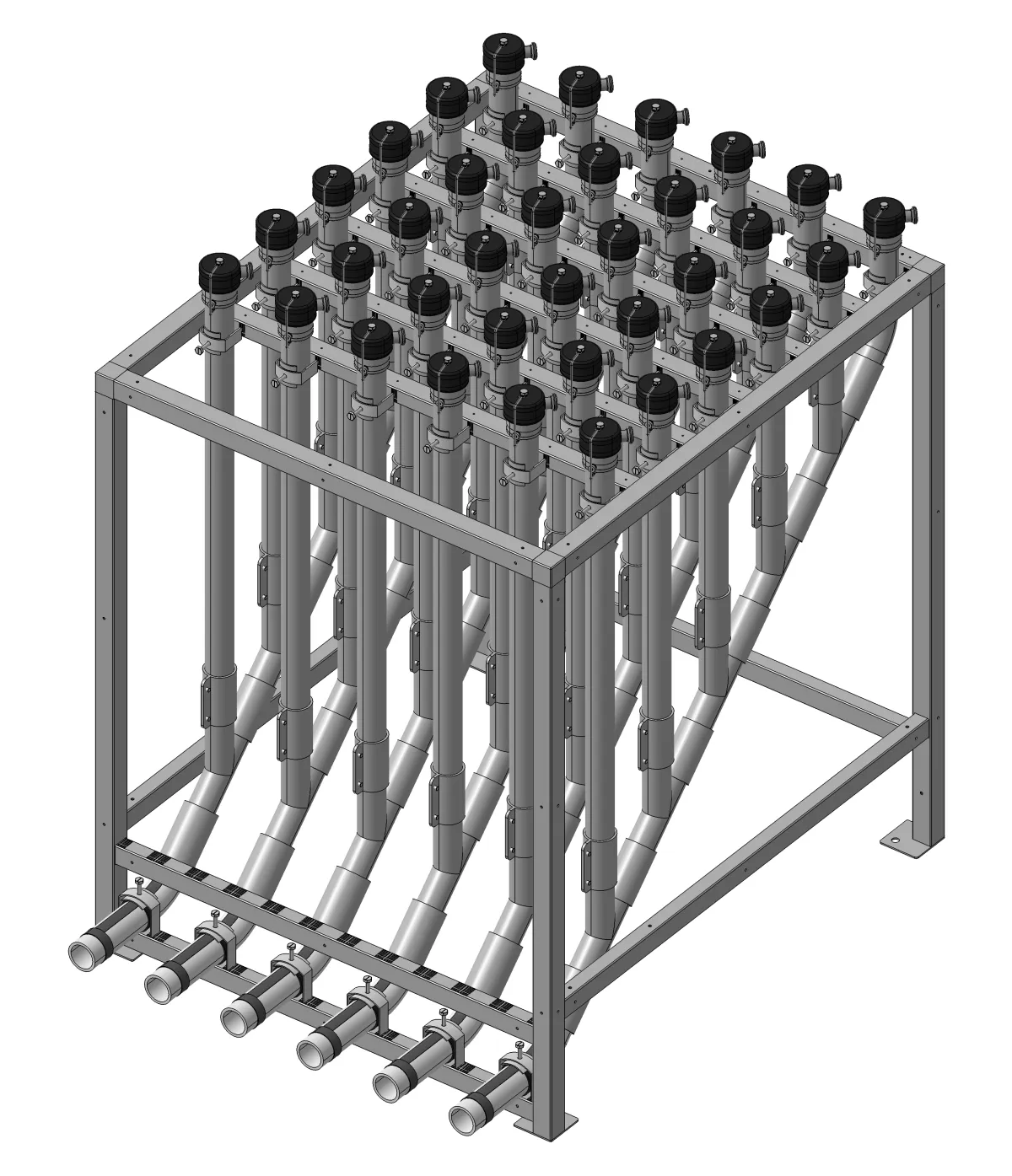 Michel Tube Engineering
›Michel Vario Table
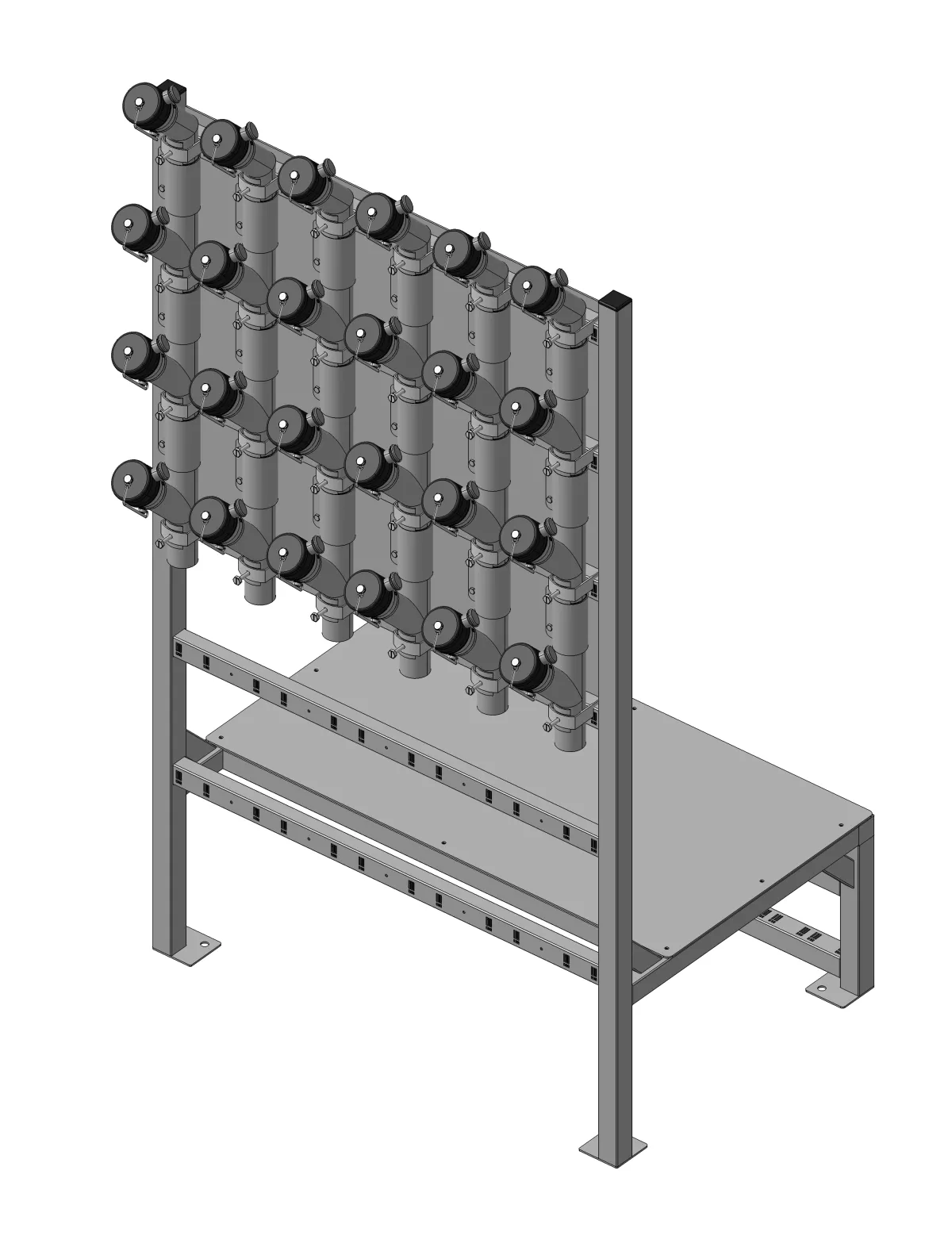 Michel Tube Engineering
›Michel Vario Station
- Vertical design — saves space
- Solid welded stainless steel frame
- Ø 40.0 / 45.0 / 50.0 mm with a single frame
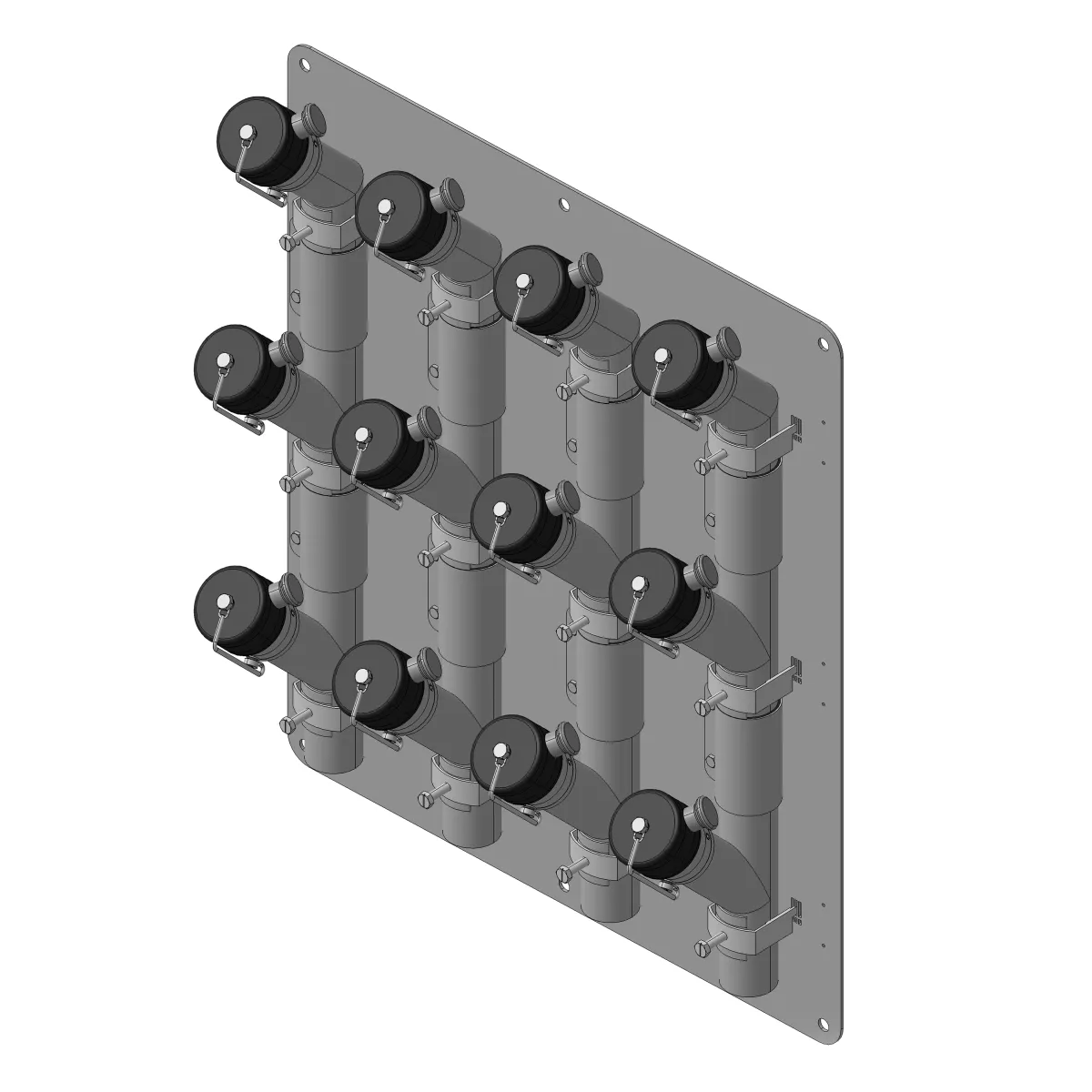 Michel Tube Engineering
›Michel Vario Wall
- Wall-mounted — complete saving of floor space
- Solid stainless steel sheet plate
- The plate serves as a cover sheet at the same time
Material Distributors (Coupling Station)
The distributor is the point where it is decided which material goes to which machine. The material sources are connected on one side and the machine lines on the other; the matching between them is made with couplings.
Three layout options
| Model | Layout |
|---|---|
| Michel Vario Table | Free-standing modular table — an expandable body construction |
| Michel Vario Station | Vertical arrangement — the solution taking up the least space |
| Michel Vario Wall | Wall-mounted — hung like a plate panel, and it also serves as a cover sheet |
All three work on the same system logic and their inlet heights match; the table and the station can be used together.
Selection criterion
Where floor space is plentiful and expansion is planned for the future, the table; where space is tight, the vertical station; where no floor space can be spared at all, the wall type is preferred. The number of connections (inlets/outlets) and the diameter range determine the model choice.
To prevent mix-ups see Color Coding, and to prevent a wrong connection physically the Automatic Distribution Table.
The system as a whole: vacuum granulate conveying
Three layouts, three needs
The Vario Table is a horizontal distribution arrangement; the operator sees all the connection points in front of them and reaches them comfortably. It requires a wide area.
The Vario Station is of vertical construction; it gathers the same number of connections into a far smaller footprint. It is preferred in plants where space is limited and, because it has the same inlet height as the Vario Table, the two can be used together.
The Vario Wall, in turn, is hung in the form of a plate and at the same time serves as a cover sheet; it is the solution taking up the least space.
Manual or automatic?
At a manual distribution table the operator makes the connection; the system is cheap but the risk of a wrong connection depends on the operator. At automatic coupling stations the connection is made by the system and its correctness is verified; the investment is high but the possibility of error disappears.
The decision criterion is the number of lines and the frequency of material changes. In a plant with a few changes a day, a manual table plus color coding is sufficient; in continuously changing production an automatic station pays for itself.
When planning the layout
- The operator's reach height and the hose lengths should be considered together
- Enough distance is left between the connection points so that the hoses do not tangle
- A reserve of free connections should be planned for machines to be added later