Pipe Elbows Products(3)
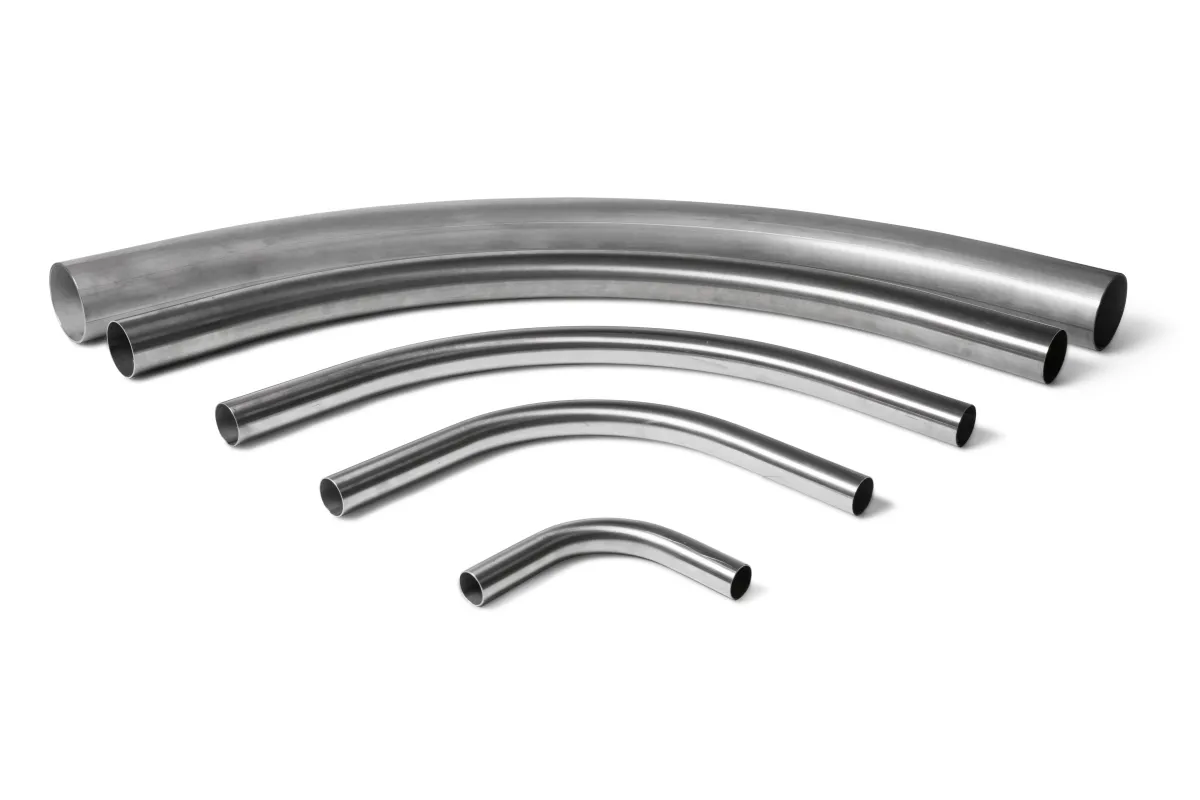 Michel Tube Engineering
›Stainless Steel Pipe Elbow
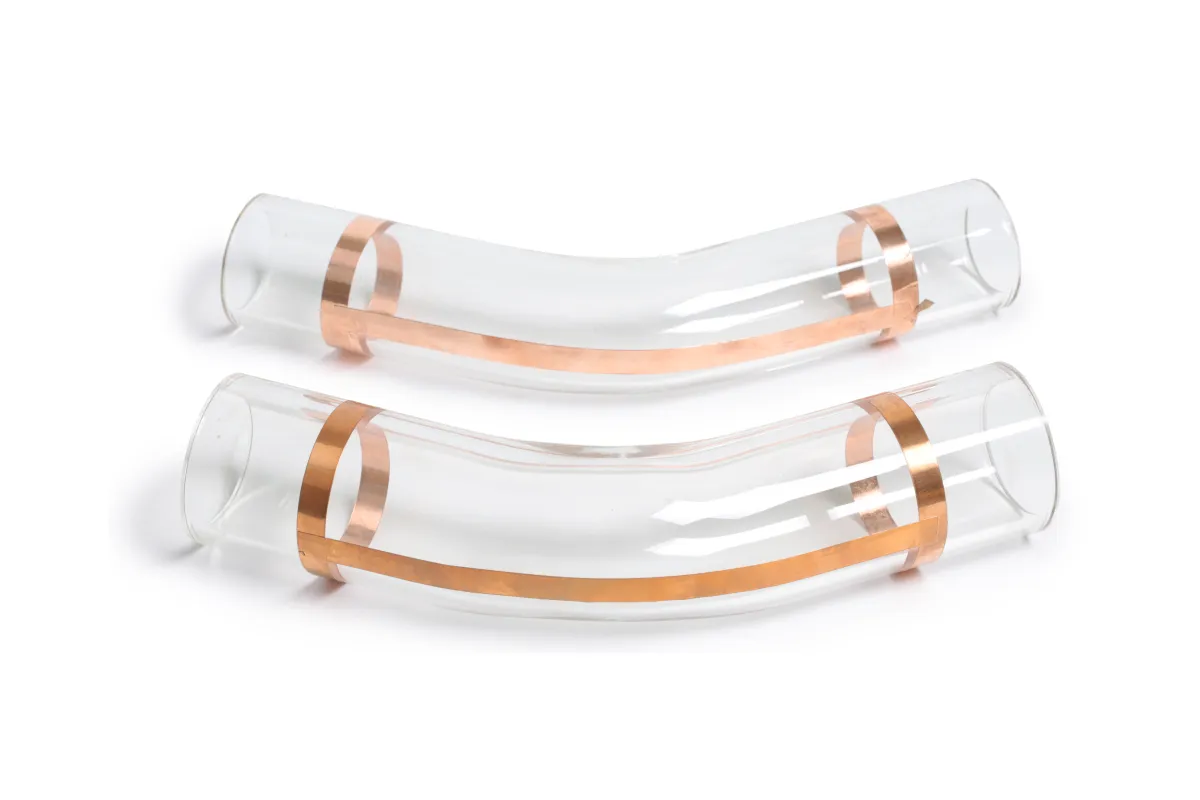 Michel Tube Engineering
›Glass Pipe Elbow
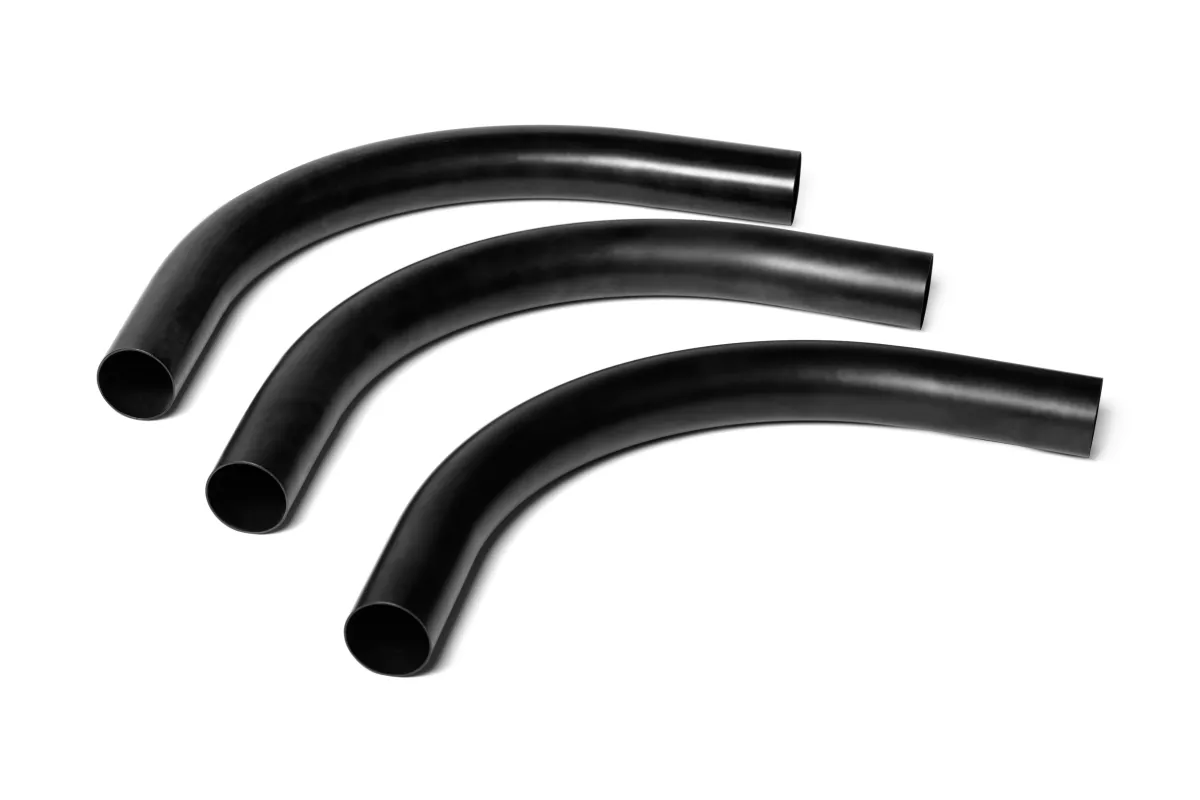 Michel Tube Engineering
›Wear-Resistant Pipe Elbow
Pipe Elbows
The elbow is the most critical part of a pneumatic conveying line. The material changes direction here; the particles strike the outer wall of the elbow. For that reason most of the wear in a line takes place at the elbows, and holes appear here first.
Material selection
| Material | Use |
|---|---|
| Stainless steel | Standard raw materials, general purpose |
| Wear-resistant | Glass fiber reinforced, mineral filled, hard and abrasive raw materials |
| Glass | Inspection points where the flow has to be watched |
Two traps in elbow design
1. Too small a radius — the material strikes the wall of the elbow head-on; wear accelerates and the particles break. A broken particle produces dust, and dust leads to a visual defect on the part.
2. Too many elbows — every elbow means a pressure loss. Keeping the number of elbows to a minimum when planning the line directly affects the capacity of the vacuum pump.
On long lines with many elbows, the formation of angel hair in soft materials such as PE also increases; the conveying speed and the elbow radius should be assessed together.
Related: Round Tubes · Pipe Fittings · The system as a whole: the central conveying system
Why the elbow radius matters so much
Wear is slow in a straight tube and fast in an elbow — because the material strikes the wall as it changes direction. What determines the severity of that impact is the elbow radius. An elbow with a small radius turns the granulate at a sharp angle; the impact energy rises and the wear accelerates several times over. Choosing a small radius to save space pays off in the short term but noticeably shortens the life of the tube.
Reducing the number of elbows
Every elbow is both a wear point and a pressure loss. Planning the route as straight as possible when the line is designed is a more effective measure than improving the elbow material. Avoiding connecting two elbows directly to one another, and leaving a straight distance between them, noticeably eases the flow.
Angel hair
As the granulate rubs against the wall, fine filaments known as angel hair are formed. These filaments clog filters, accumulate in the hopper and appear as a defect on the part surface. High conveying speed and sharp elbows are the principal sources of angel hair.
Maintenance
Elbows are the first part of the line to wear through, and the hole usually goes unnoticed; the false air leaking in quietly lowers the conveying efficiency. In plants processing abrasive raw material it is good practice to check the wall thickness of the elbows periodically.