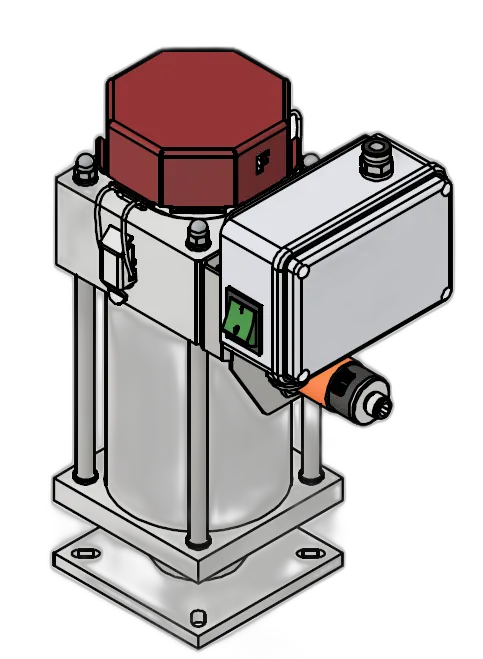
 7 models
MOVAC Easy-2 — click for technical specifications and models.
MOVAC Easy — Independent Hopper Loaders
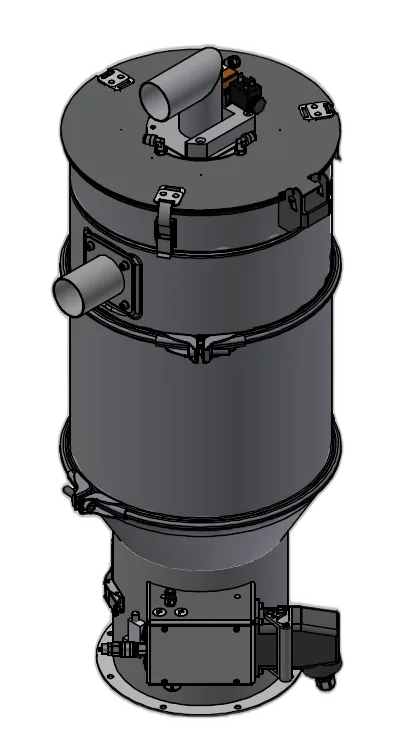
The MOVAC Easy series are hopper loaders with their own motor and vacuum unit. Without installing a central conveying line, they are mounted directly on the machine throat and draw material from a bag, an octabin or a dryer.
Who is it suitable for?
- Production areas with a small number of machines
- Situations where a central line installation is not economical
- Machines that are moved frequently or are rented
- Machines feeding a single special material in addition to a central system
Using an independent loader instead of installing a central line for a single machine noticeably reduces both the investment and the installation time.
Model range
| Model | Hopper | Capacity |
|---|---|---|
| Easy-2 | 2 L | 30 kg/h |
| Easy-4 | 4 L | — |
| Easy-5 | 5 L | — |
| Easy-7 | 7 L | — |
| Easy-12 | 12 L | — |
| Easy-25 | 25 L | — |
The entry model works with 0.02 kW of power and a single phase supply; it can be fed from an ordinary socket. As the hopper volume grows, the capacity and the motor power increase.
Selection criteria
1. The hourly consumption of the machine — the loader capacity must be above it 2. Hopper volume — it determines the amount drawn per cycle and the filling frequency 3. Conveying distance — independent loaders are designed for short distances 4. Type of material — with abrasive materials the life of the line and the filter is shortened
In plants with many machines a central solution is more economical: Central Hopper Loaders · the central conveying system
When an independent loader is right
The MOVAC Easy series are hopper loaders that work with their own motor, without being connected to a central vacuum. They are the right solution in small plants, for feeding one or a few machines, and in the stage before a central system is installed.
Their advantage is simplicity: no line, no vacuum source and no distribution infrastructure is required. The loader is placed on top of the machine, its hose is dipped into the material container and it starts working.
Where its limit begins
As the number of machines grows, the disadvantages of the independent loader become clear: a separate motor at every machine, a separate source of noise, a separate maintenance point. Every loader also has its own filter, and as the filter maintenance multiplies it begins to be neglected.
Beyond that point, moving to a central conveying system becomes more economical both in labor and in total maintenance.
Choosing a model
The capacity is determined by the hourly consumption of the machine. The suction distance and the position of the material container also have to be taken into account — on long and steep routes the drawing capacity of the loader falls.
The relationship with drying
If dried material is being conveyed, the line and the hopper have to be closed; otherwise the granulate picks up moisture before it reaches the machine. The subject is covered on the material drying page.